 Image 1 of 5
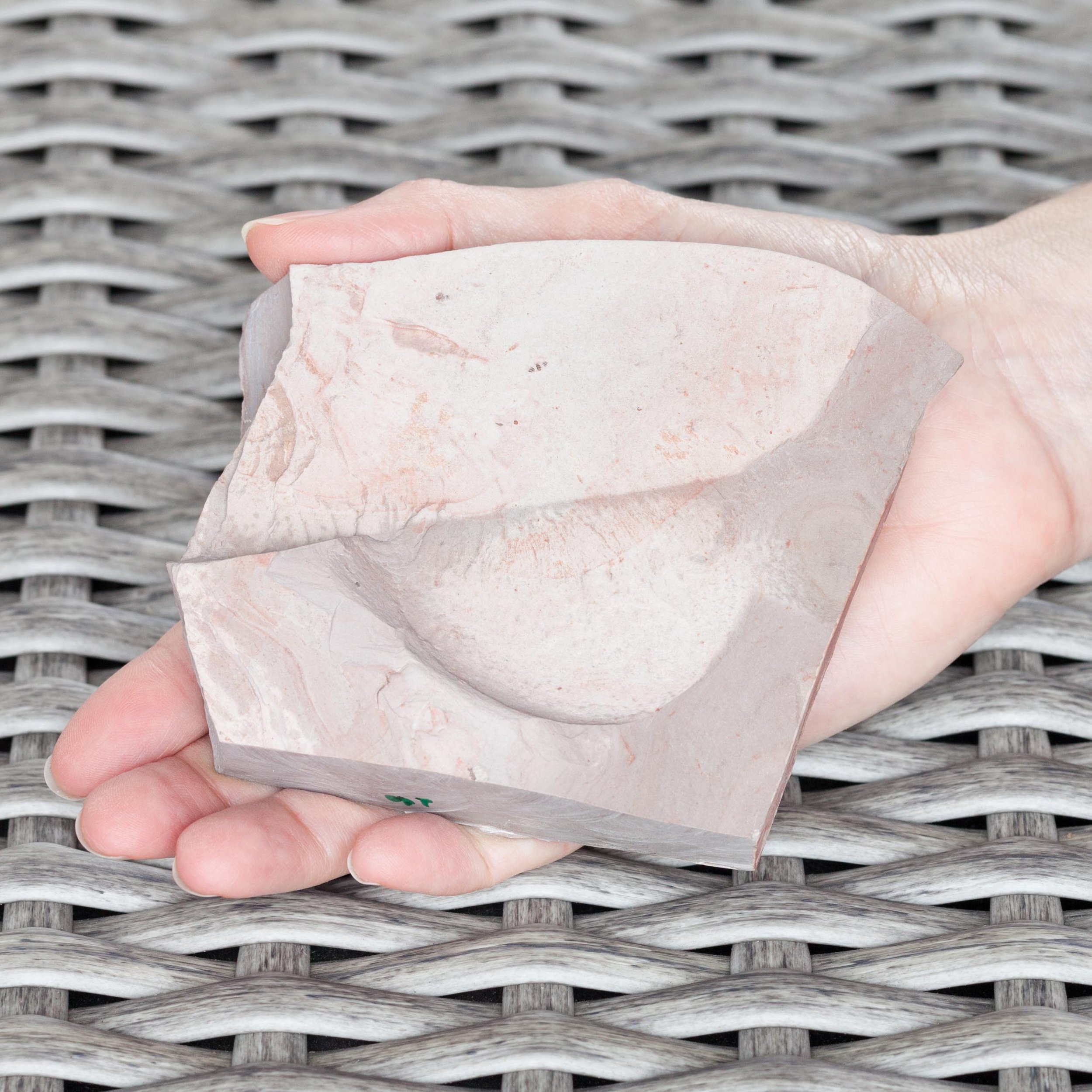 Image 2 of 5
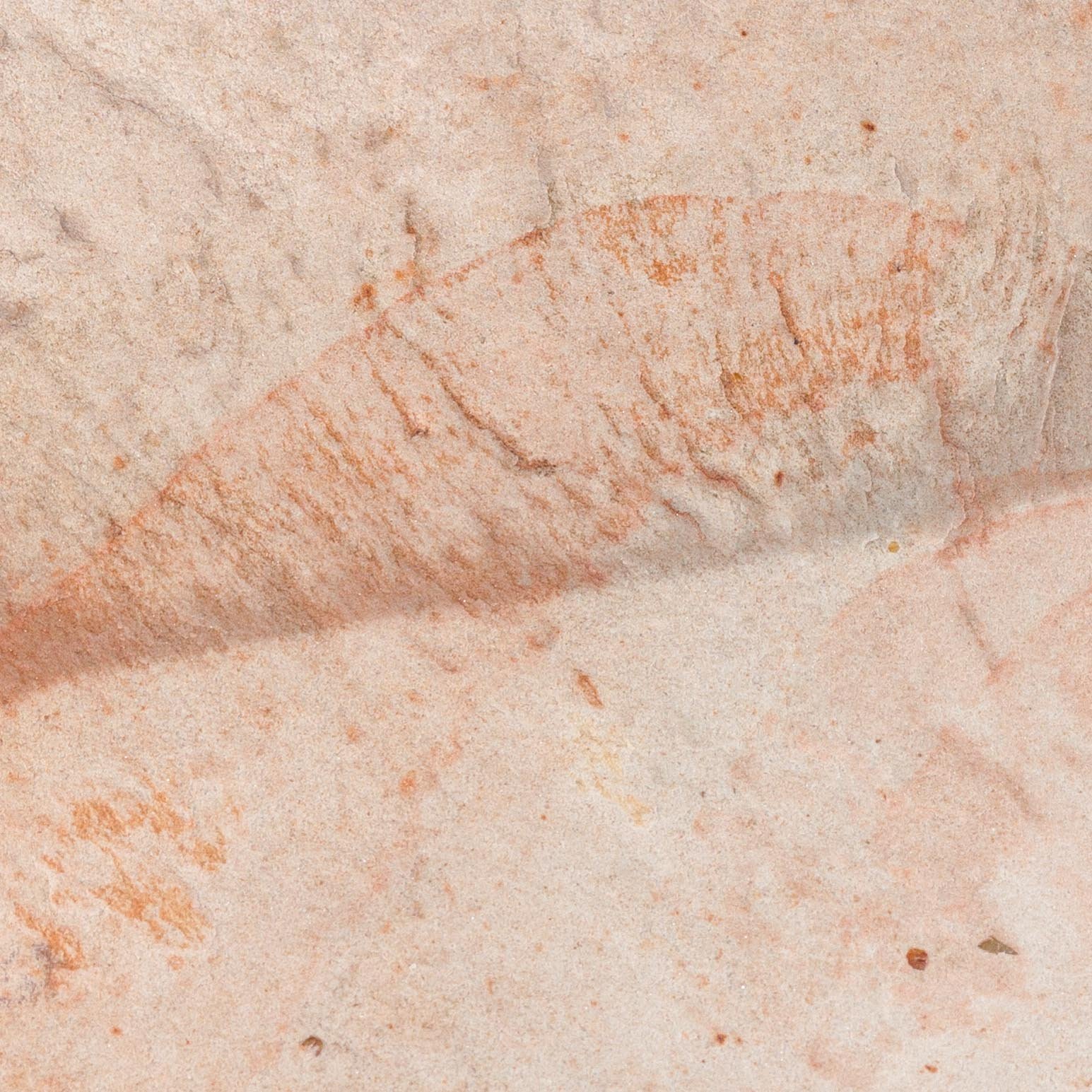 Image 3 of 5
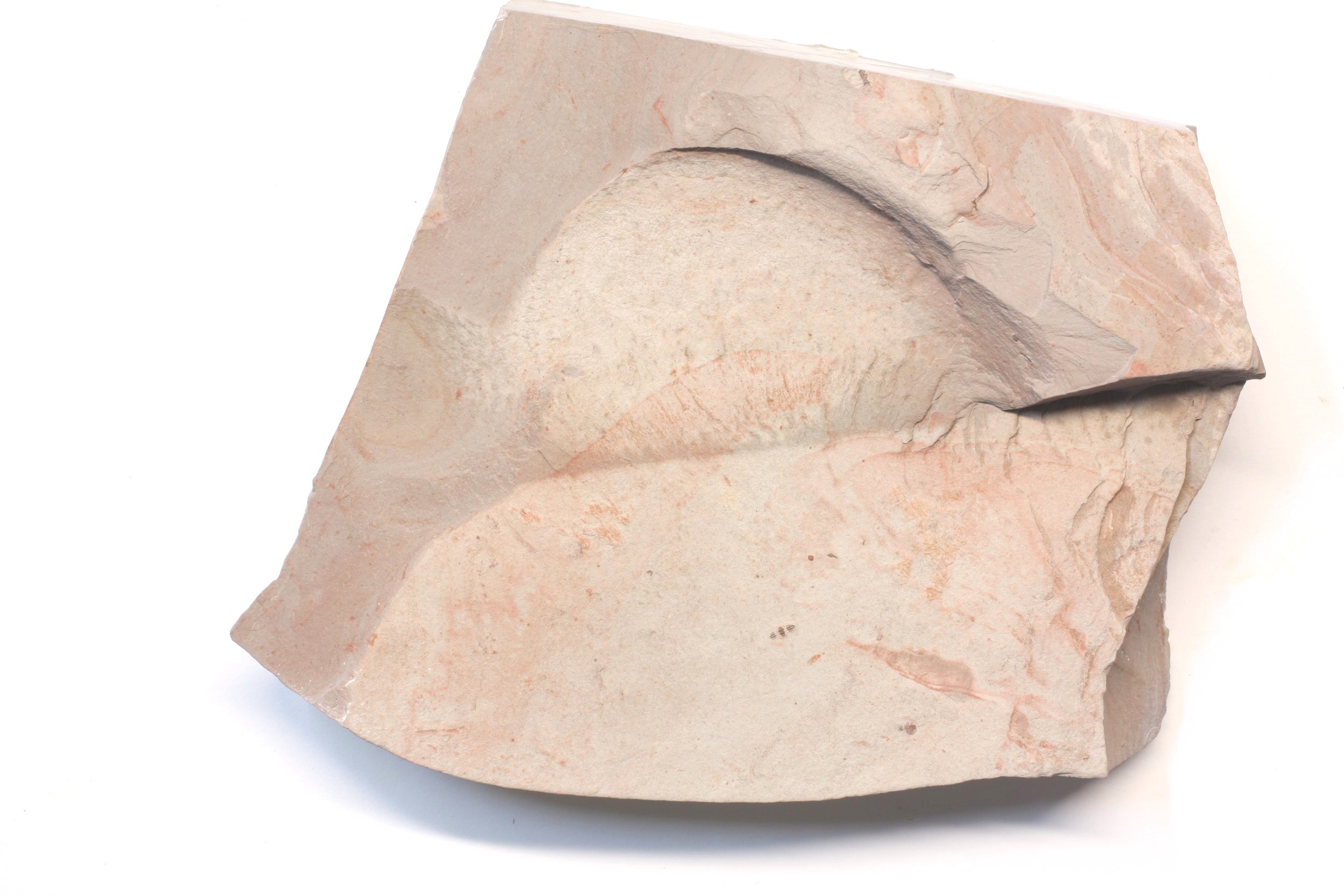 Image 4 of 5
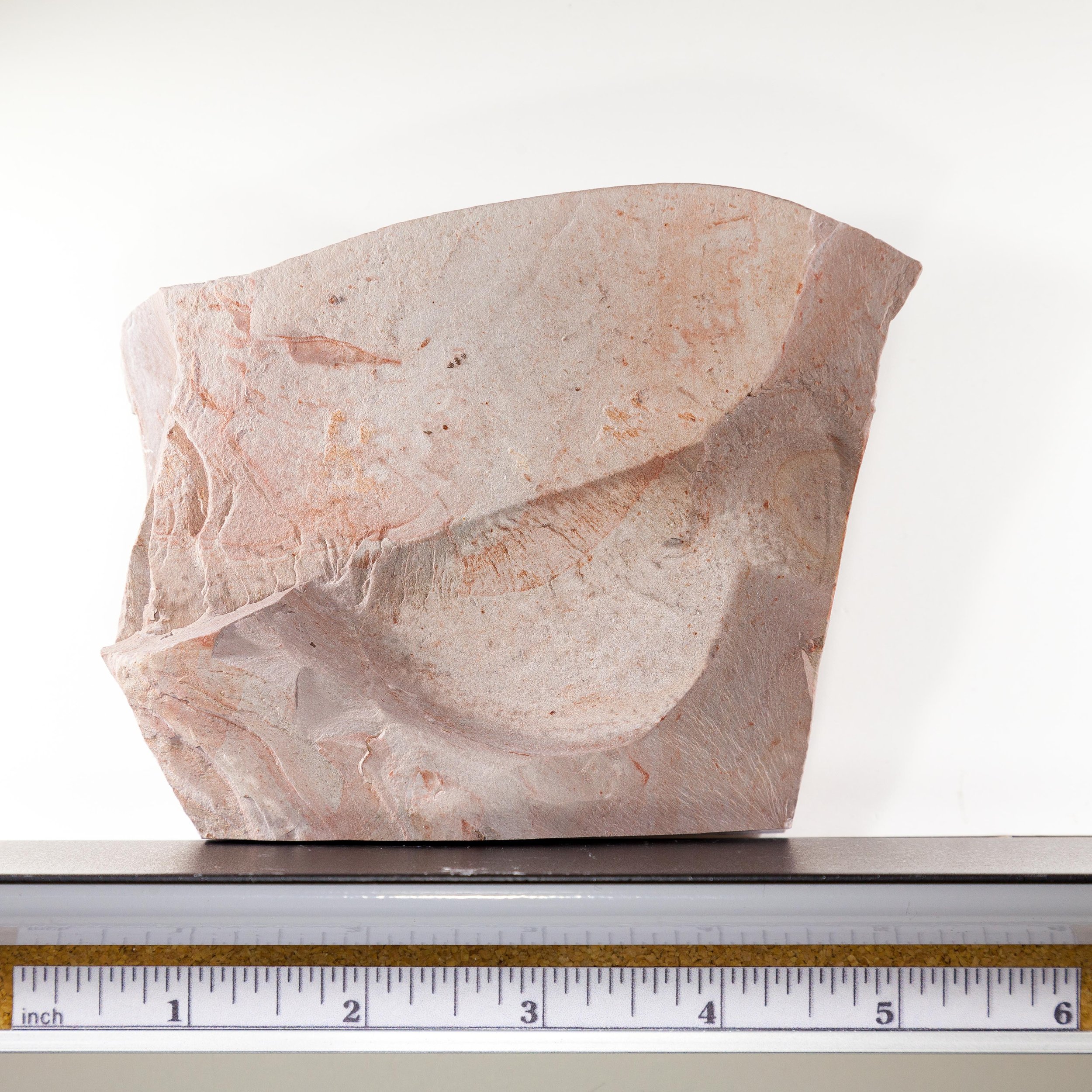 Image 5 of 5

Additional Information
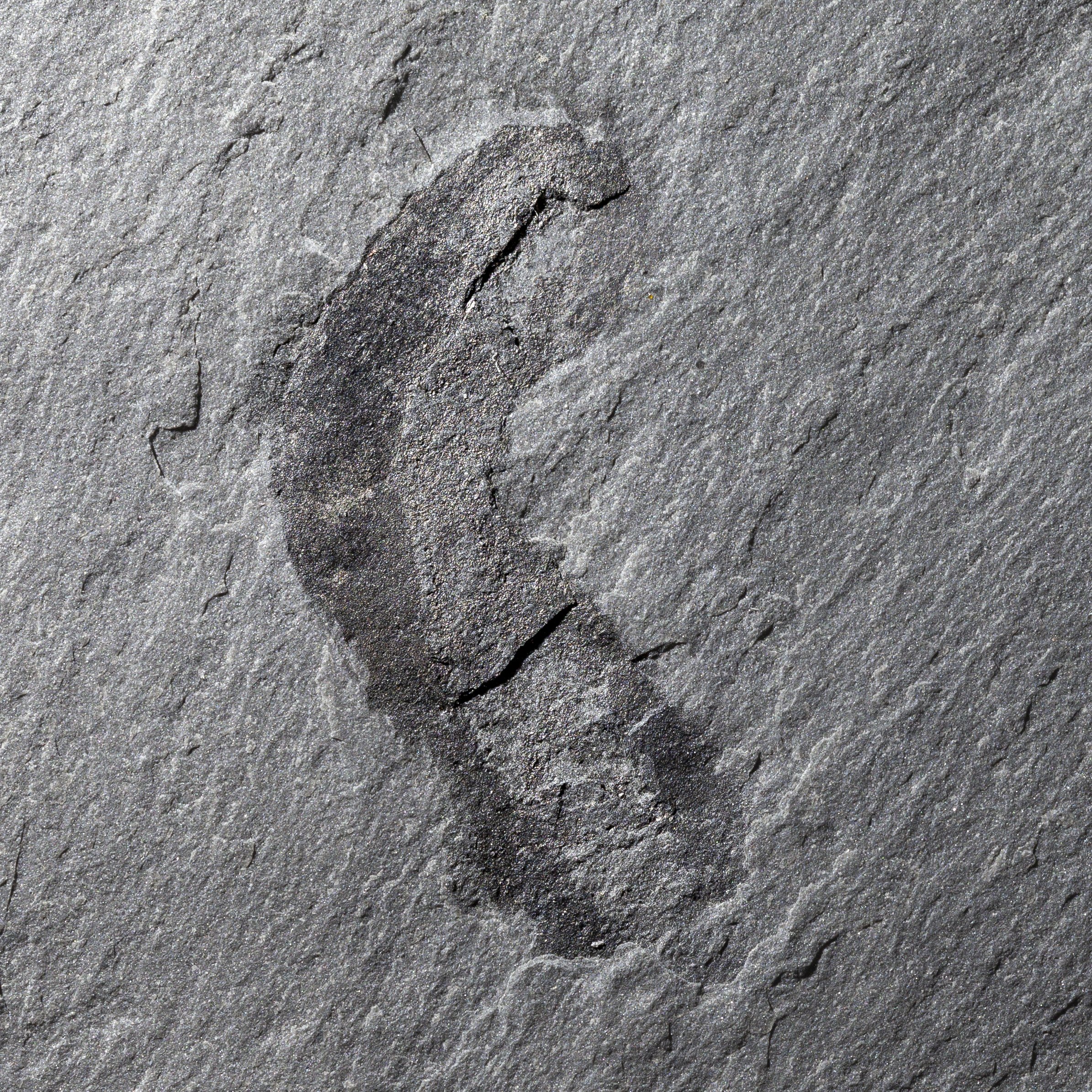
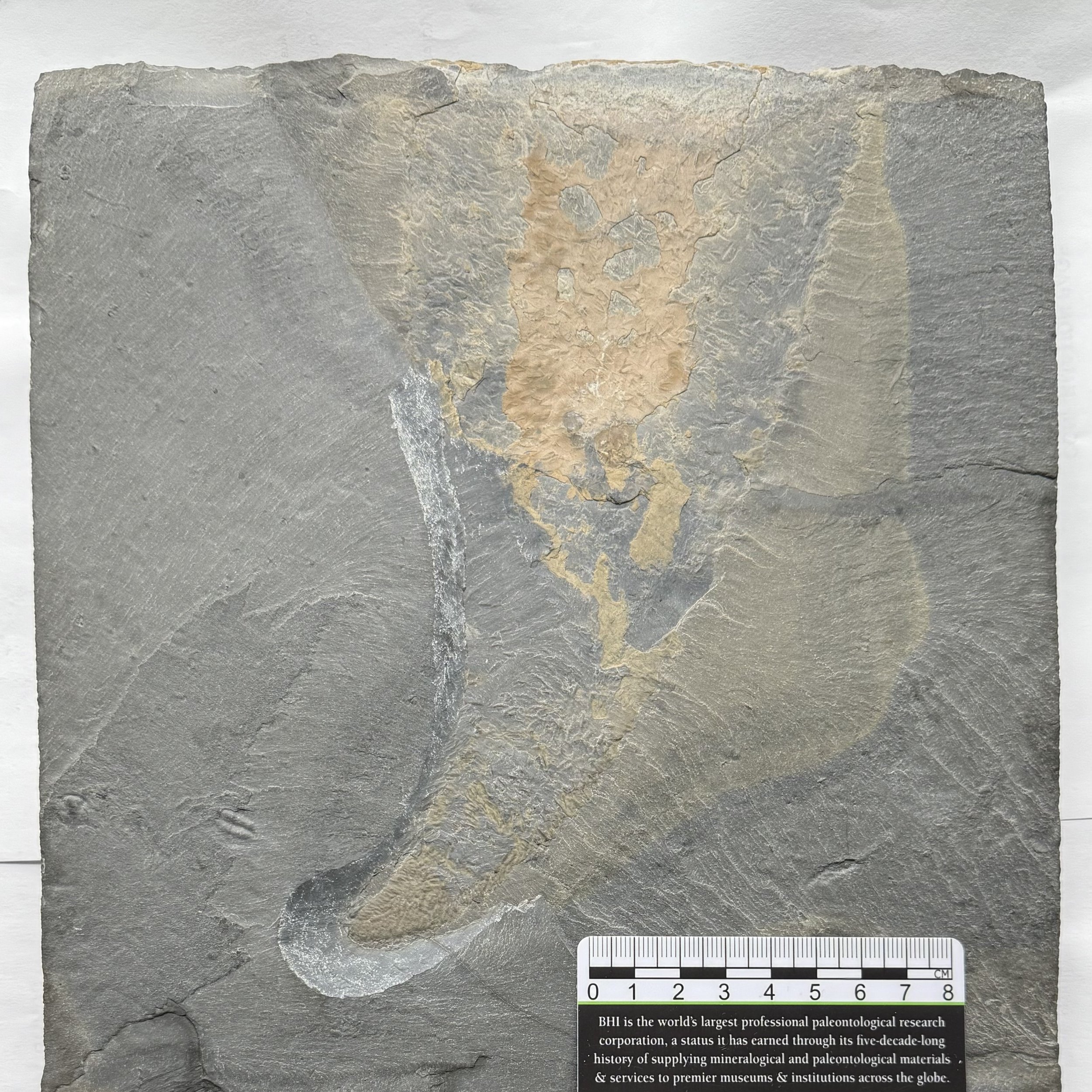
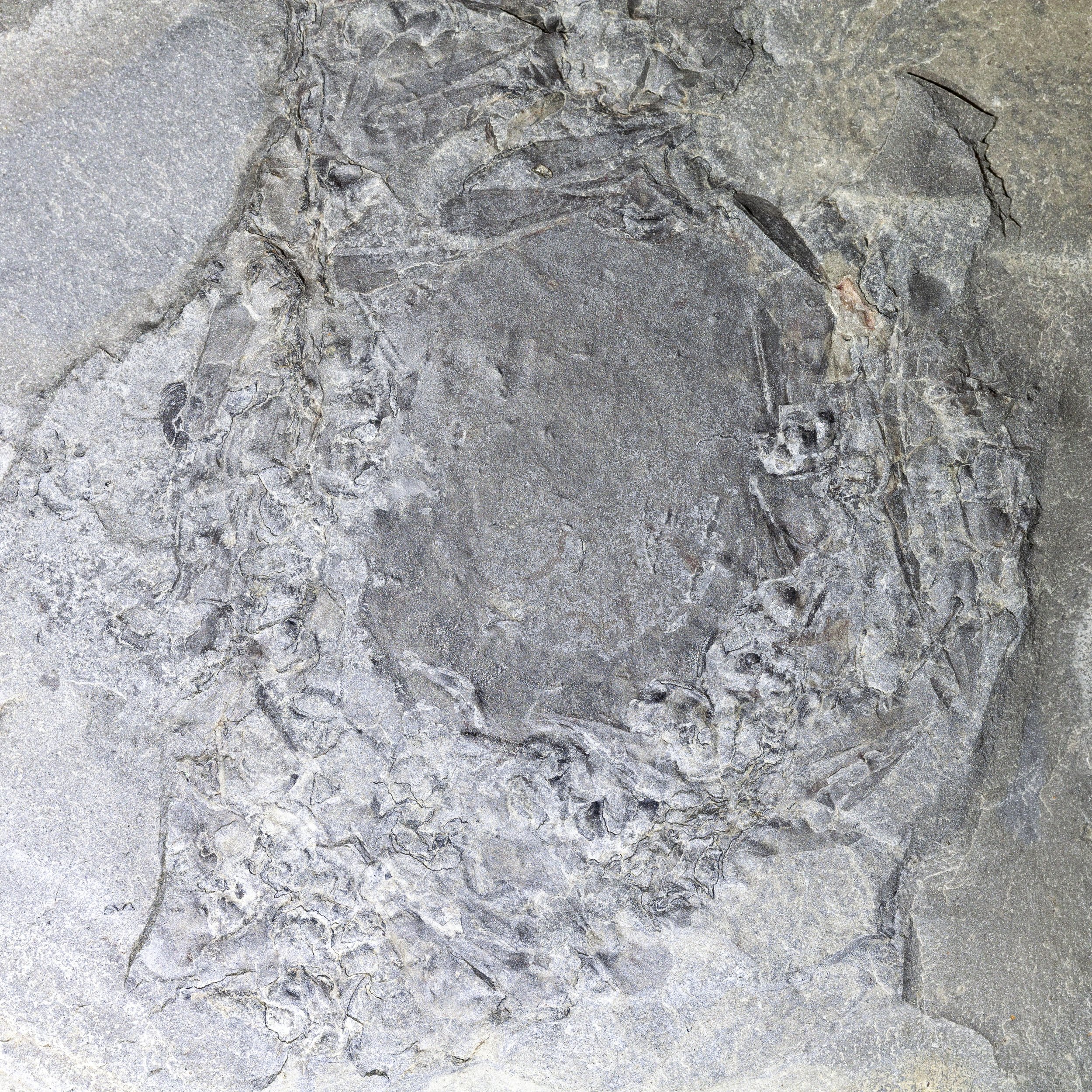
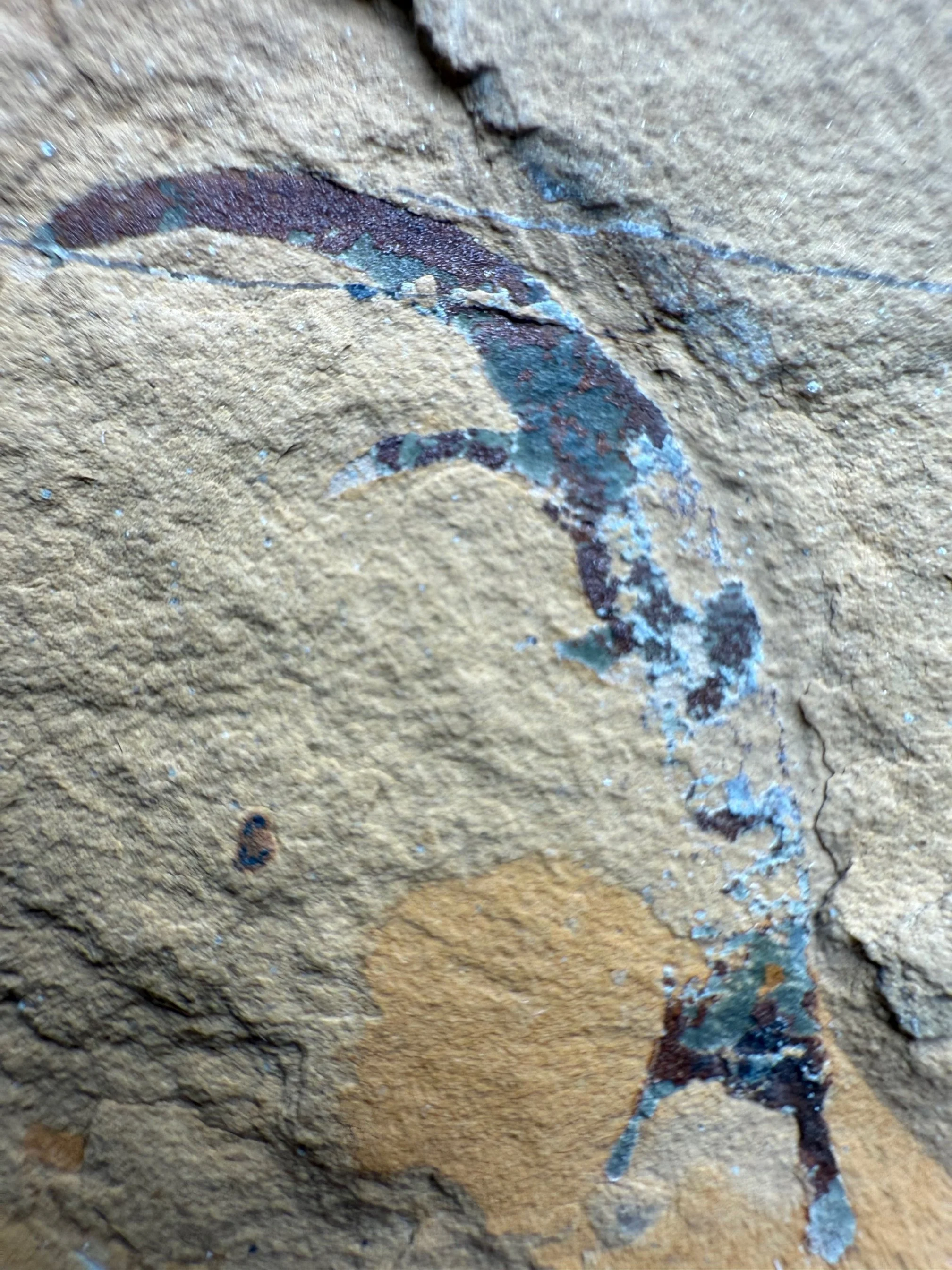
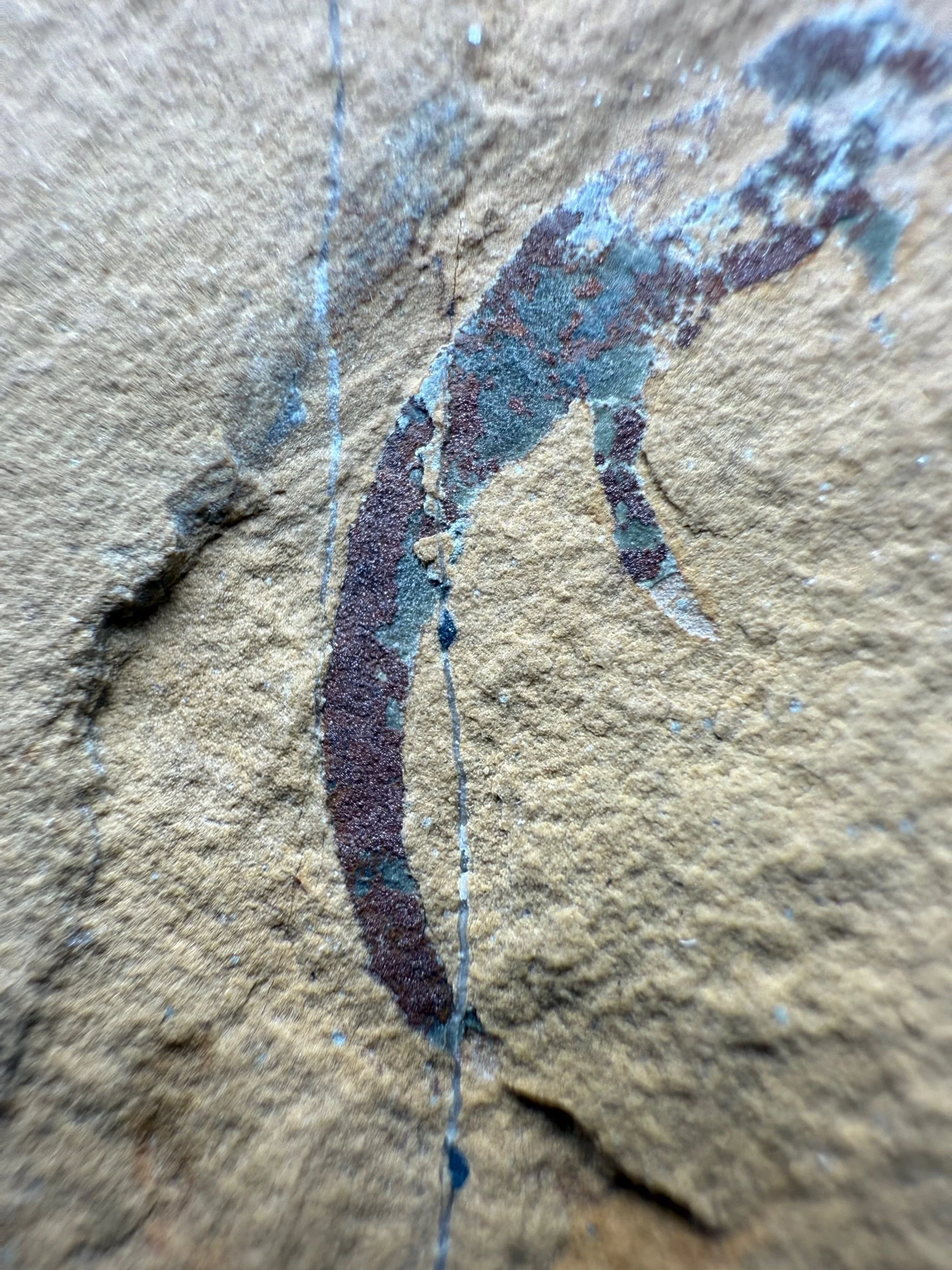
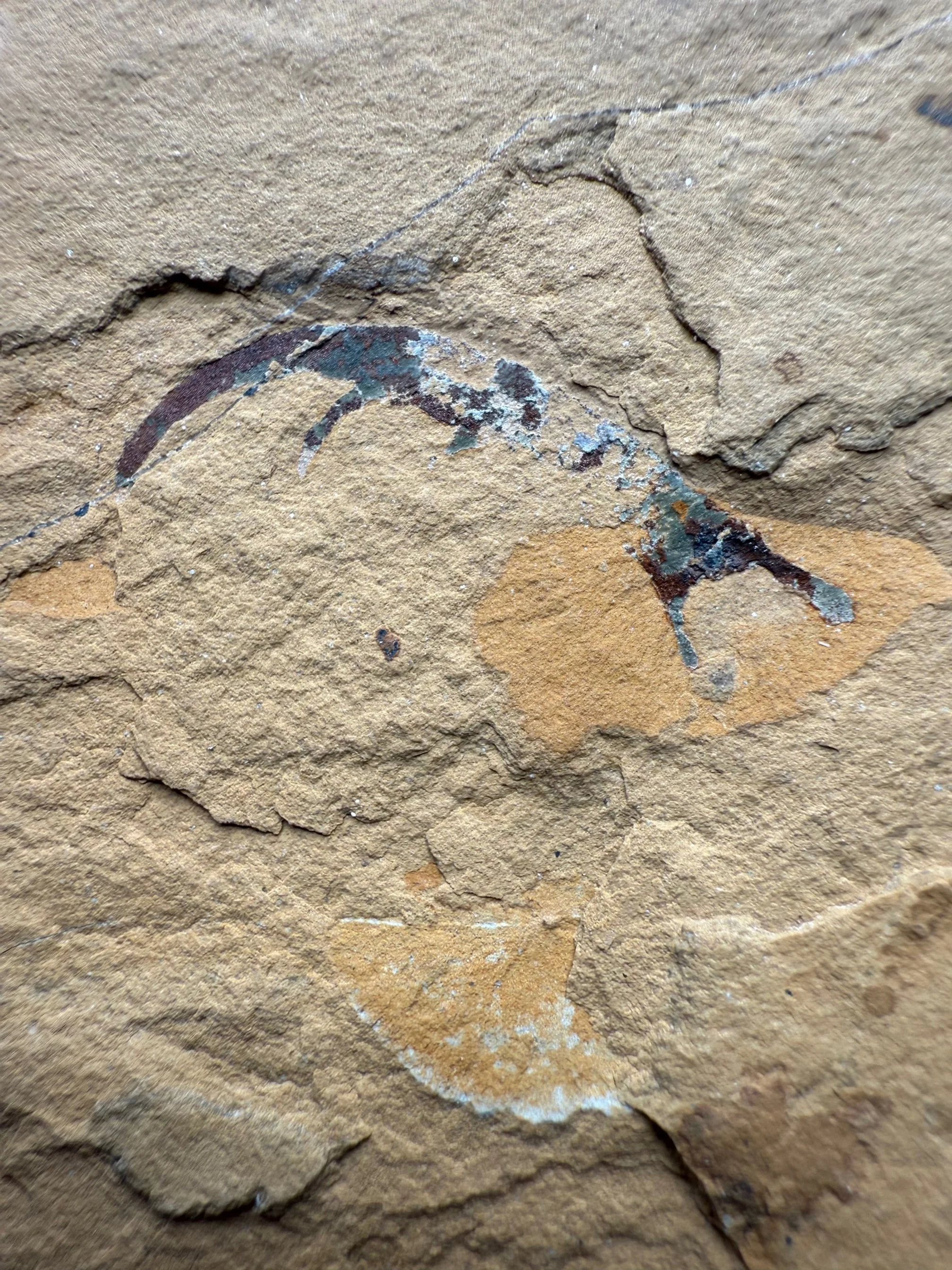
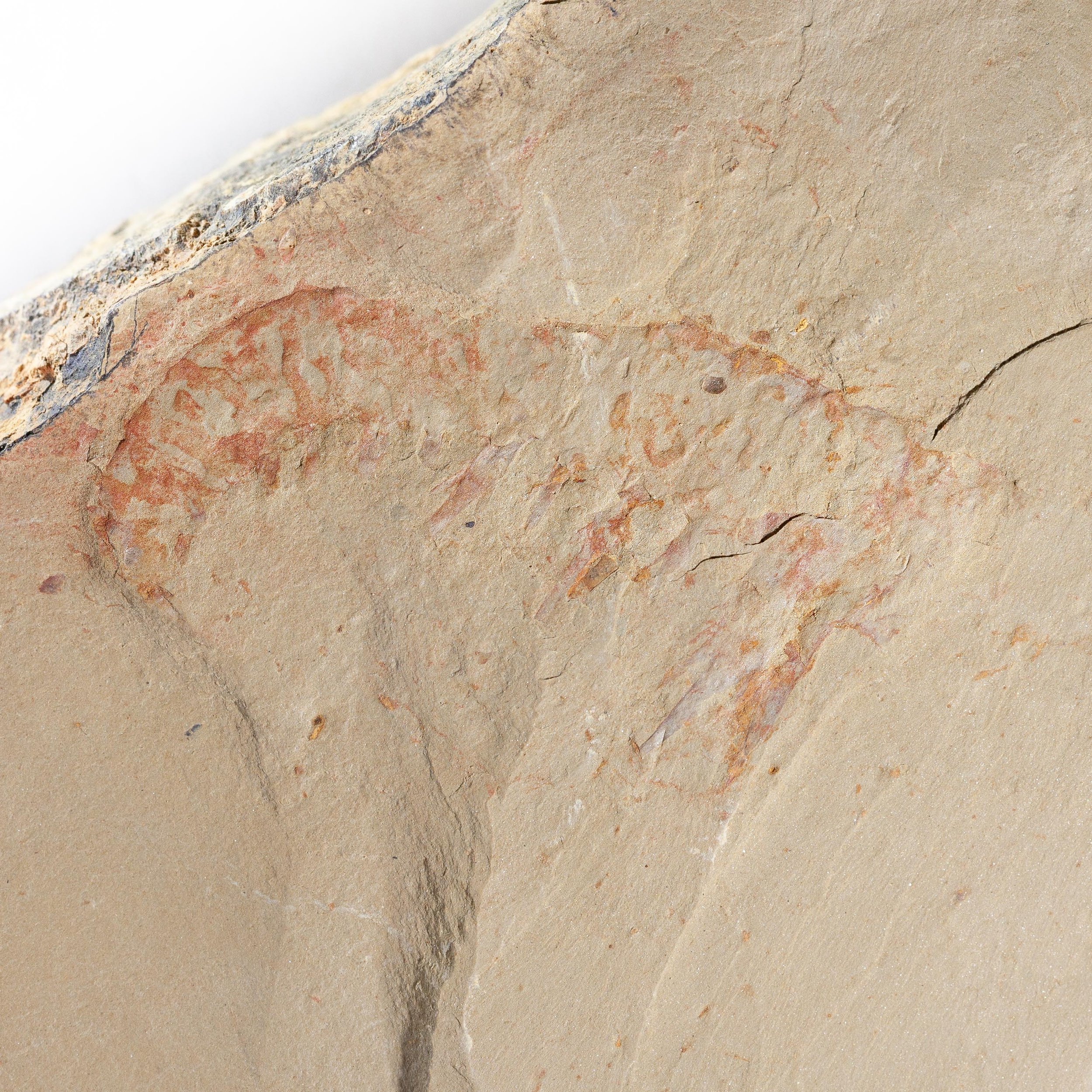
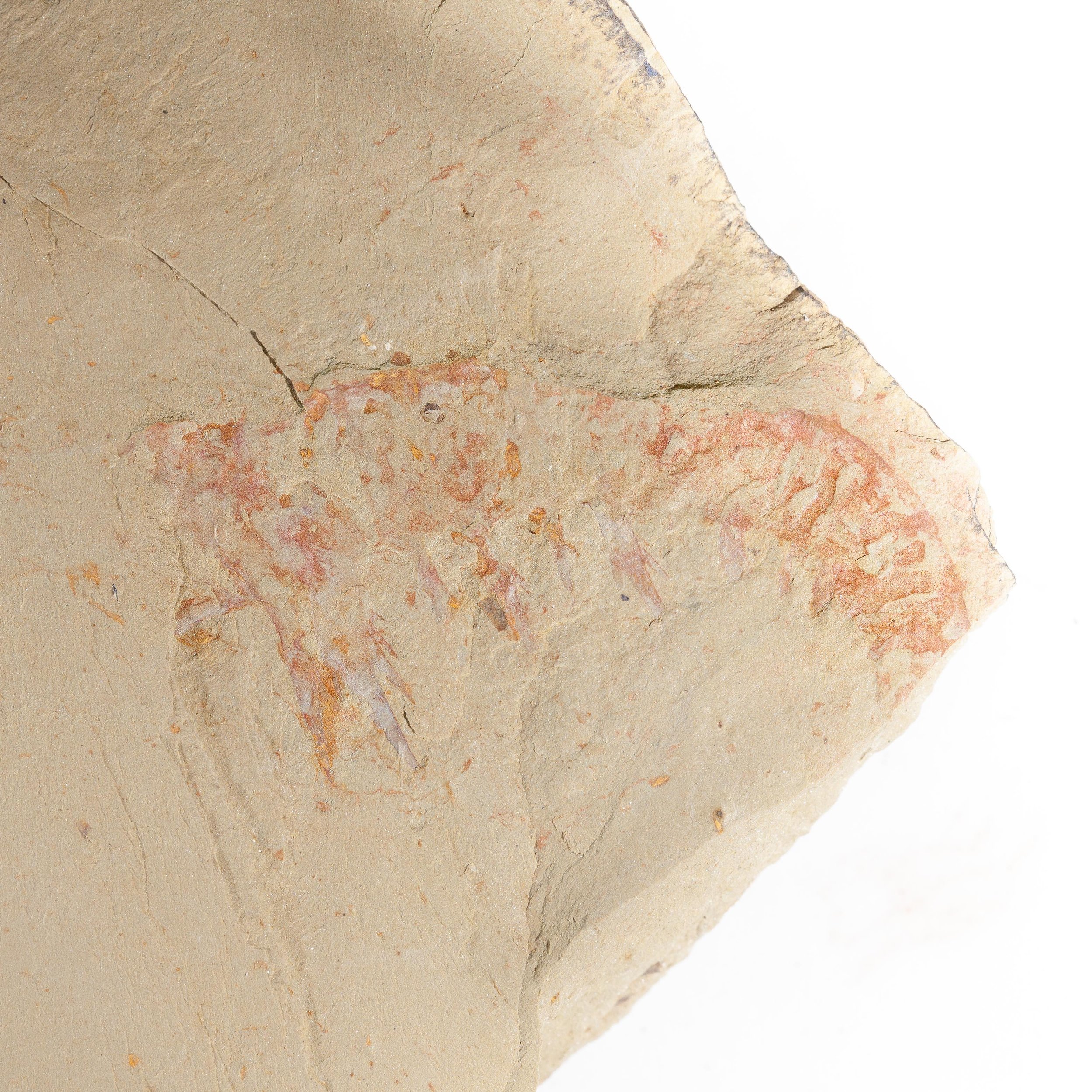
Anomalocaris was a predatory Radiodont with raptorial fore-limbs. It had been thought that Anomalocaris fed on hard-bodied animals and was able to penetrate the mineralized exoskeleton of trilobites. This has recently been put into question and recent research suggests they may have had a diet of soft bodied arthropods instead.
The Radiodonts were a group of Arthropods that appeared early in the Cambrian and appear to have been the first free-swimming raptorial predators, a role subsequently taken on by animals such as Sharks, Fish, Squid, and marine Tetrapods, which appeared to place them firmly at the top of the Cambrian food-chain. These Radiodonts had rather complex exoskeletons, which tended to become disarticulated before being preserved.
Recently, large Radiodonts from the early Cambrian have been discovered that have feeding organs adapted not for raptorial predation but for filter feeding. Filter feeding has repeatedly appeared in the largest members of other groups of raptorial marine predators, including Sharks, Whales and several types of Fish, making this a predictable occurrence in large raptorial Radiodonts, a view that was supported by the discovery of a second such species, the two meter long Aegirocassis from the Early Ordovician.
References:
Anomalocaris
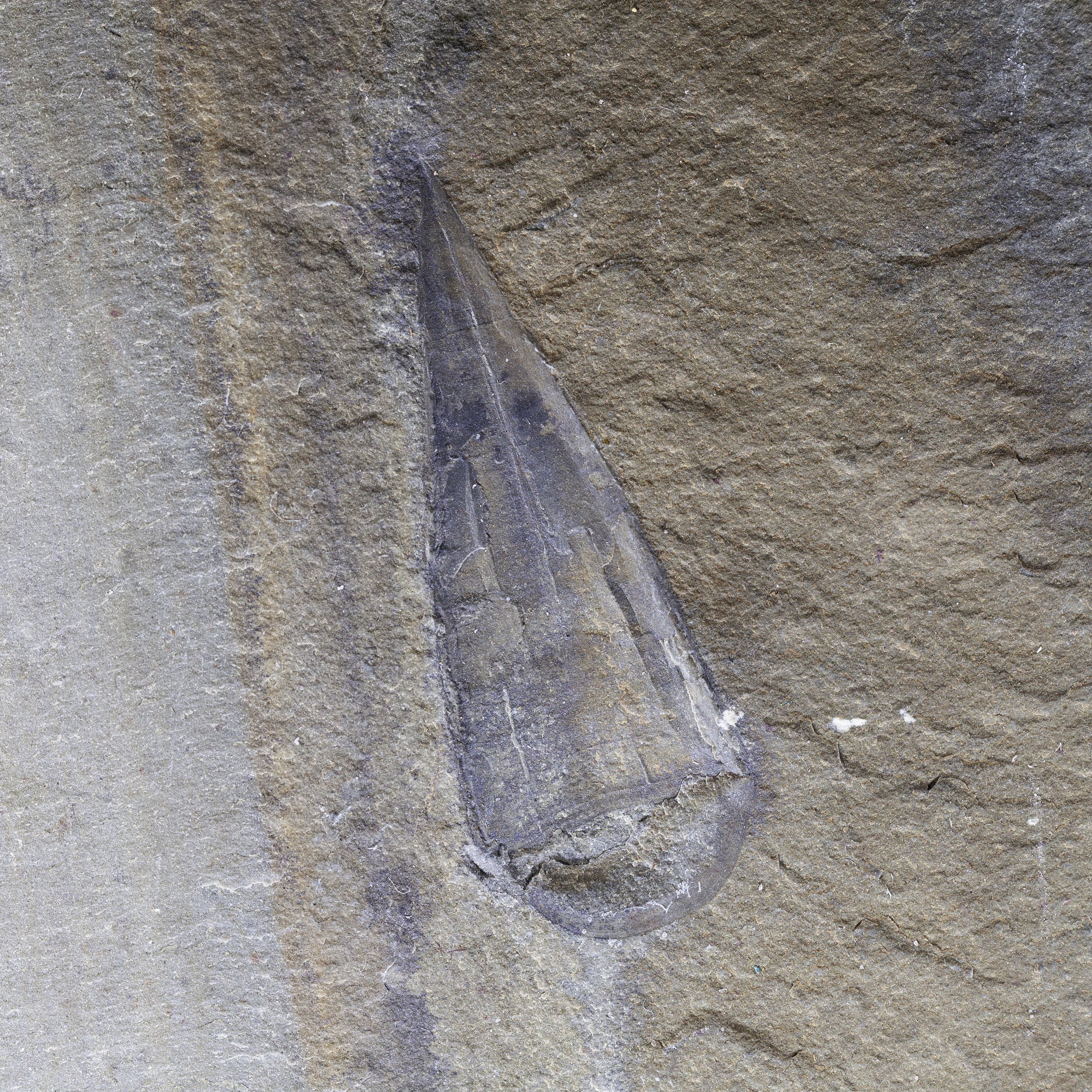
Pahvantia hastata - Sciency Thoughts
Pahvantia hastata - University of New England



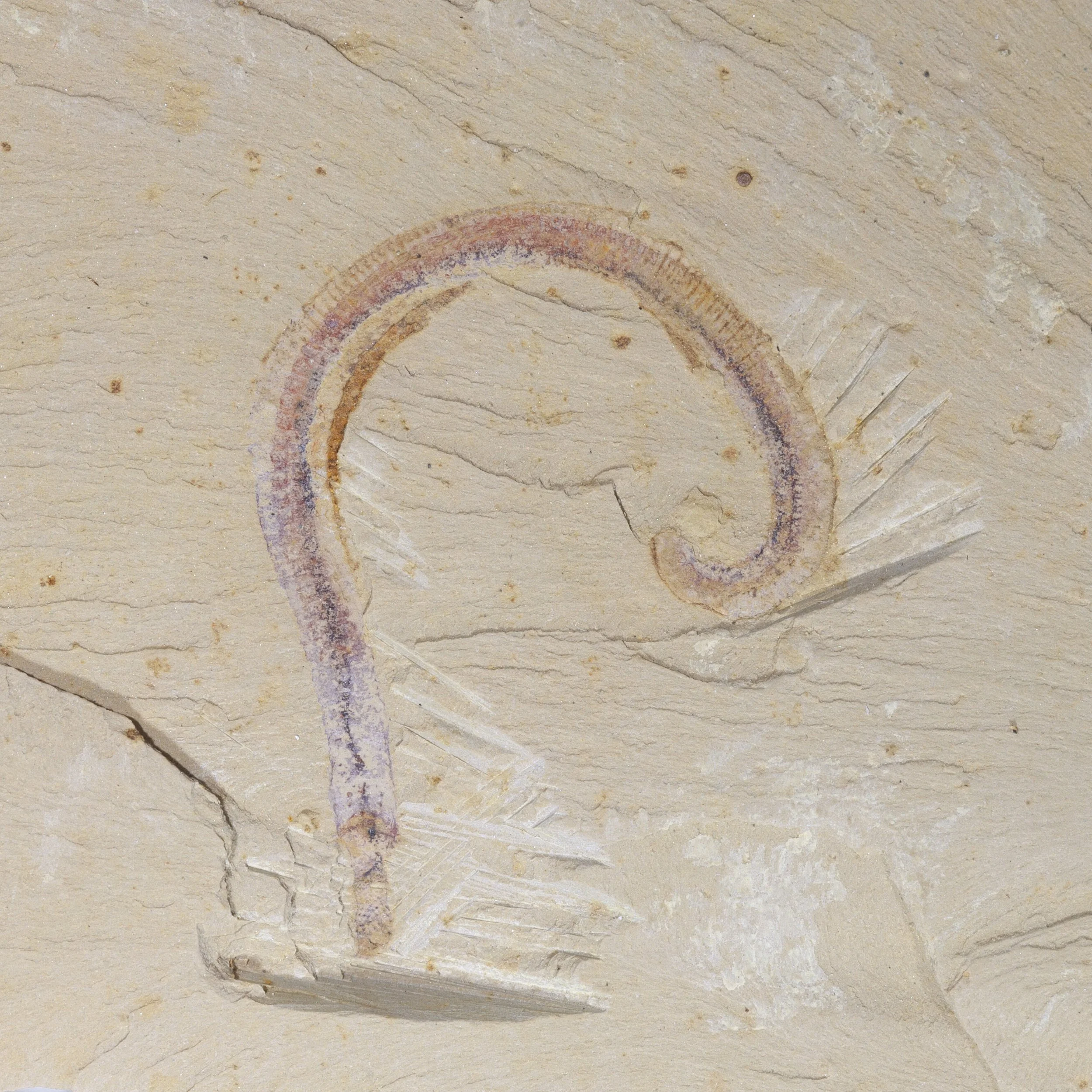
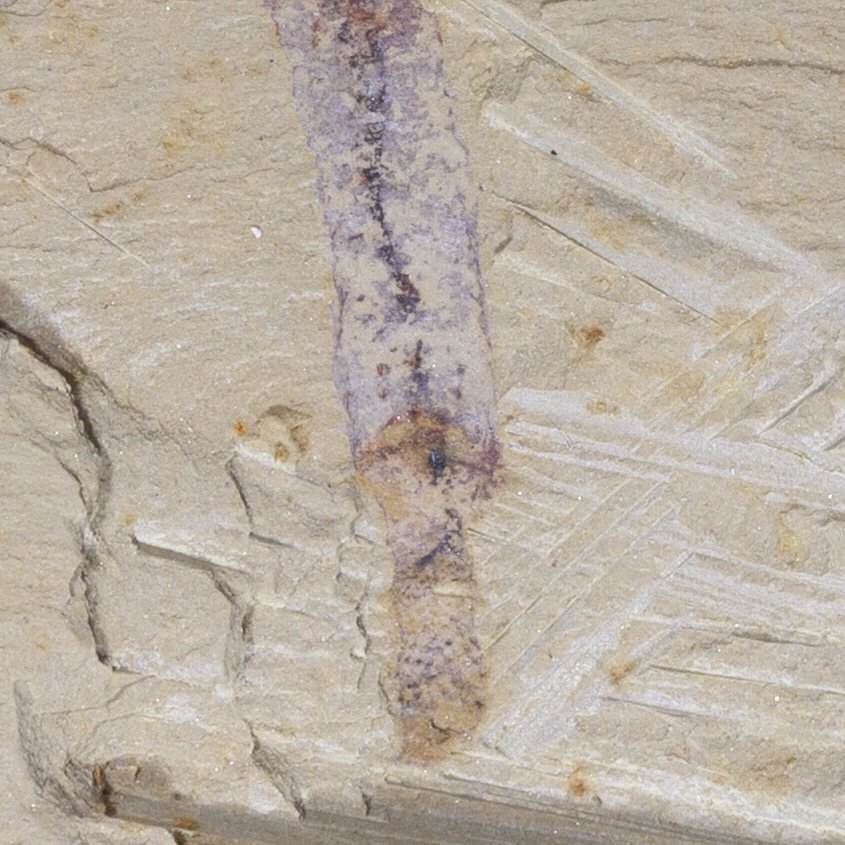

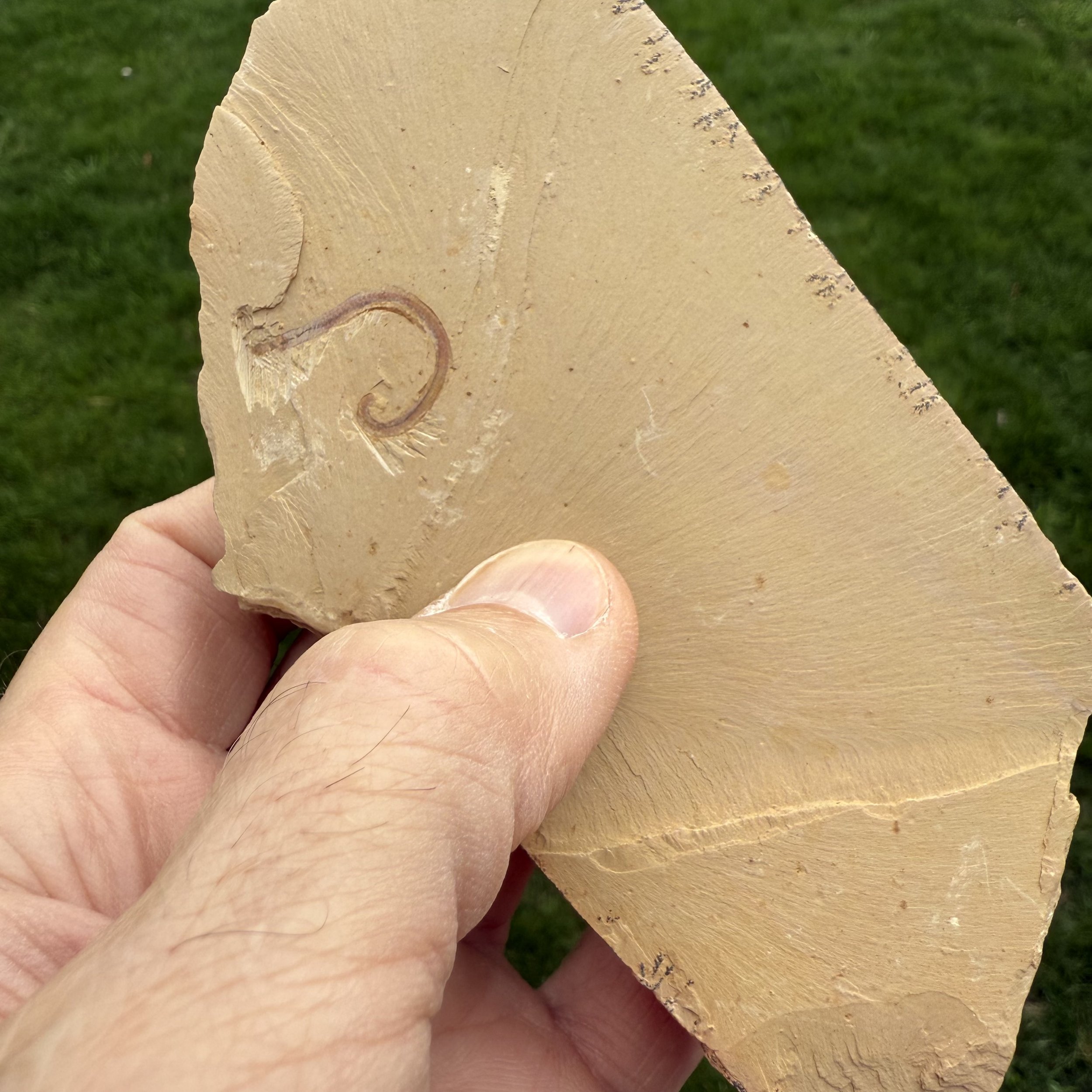

Vendor: FS-JS
SKU Number: SQ5615228
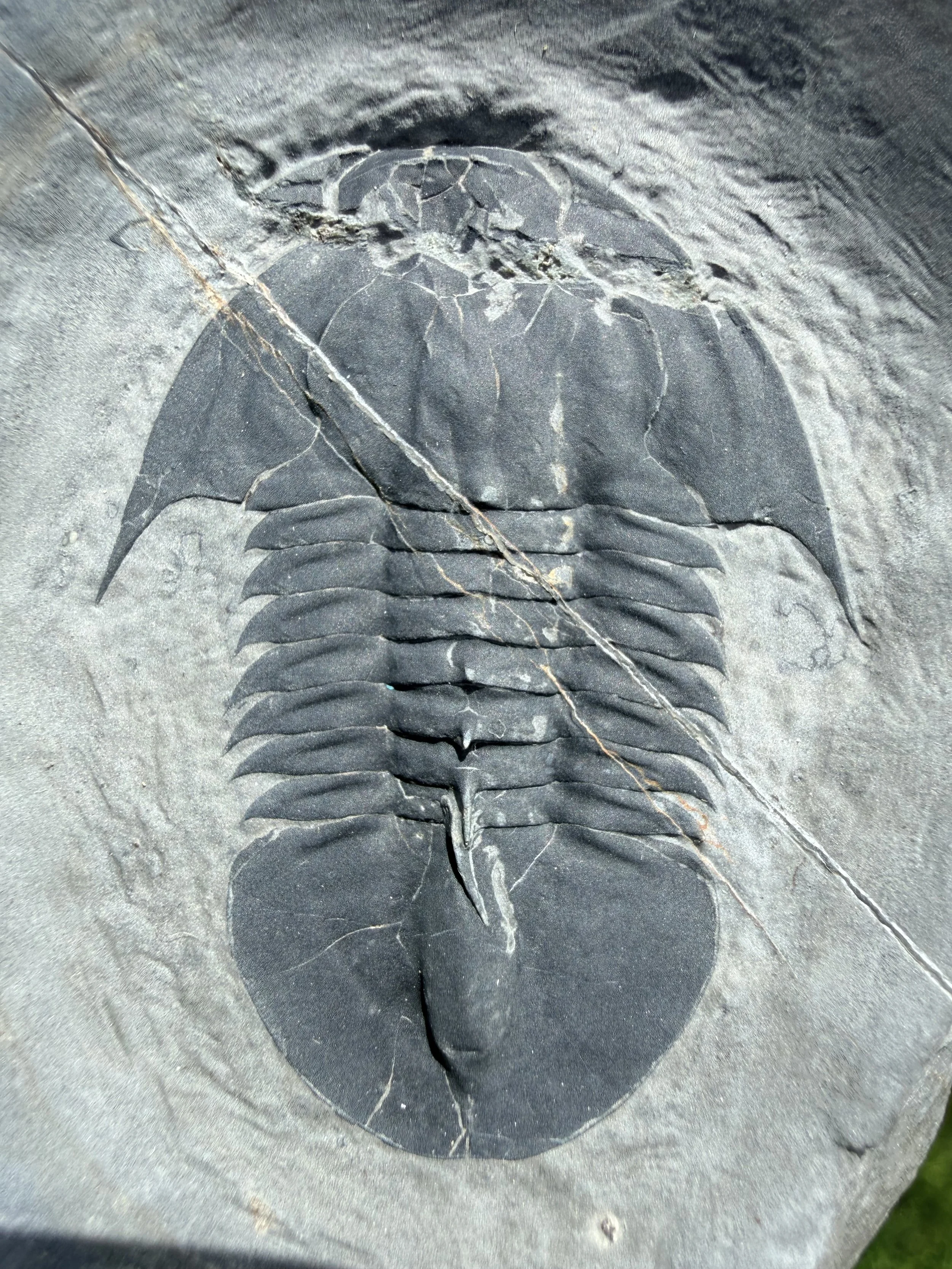
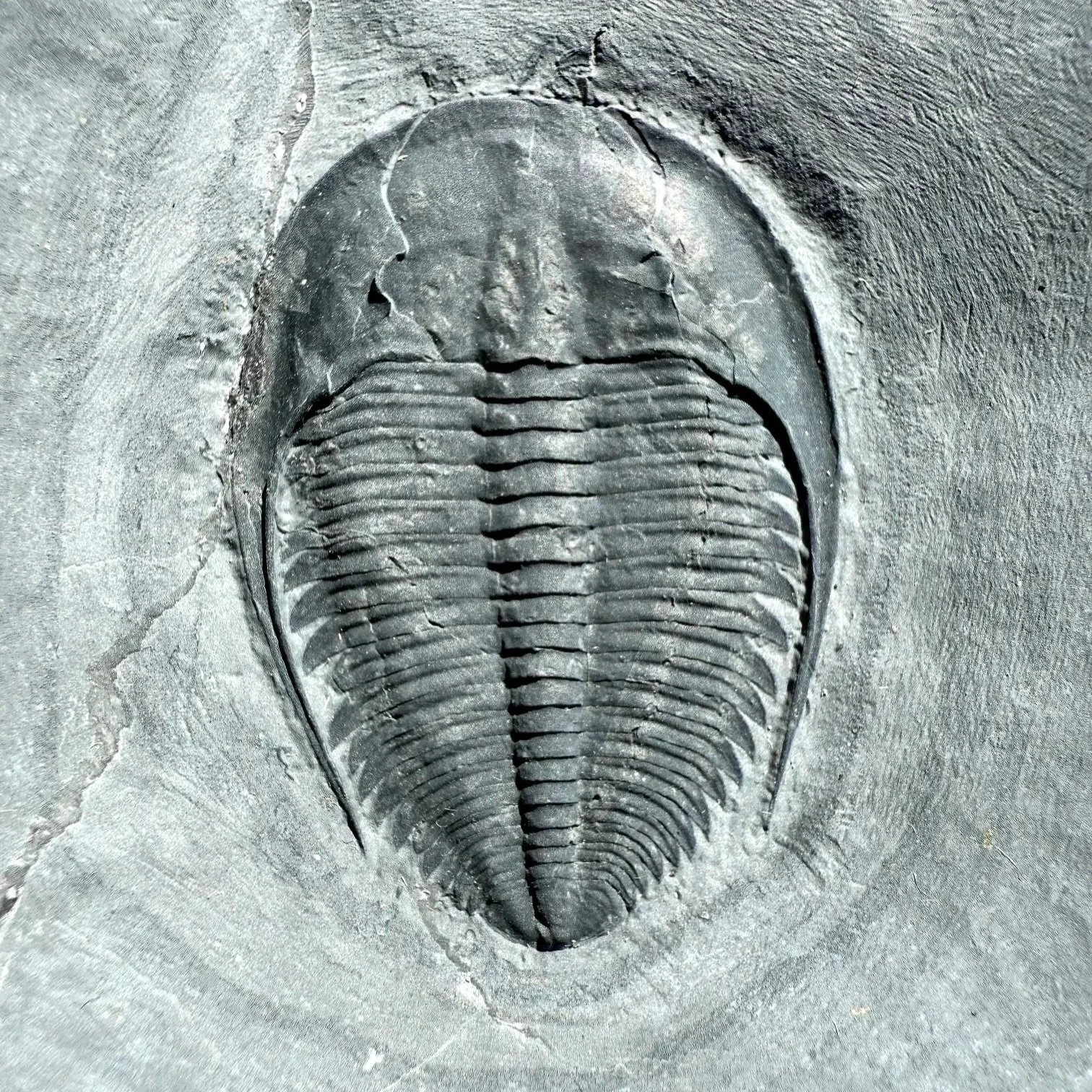
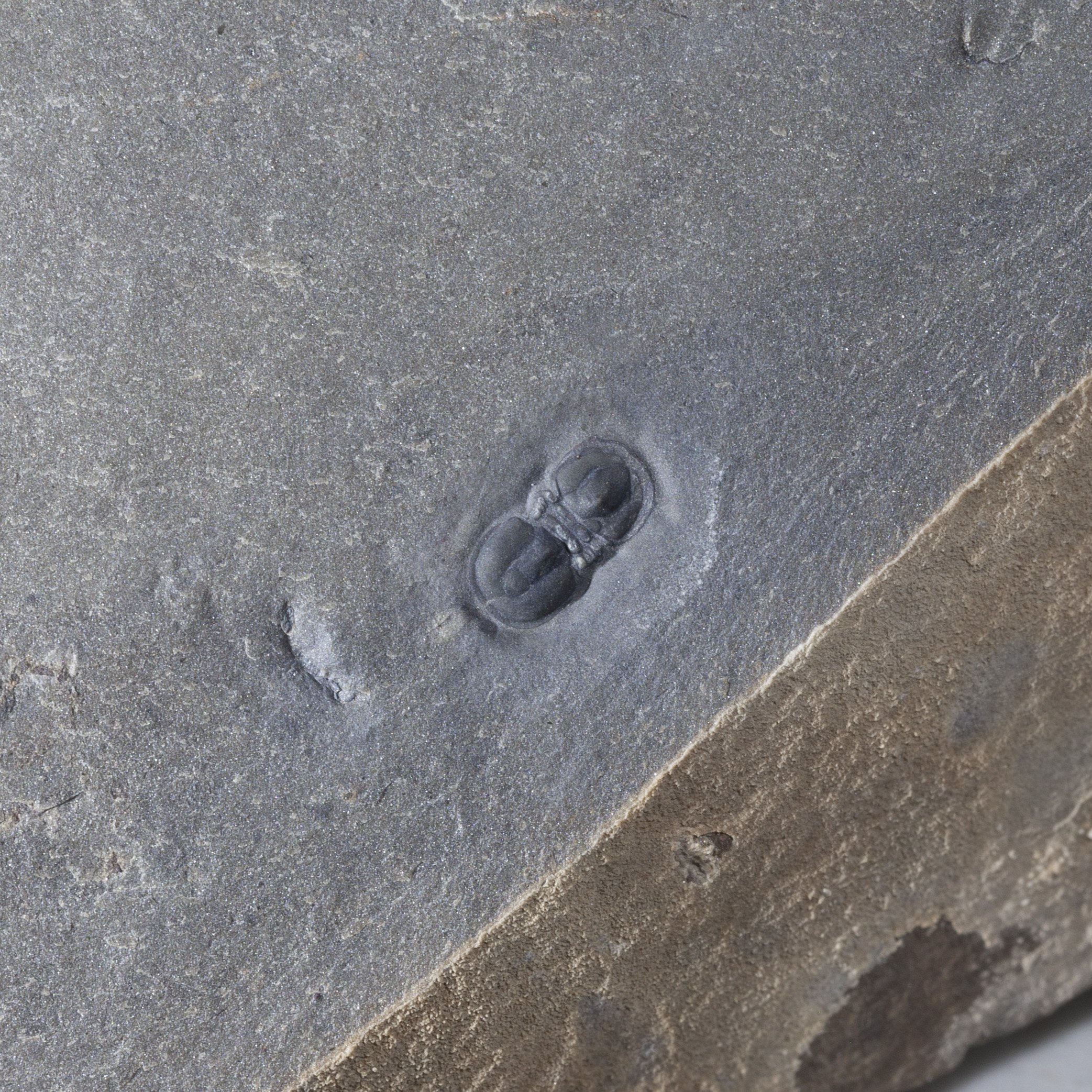
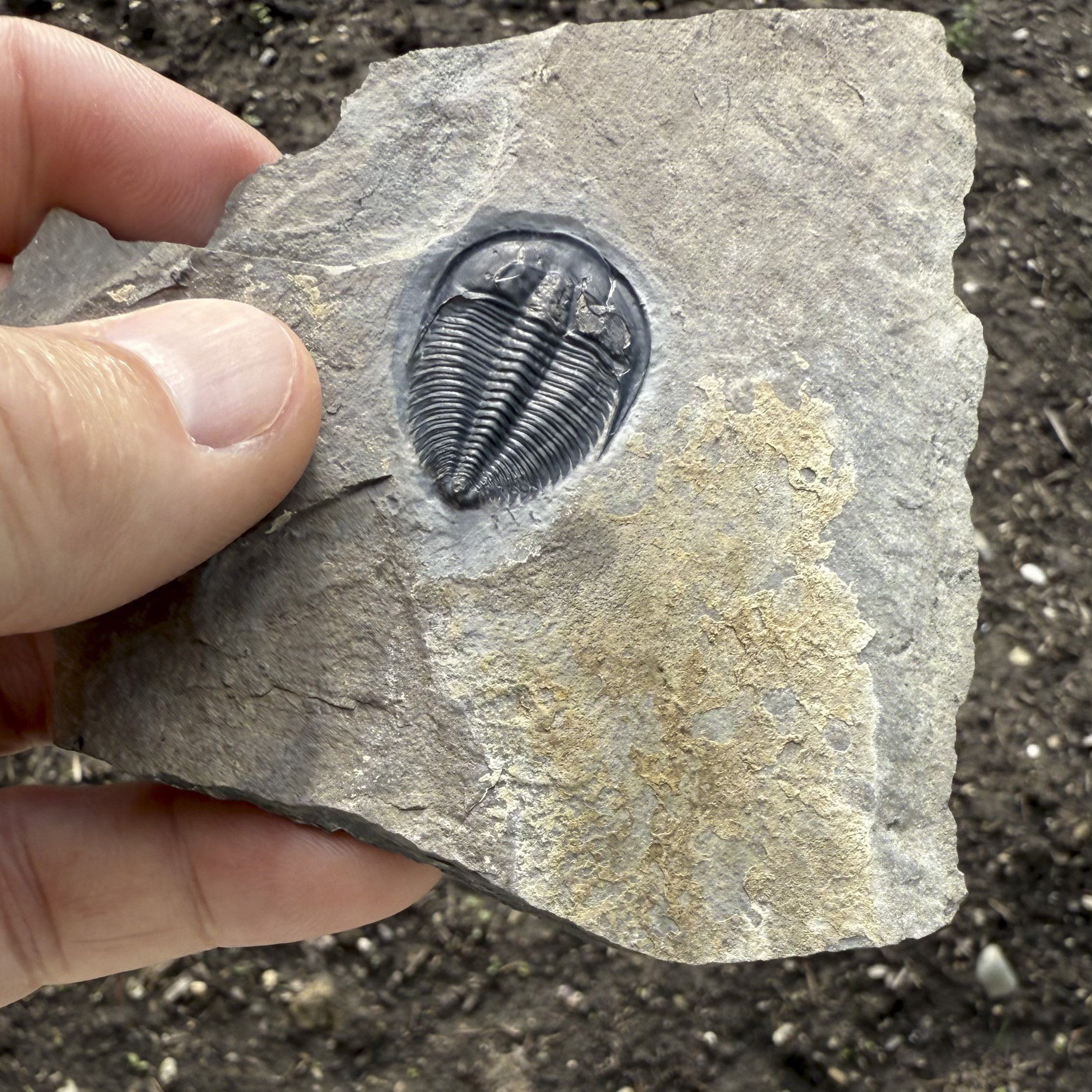
Amecephalus laticaudum from the Middle Cambrian, Spence Shale, Wellsvilles Mtns, Box Elder Co., Utah.
A very rare and complete trilobite.
Full dimensions are listed below.