
 Image 1 of 9
 Image 2 of 9
 Image 3 of 9
 Image 4 of 9
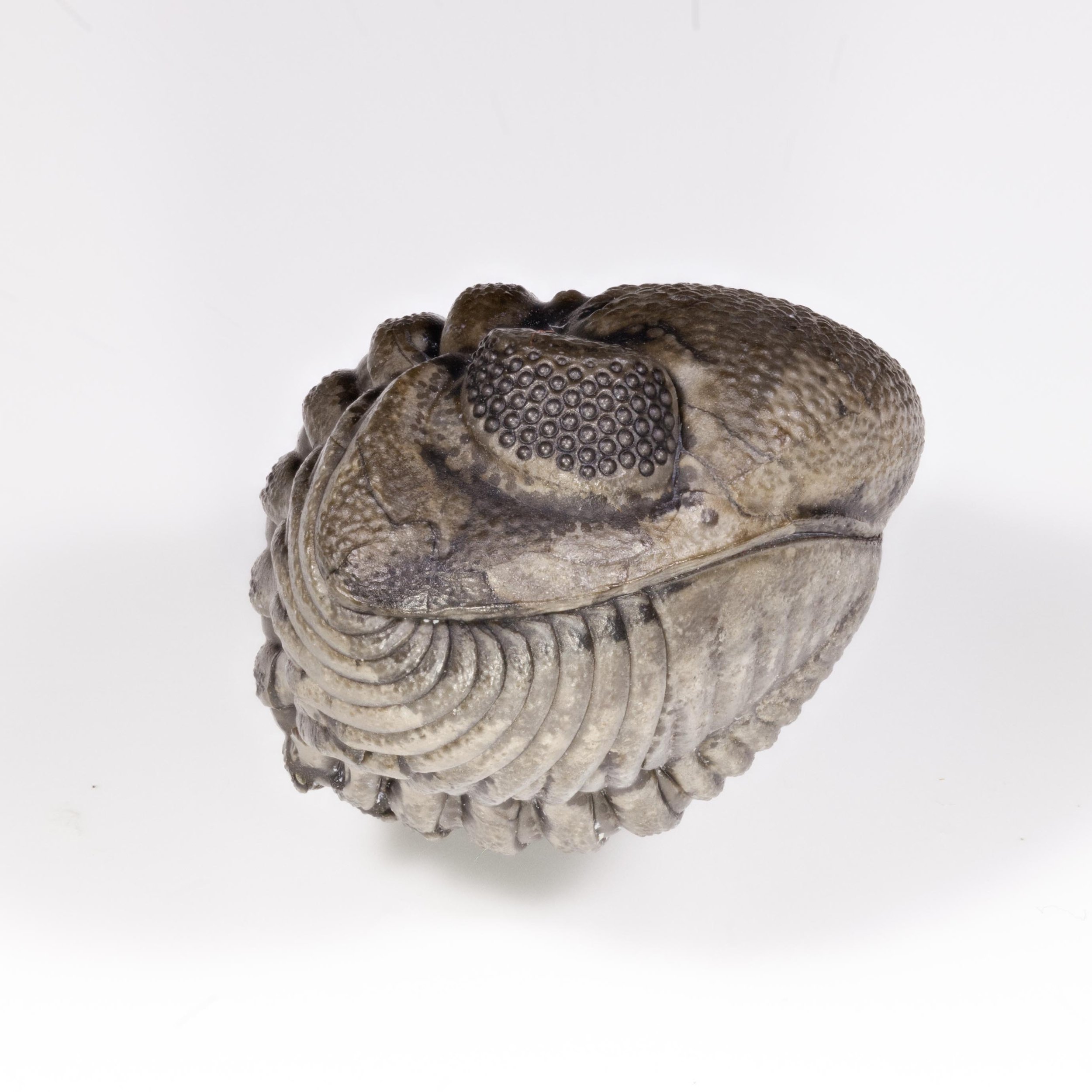 Image 5 of 9
 Image 6 of 9
 Image 7 of 9
 Image 8 of 9
 Image 9 of 9

Additional Information
Phacops / Eldredgeops
Eldredgeops is a recently introduced genus (1990), replacing Phacops as the name for the common North American Devonian Phacopid trilobite. The change was necessary to distinguish between morphological differences observed in Phacopid trilobites on the African and European edge of the Rheic Ocean and those on the N. American edge.
Calymmene latifrons, the first Phacopid trilobite to be described, was found in Gerolstein, Germany. Unfortunately the holotype was lost and topotype material was used until a neotype specimen was designated in 2006. The neotype was designated Phacops latifrons and is now the definitive specimen for the description of Phacops. When a change in name was suggested, it was the N. American trilobite that received the new genus name as the European trilobite had been described first.
For a really good understanding of the differences between the 2 genera, follow the link at the bottom of this page. The post is on The Fossil Forum and is by Gerry Kloc, and dated June 8, 2014.
Eldredgeops rana used a type of enrollment referred to as Sphaeroidal enrollment, where each of the thoracic segments contribute equally to the process of interlocking the cephalon and pygidium, forming a ball. Many trilobites had the ability to enroll using specialized morphological features called "coaptative structures". These allowed for the complementary interlocking of opposing surfaces.
References:
Enrollment by Dr. Sam ʻOhu Gon III
Phacops Vs Eldredgeops
Colour Patterns in Devonian Trilobites
Ancient Trilobites Featured Spotted Camouflage
Trilobite Enrollment
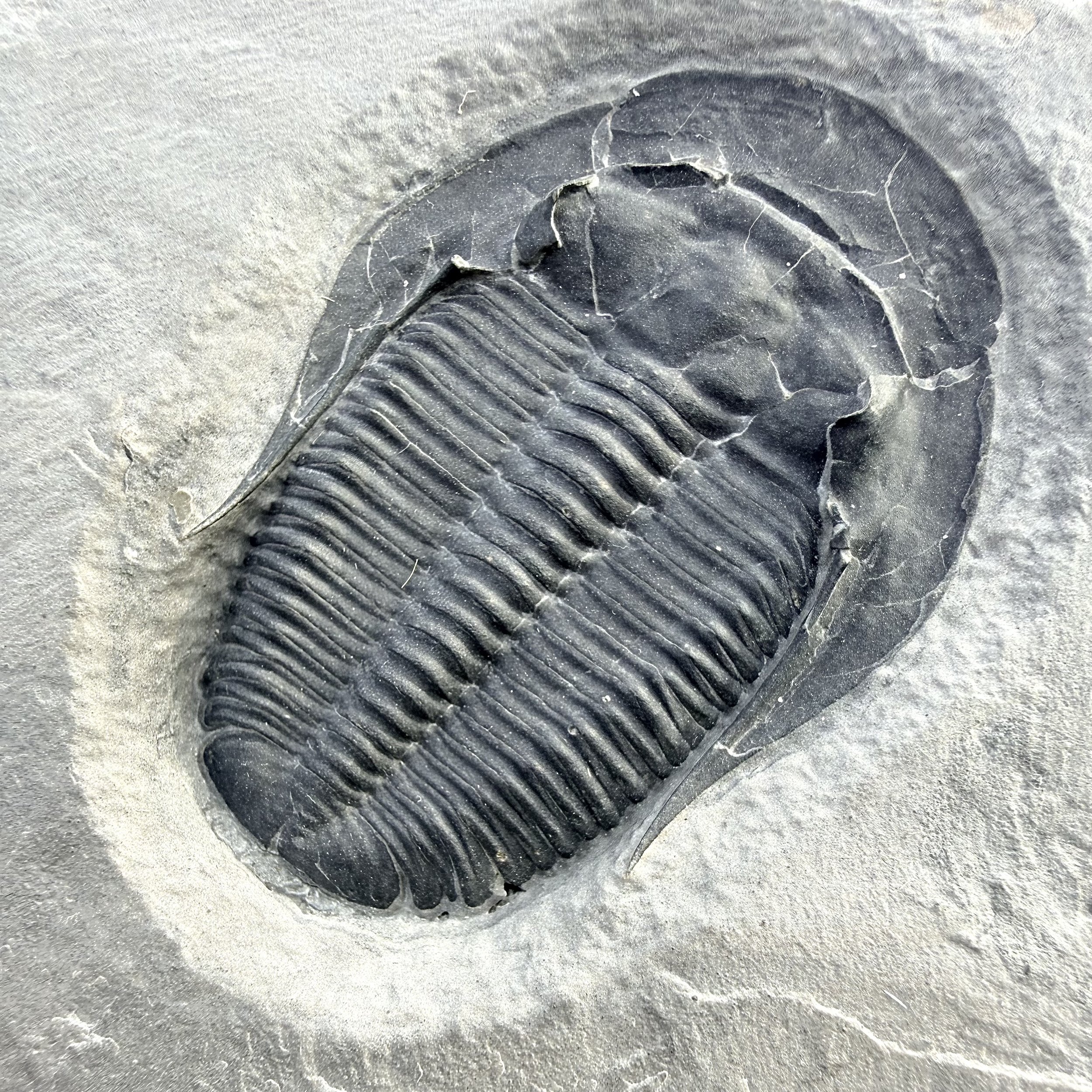
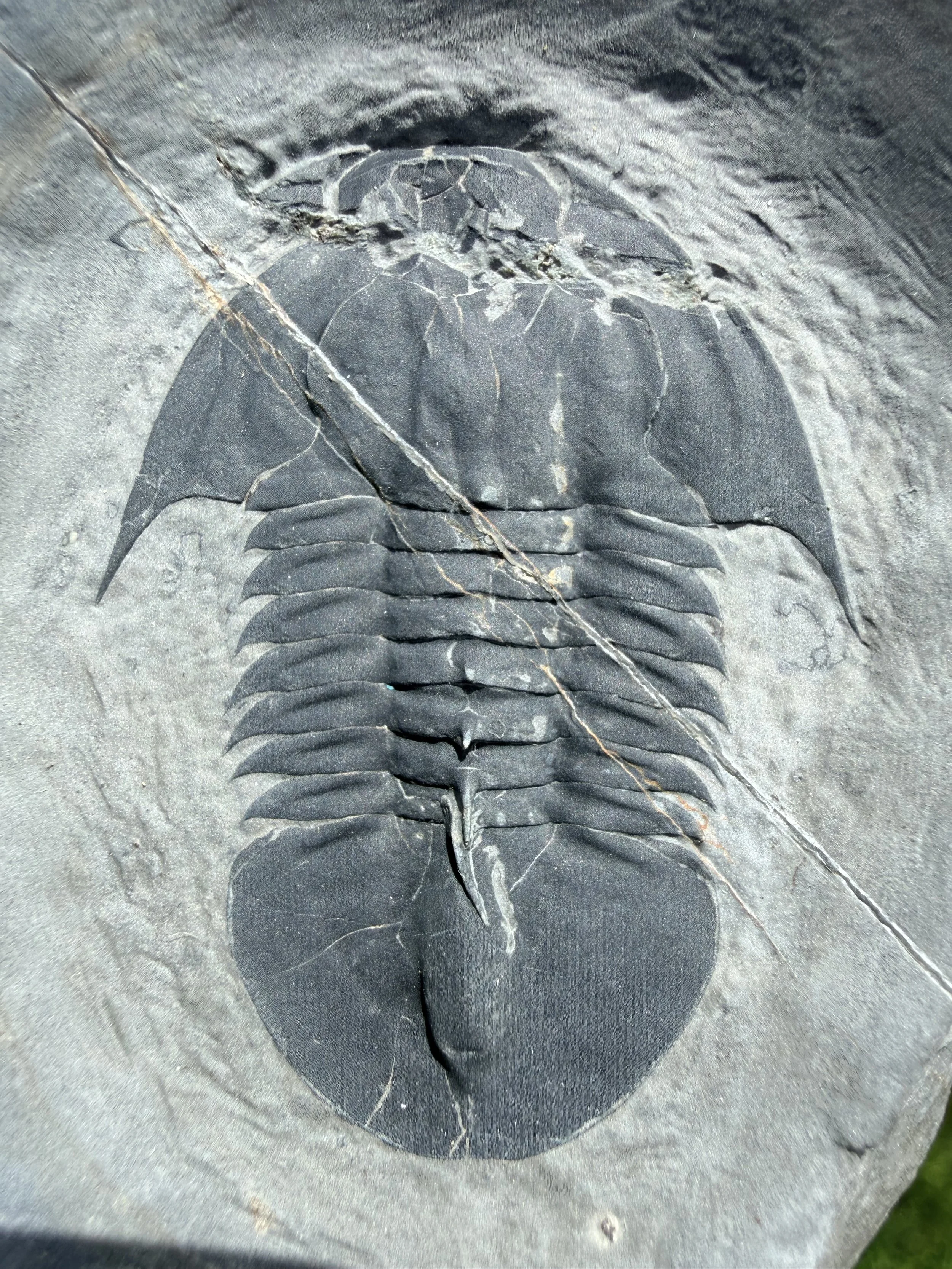
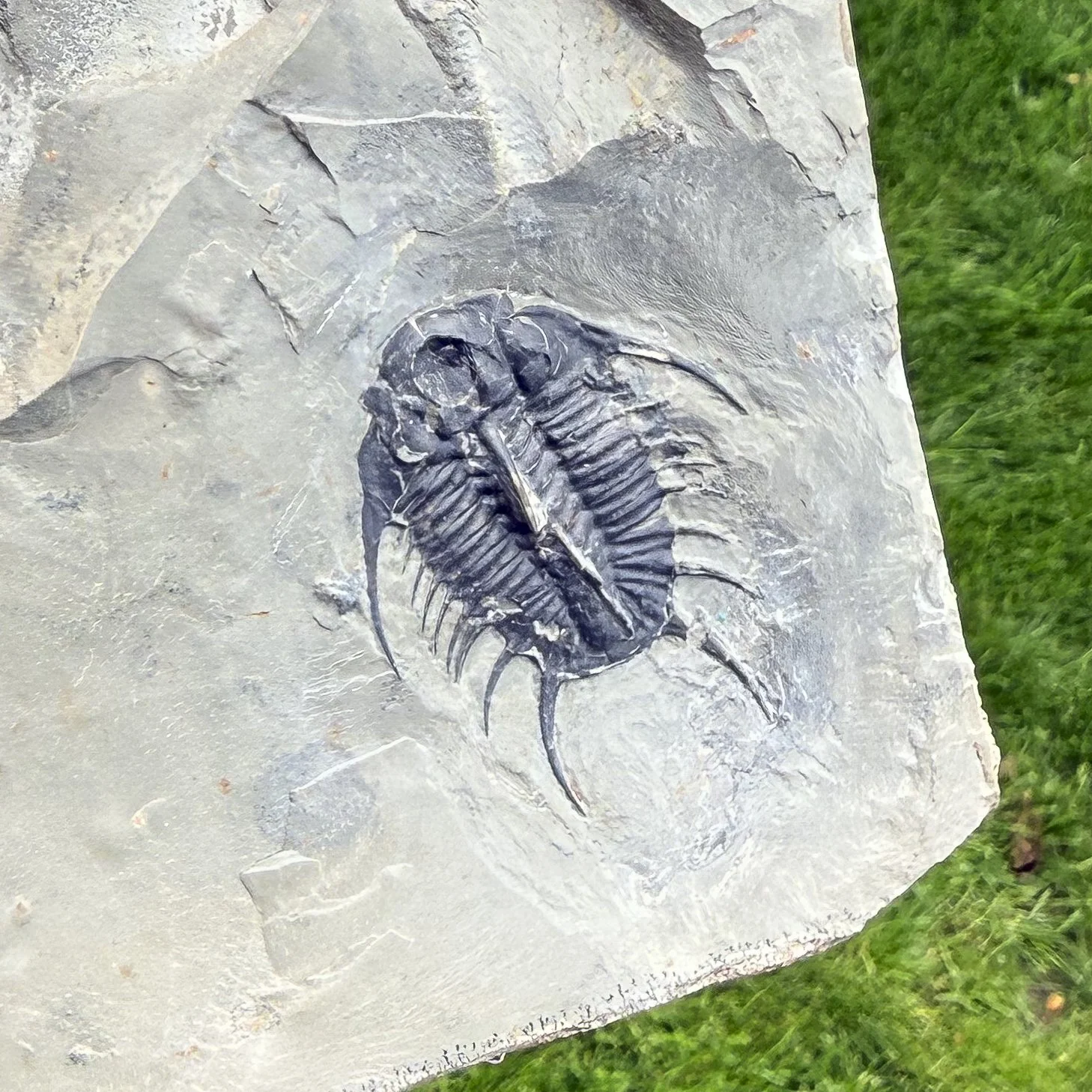
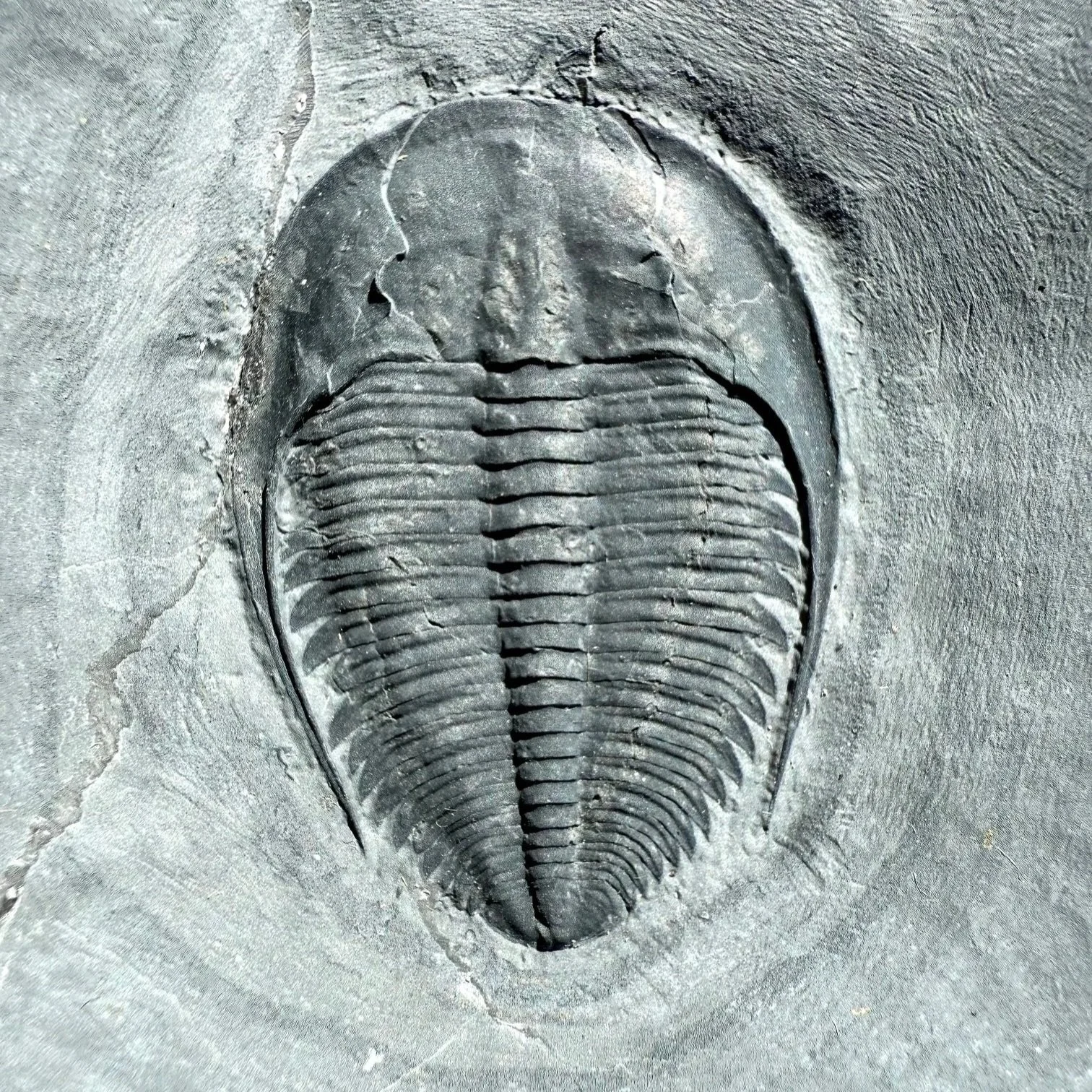
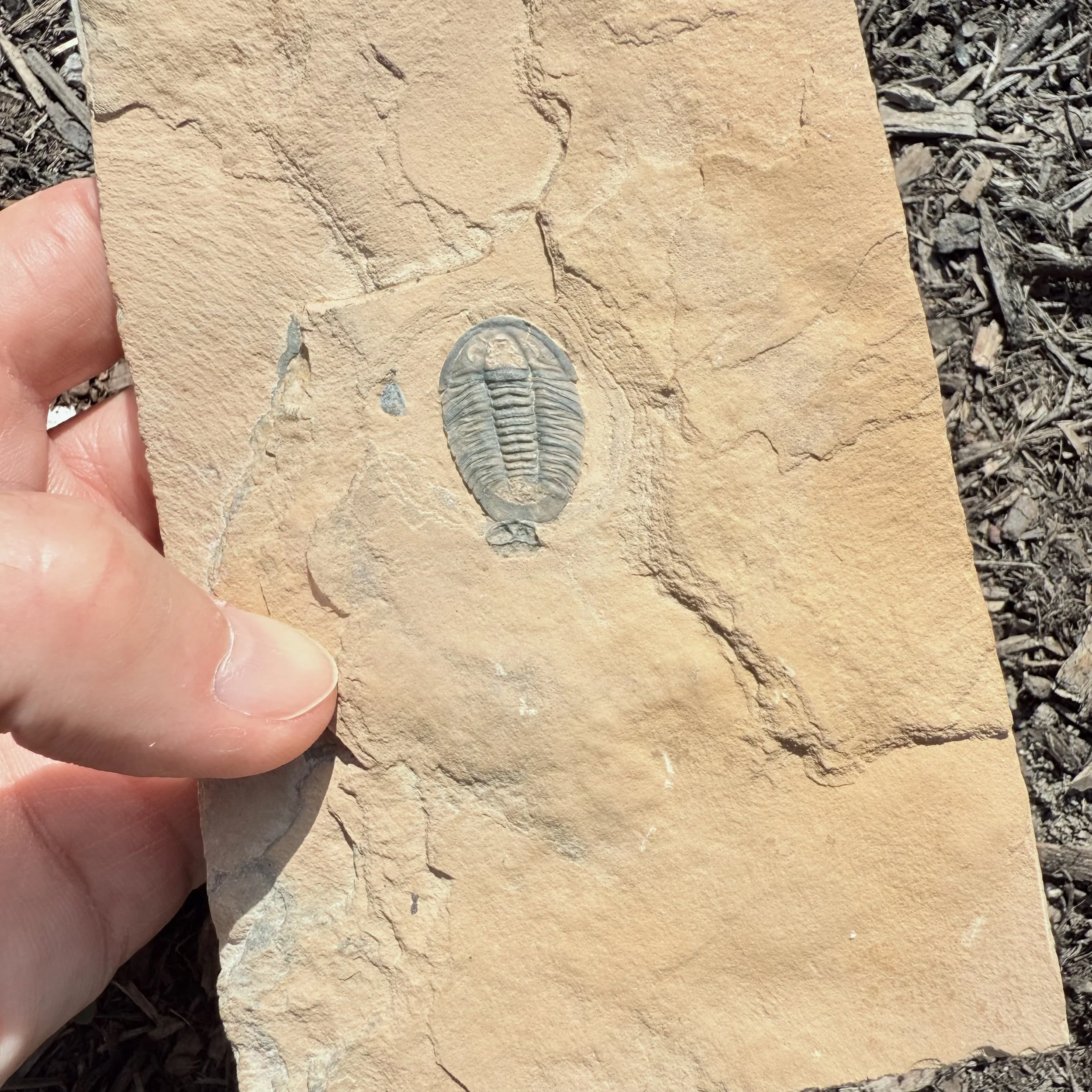
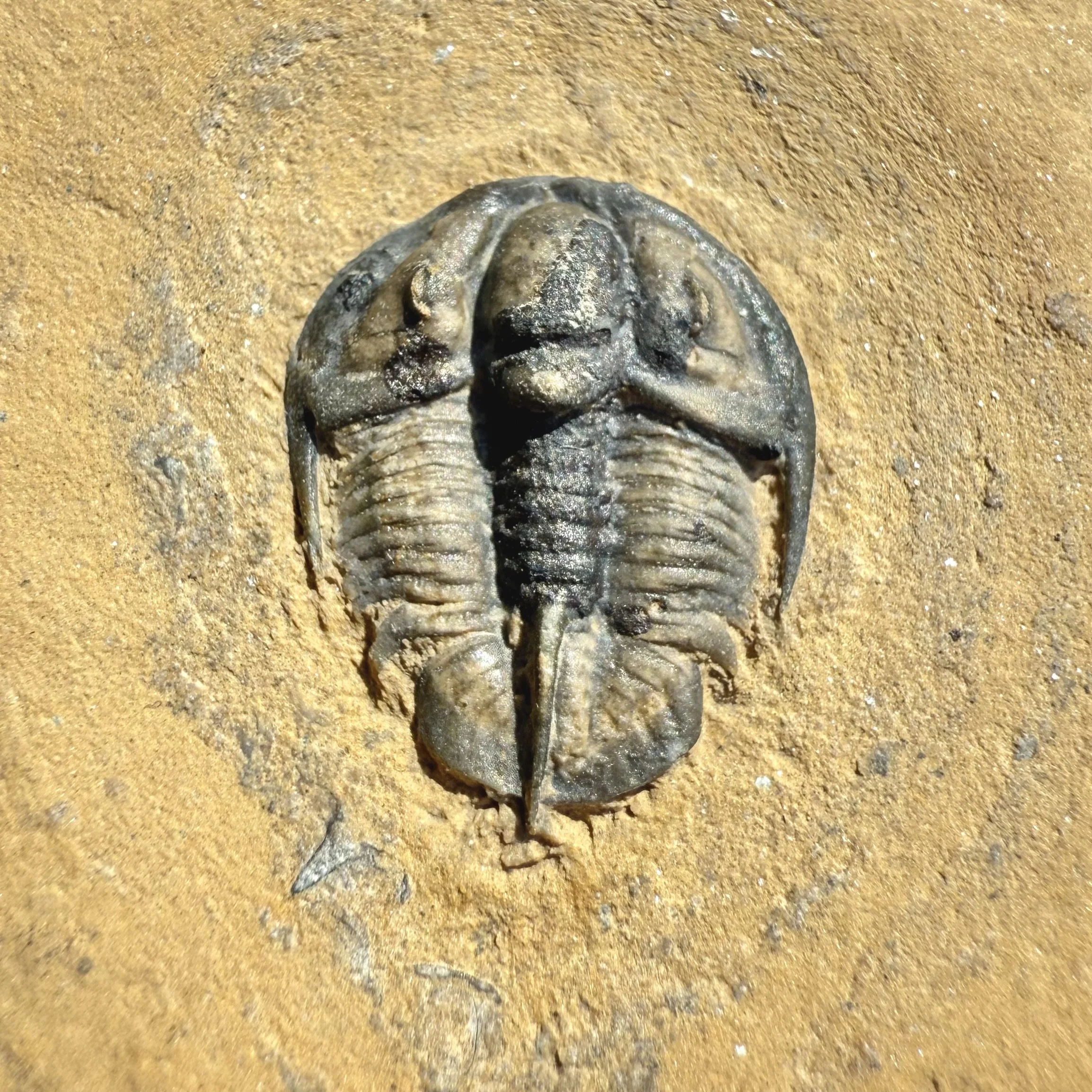


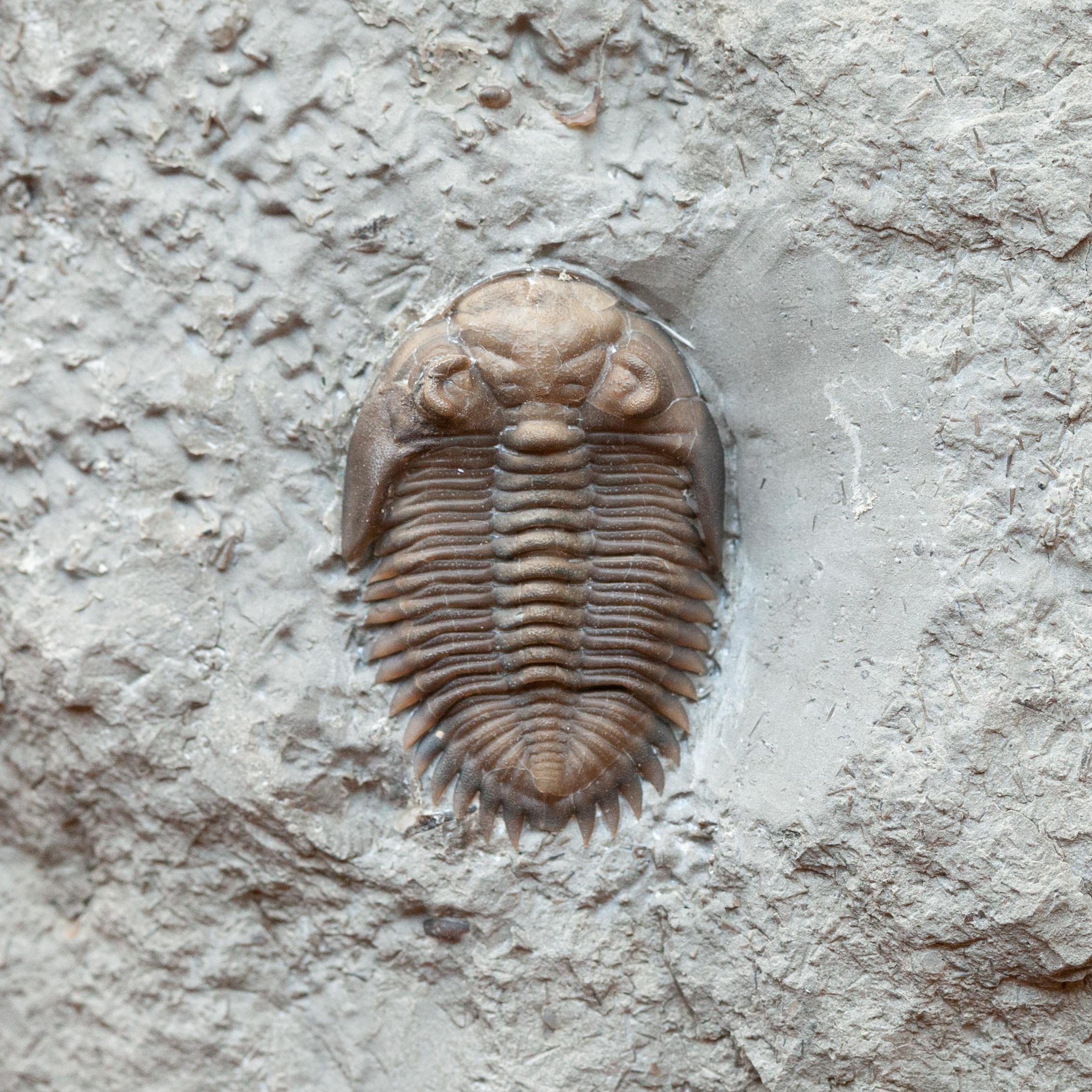
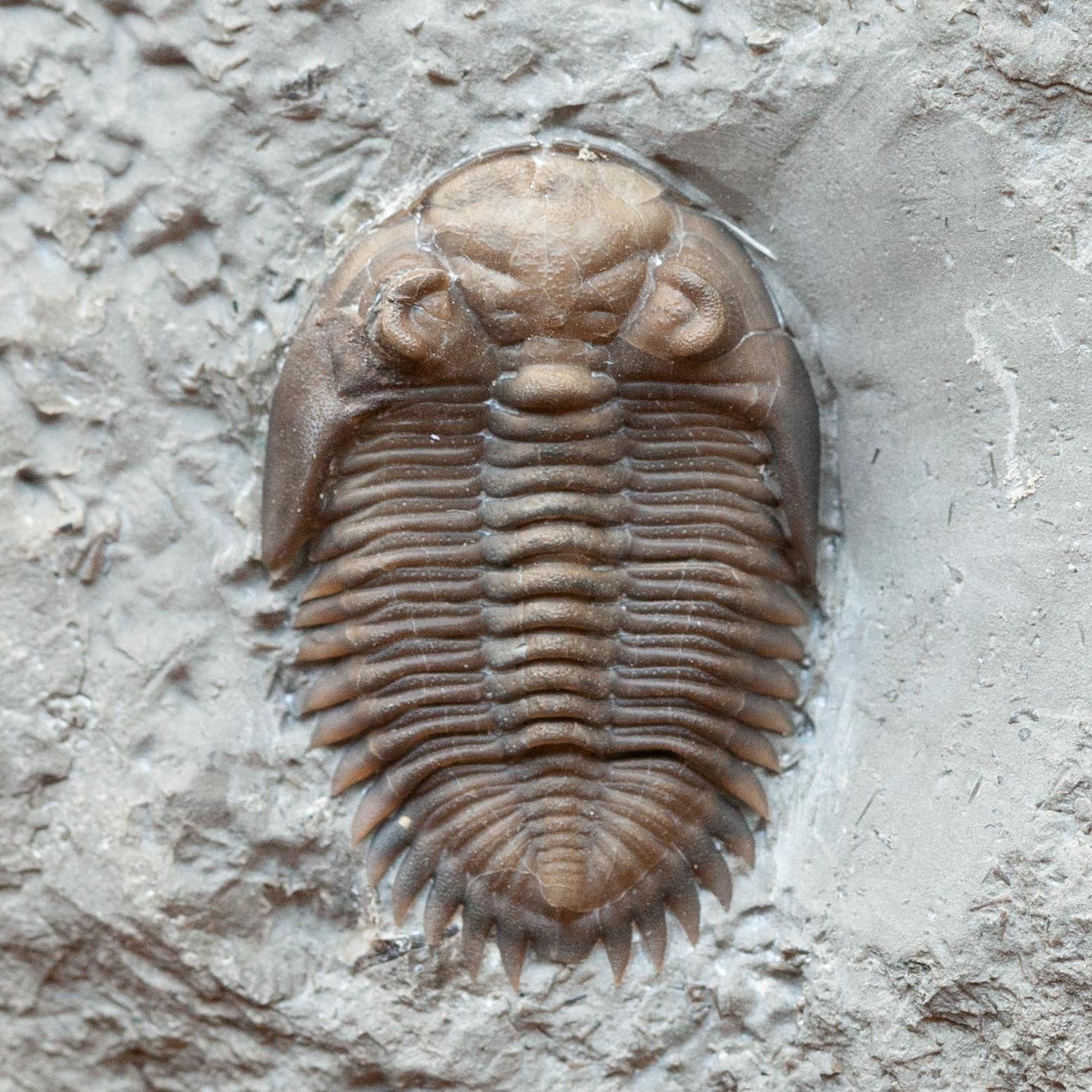
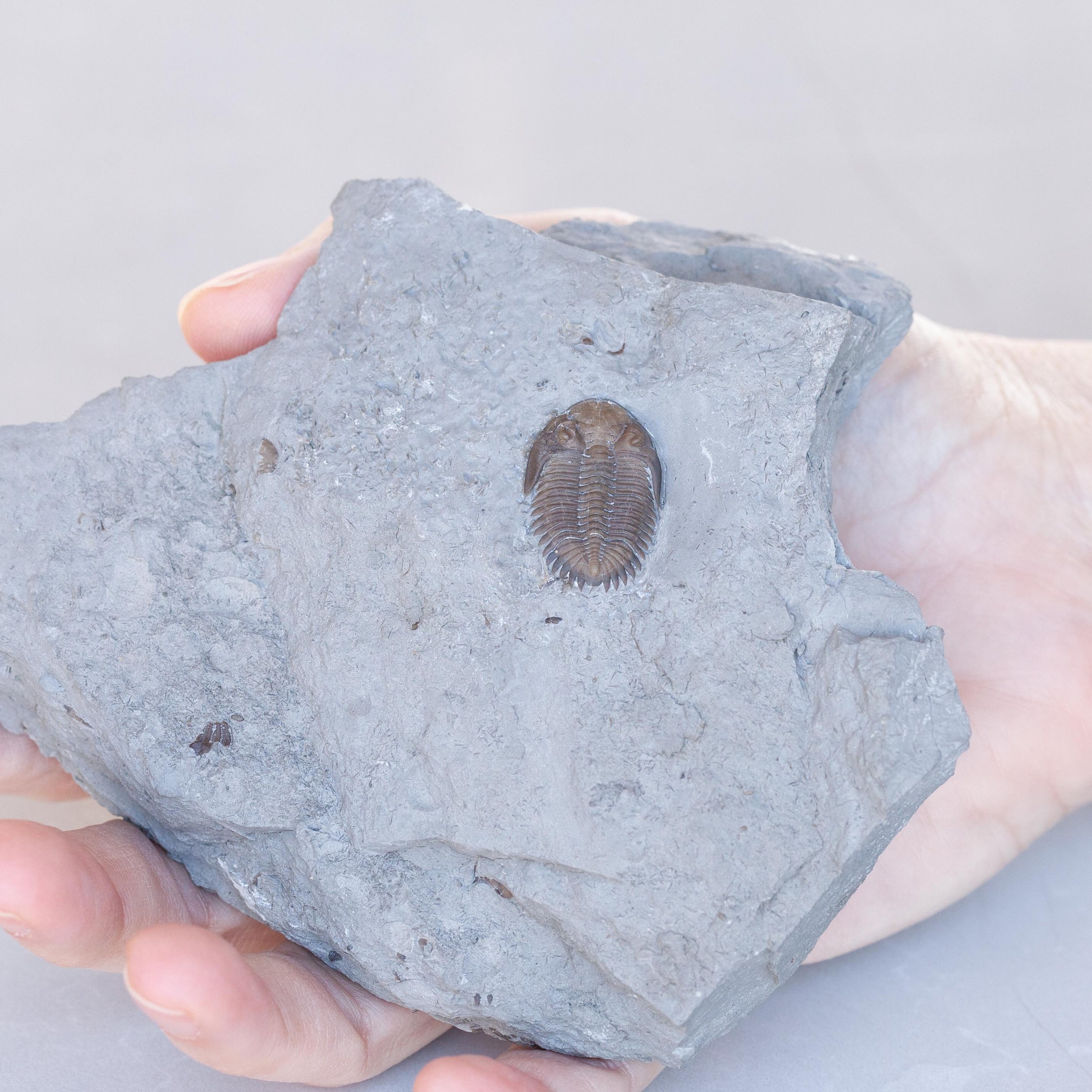
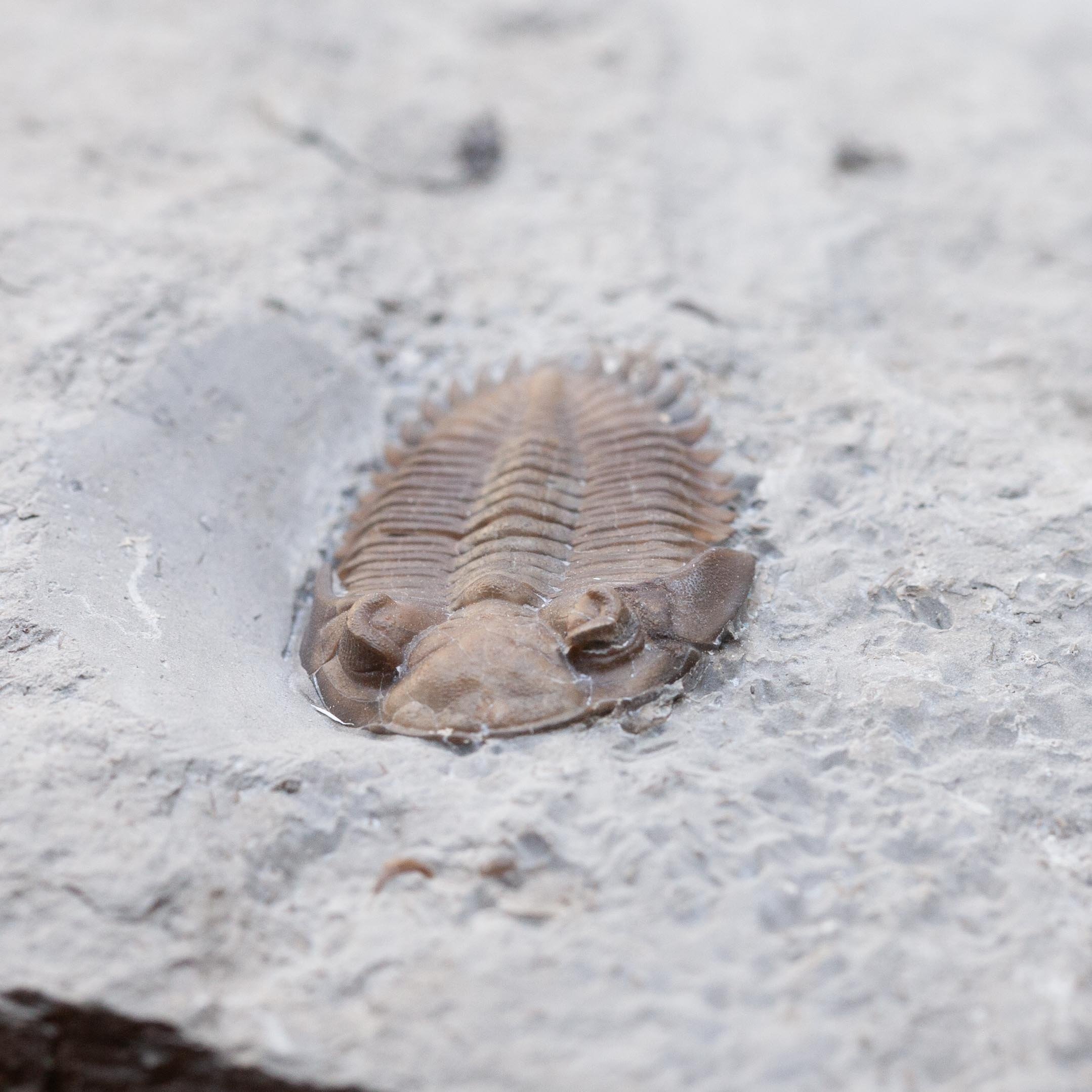
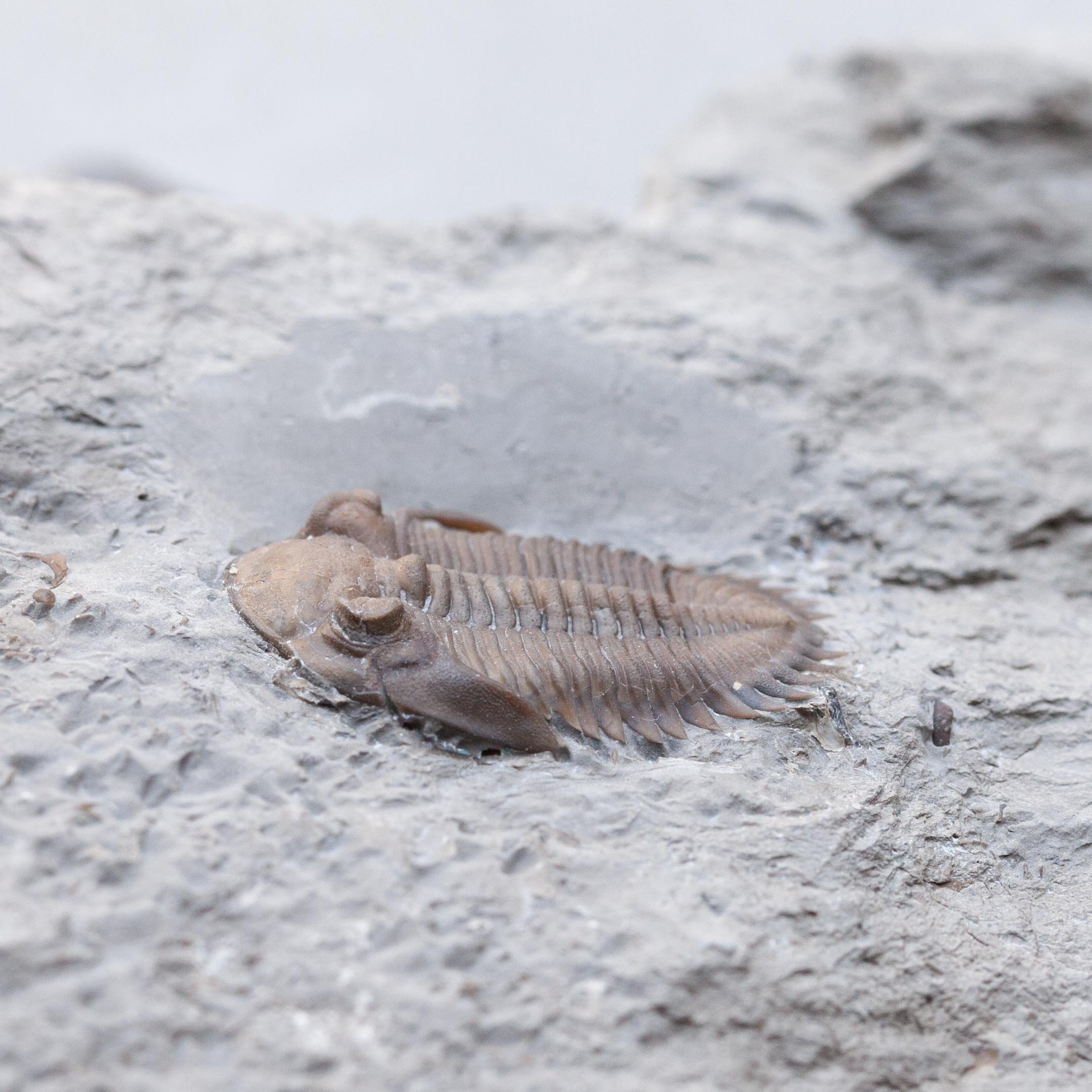
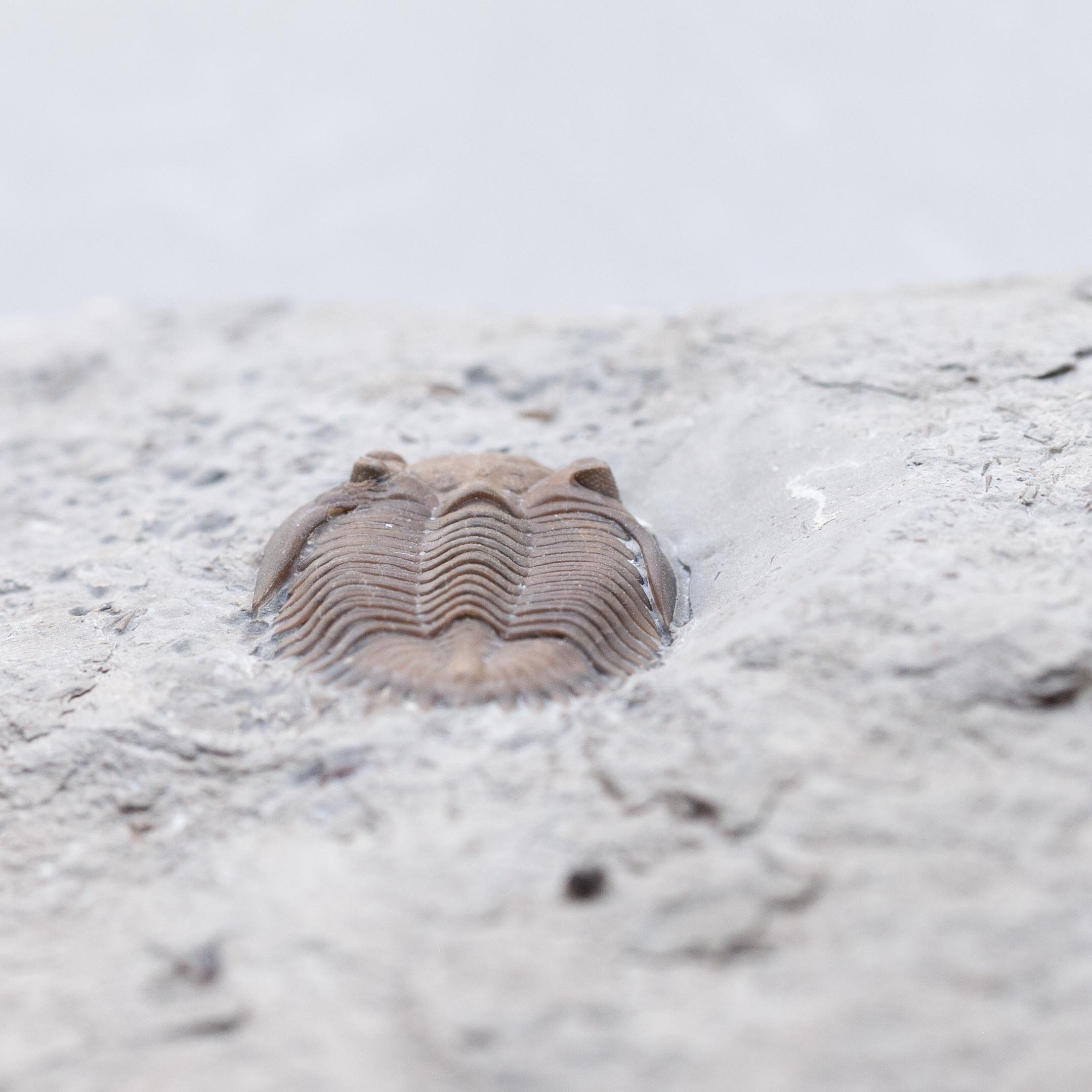


Vendor: fossil soup - ZZ
SKU Number: SQ5388284
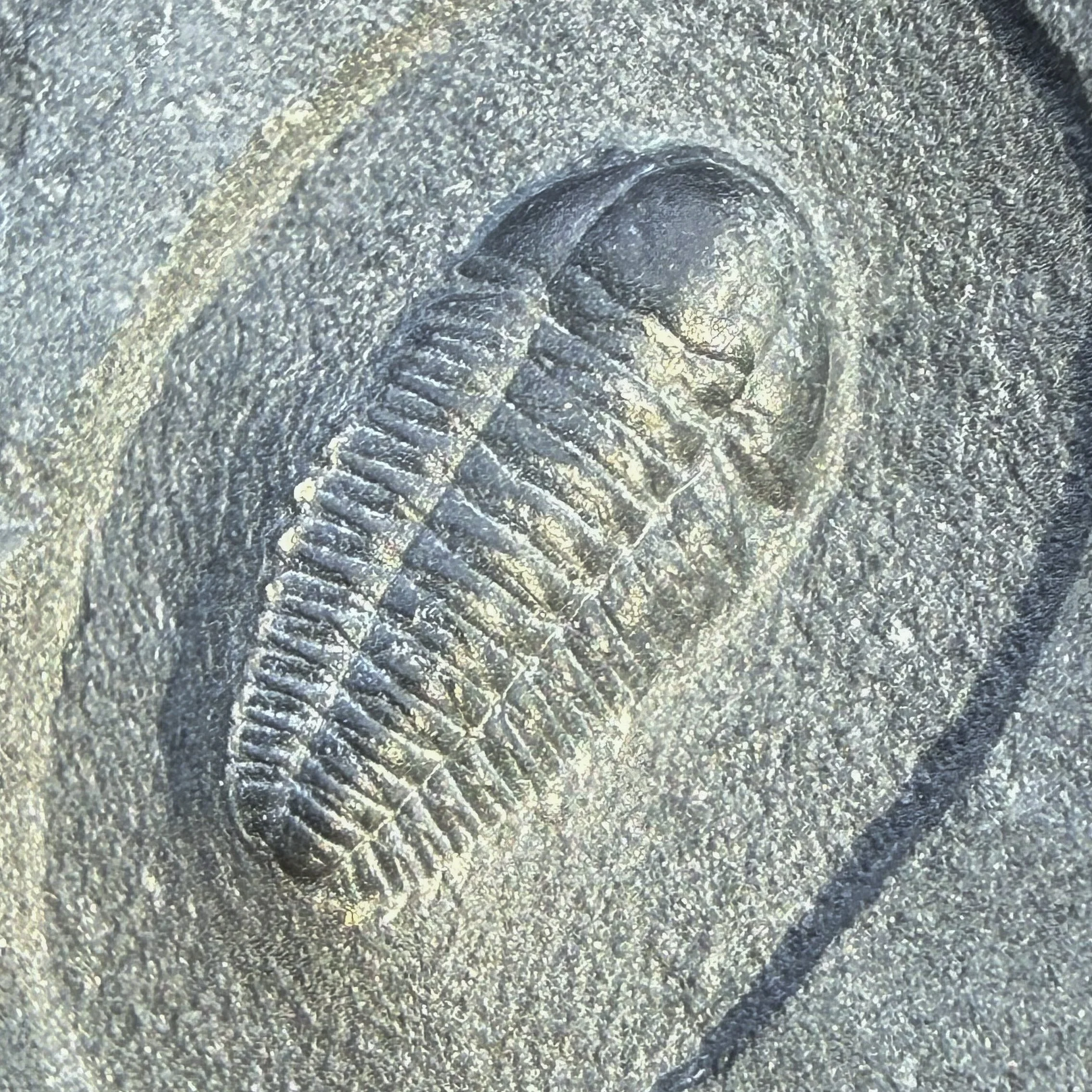
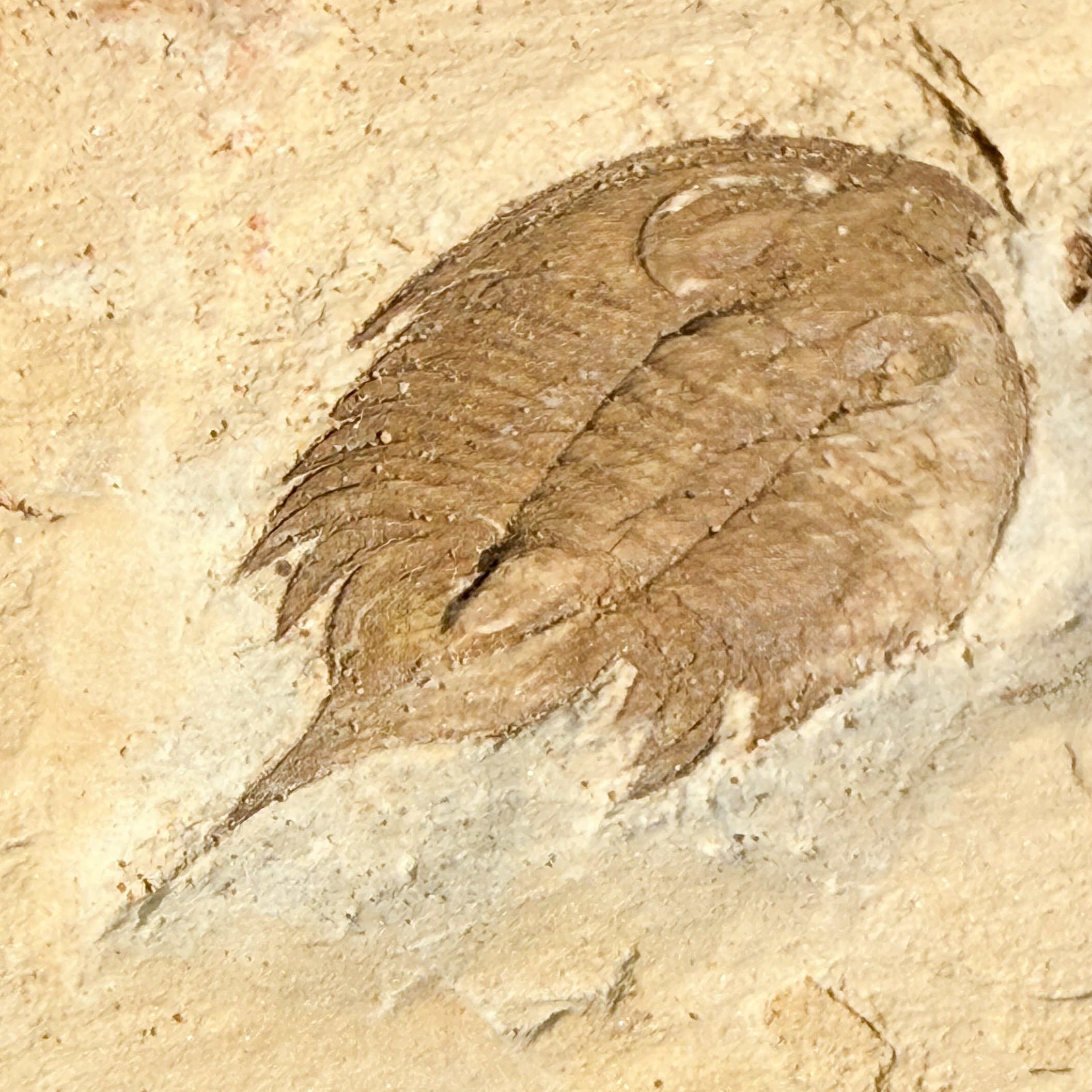
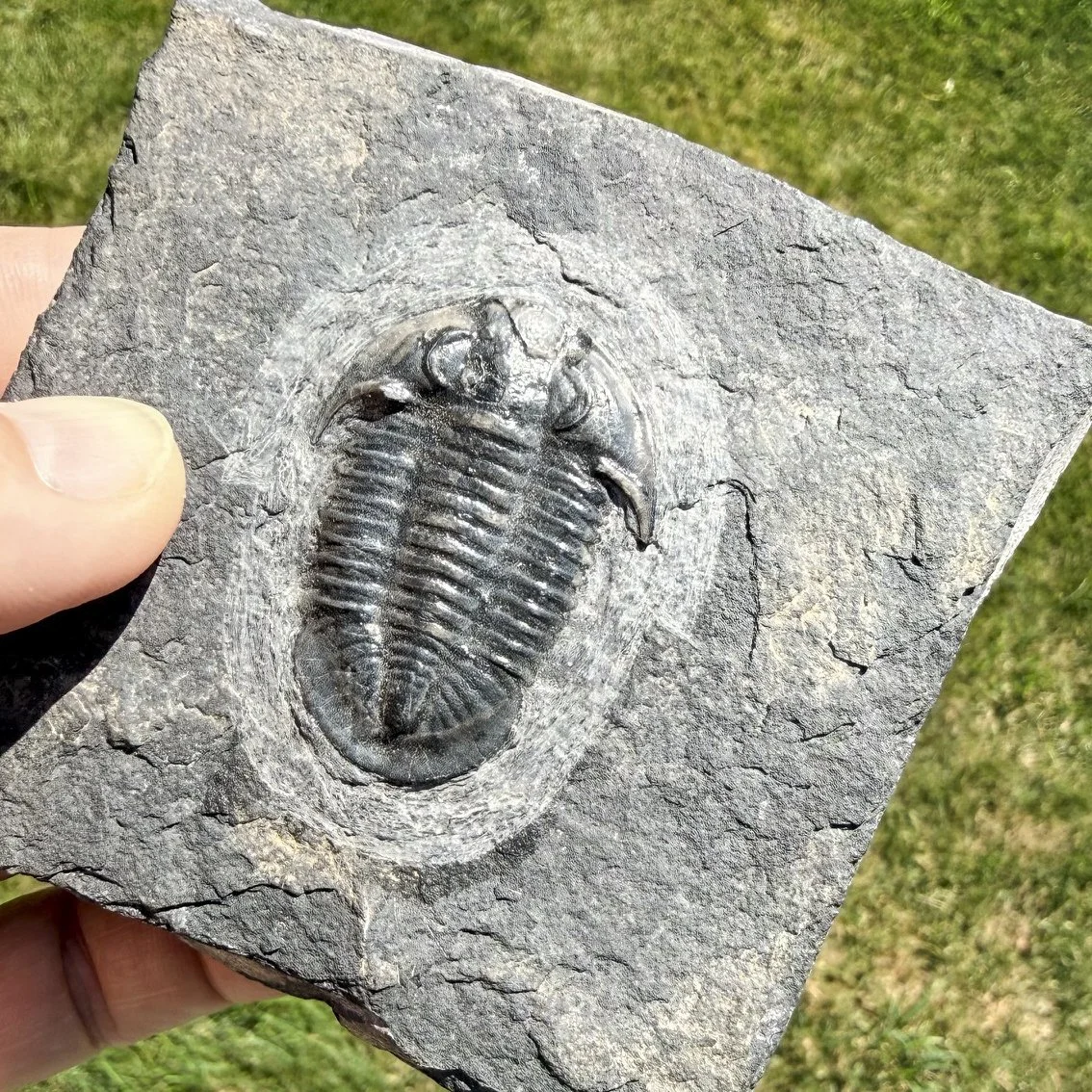
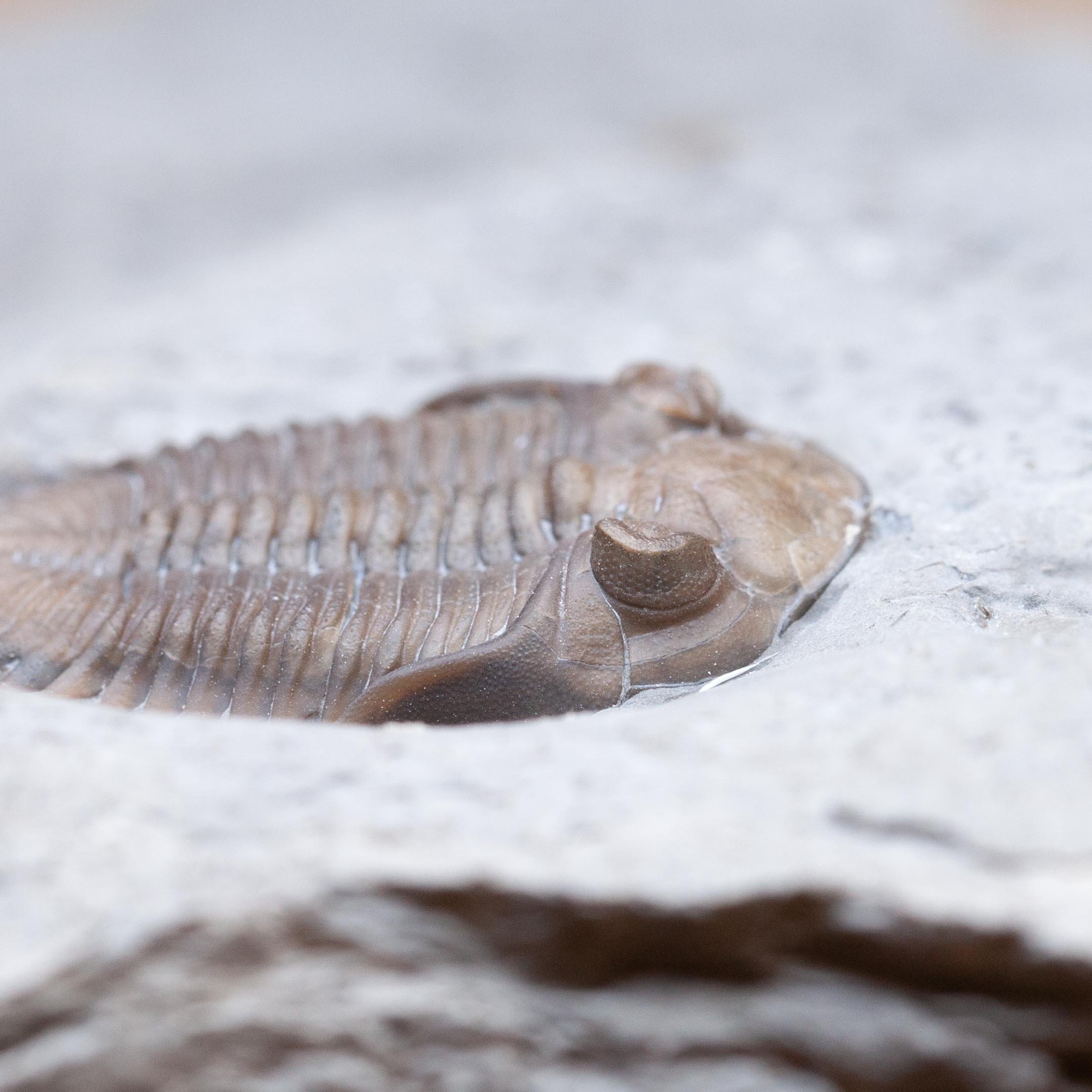
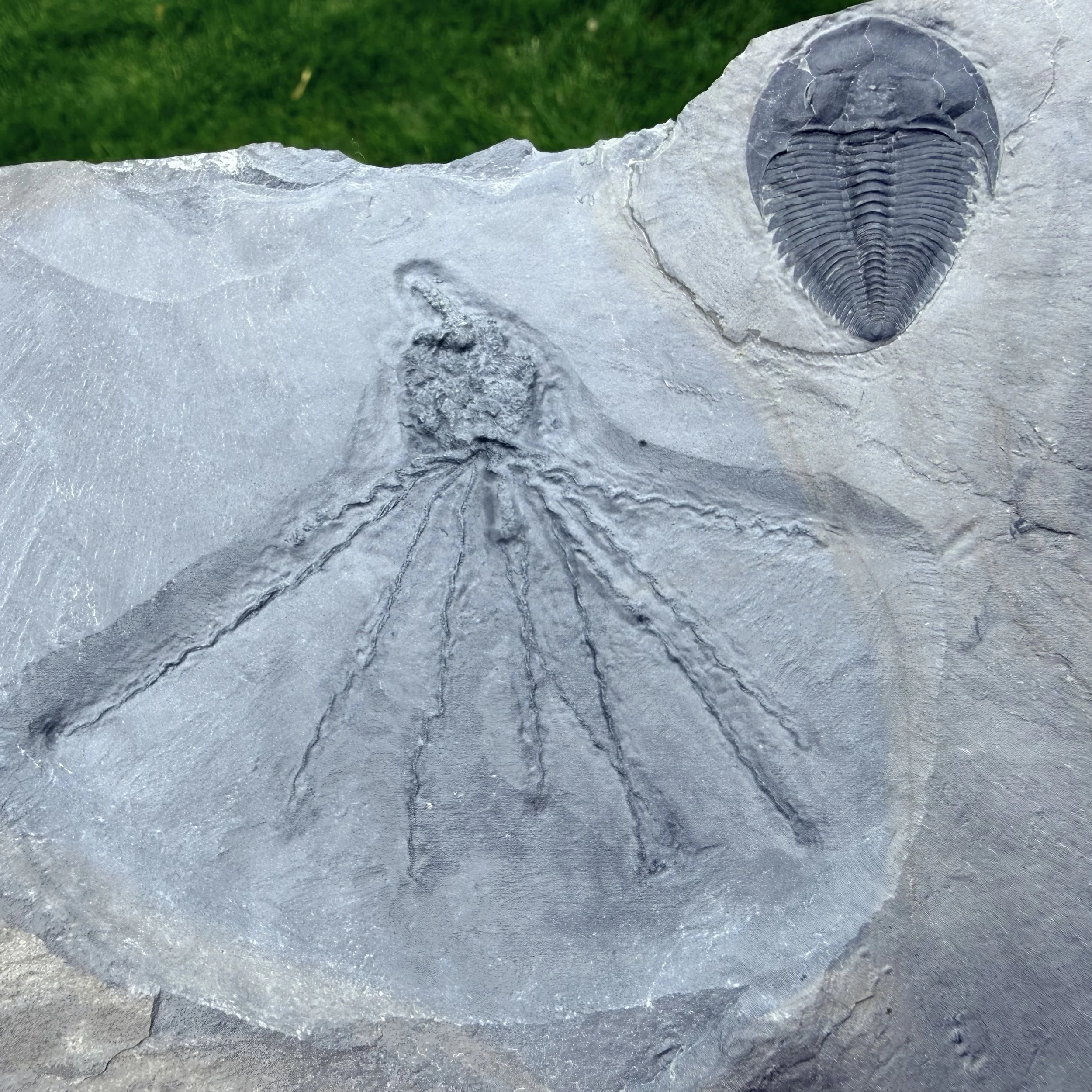
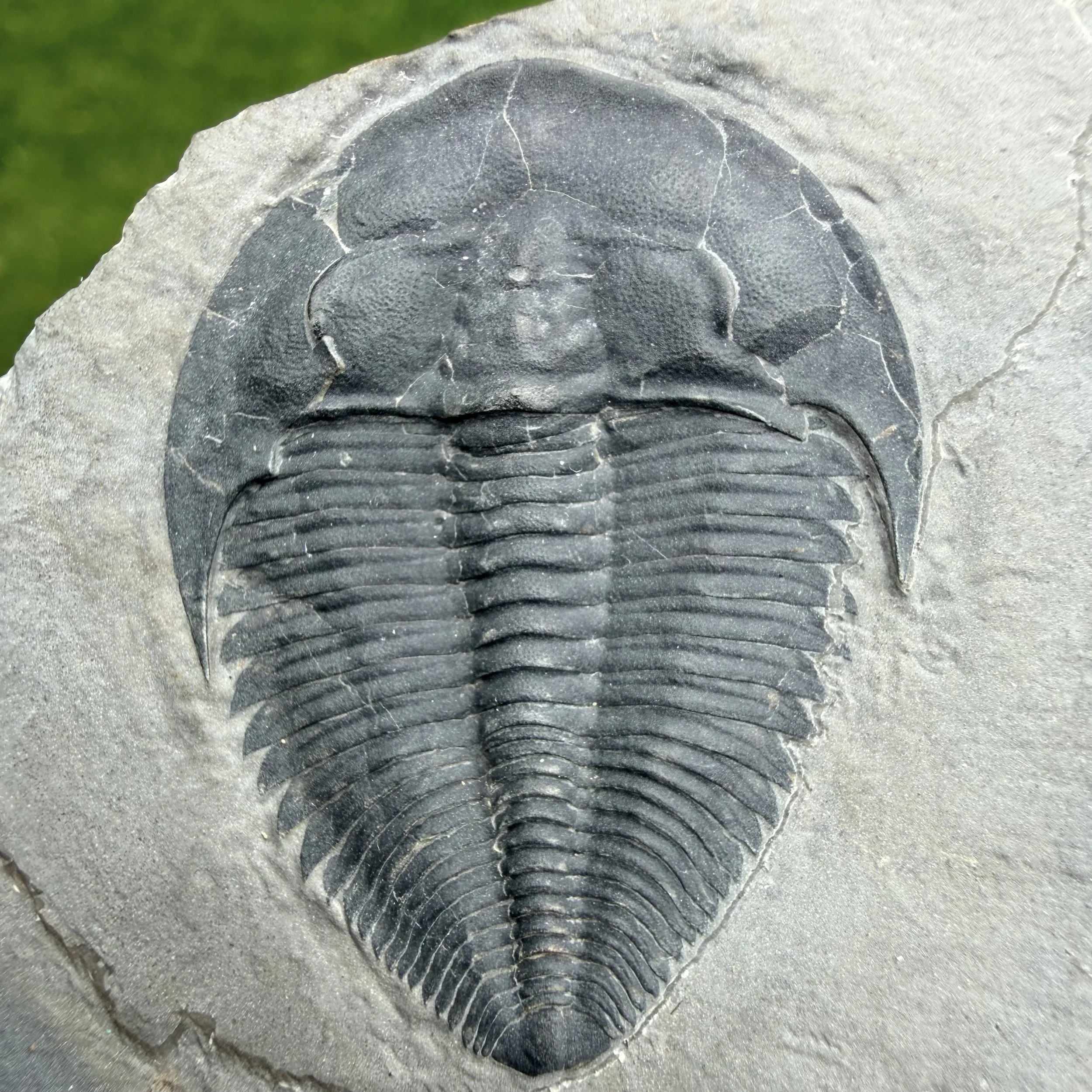
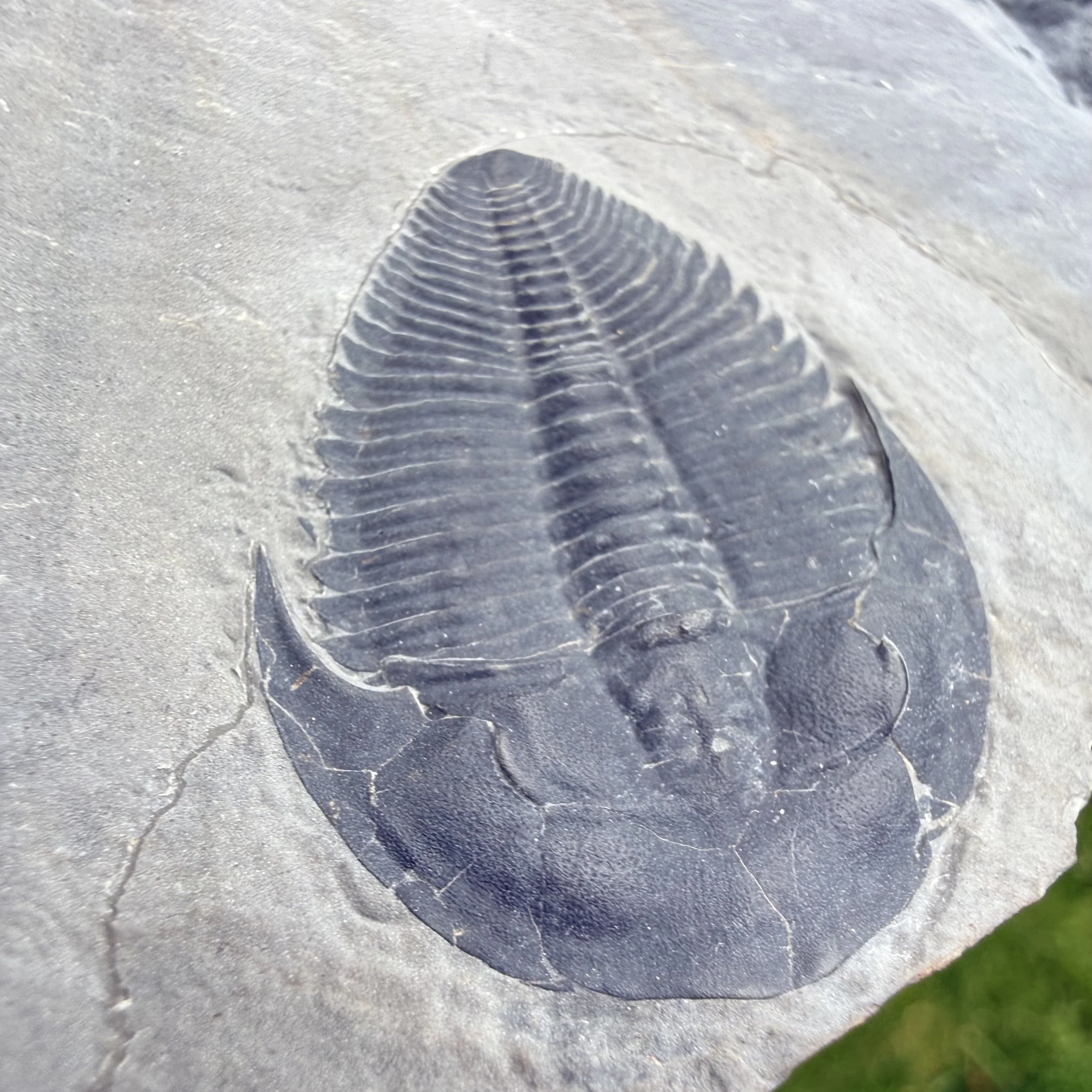
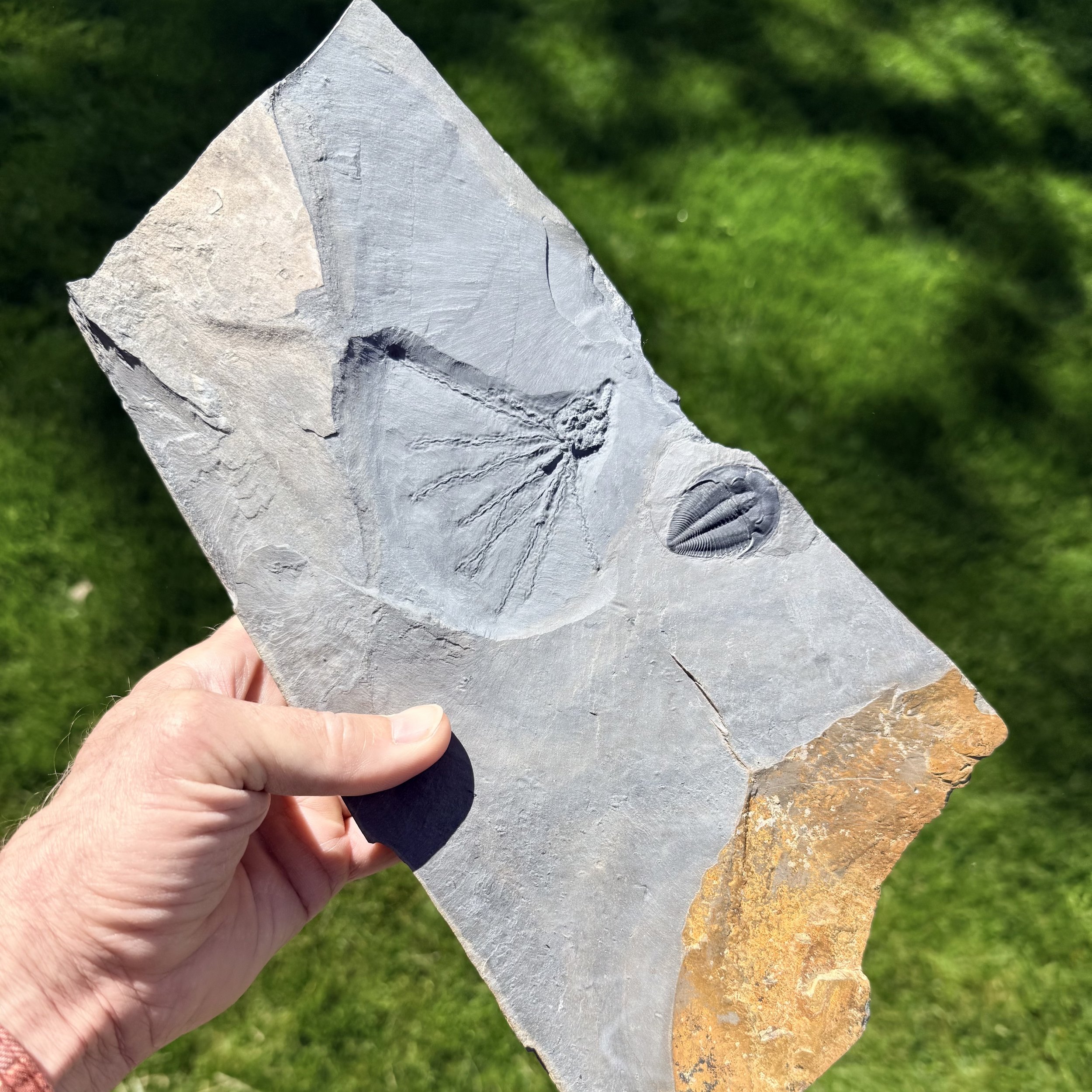
Rhombampyx yii trilobite from the Middle Ordovician, Meitan Formation, Zunyi, Guizhou, China.
The distinct oval/rhomboid dome where the anterior needle spine meets the head is the highly inflated glabella. It is slightly compressed but shows the distinctive bulbous shape unique to raphiophorids.
You can clearly see a thin, straight line pointing straight up from the top of the glabella. This is the base of the median snout spine.
The two elongated cheek spines can be seen on either side of the body. In life, these spines flared outward to stabilize the animal or deter predators, but post-mortem movement or burial compaction has curved it around the cephalon.
Full dimensions are listed below.