Vendor: Fossil Soup
SKU Number: SQ1266618
An exceptional example of Macrocrinus mundulus, Edwardsville Formation, Mississippian, Carboniferous, Crawsfordsville, Montgomery County, Indiana, USA.
This is a museum quality example for the truly discerning collector. The preservation, completeness, preparation and aesthetic appearance make this a beautiful display piece.
The stalk and the crown are exceptional on this example. The stalk is formed of numerous calcarious plates called ossicles that flow towards the crown. The crown is composed of cup shaped sets of plates in a pentaradial pattern around the crinoid. This part of the crown is known as the calyx. The arms that extend from the calyx are called brachia. There are lateral unbranched extensions of plates that protrude from the arms called pinnules.
This example has the anus perfectly preserved between and extending beyond the arms of the crown.
The crinoids from the world famous location of Crawfordsville, Indiana are about 320 Million Years Old.
This specimen has a crown of about 5.20 cm and a total length of about 12+ cm.
Full dimensions are listed below.
Vendor: Fossil Soup
SKU Number: SQ1266618
An exceptional example of Macrocrinus mundulus, Edwardsville Formation, Mississippian, Carboniferous, Crawsfordsville, Montgomery County, Indiana, USA.
This is a museum quality example for the truly discerning collector. The preservation, completeness, preparation and aesthetic appearance make this a beautiful display piece.
The stalk and the crown are exceptional on this example. The stalk is formed of numerous calcarious plates called ossicles that flow towards the crown. The crown is composed of cup shaped sets of plates in a pentaradial pattern around the crinoid. This part of the crown is known as the calyx. The arms that extend from the calyx are called brachia. There are lateral unbranched extensions of plates that protrude from the arms called pinnules.
This example has the anus perfectly preserved between and extending beyond the arms of the crown.
The crinoids from the world famous location of Crawfordsville, Indiana are about 320 Million Years Old.
This specimen has a crown of about 5.20 cm and a total length of about 12+ cm.
Full dimensions are listed below.

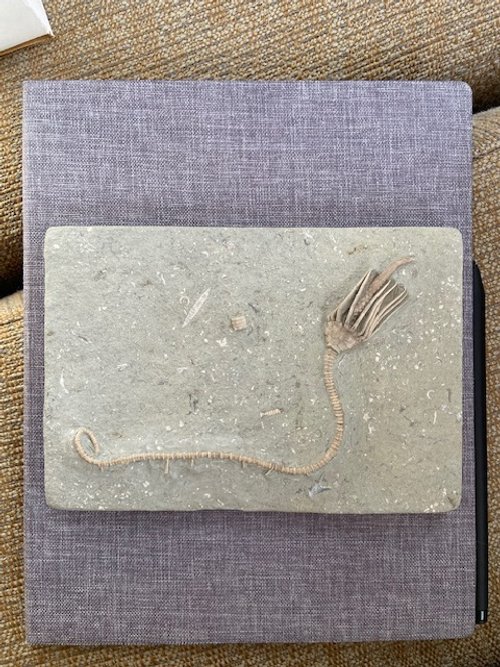 Image 1 of 2
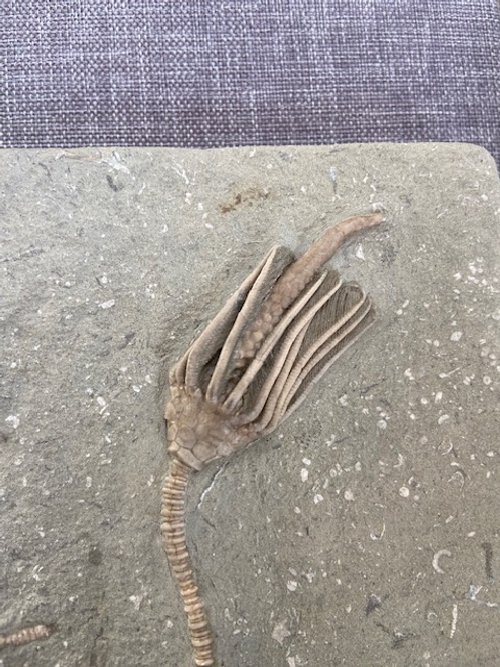 Image 2 of 2


Vendor: Fossil Soup
SKU Number: SQ1266618
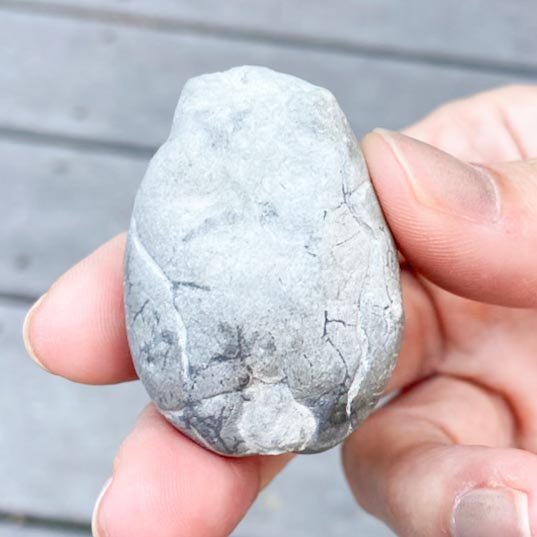
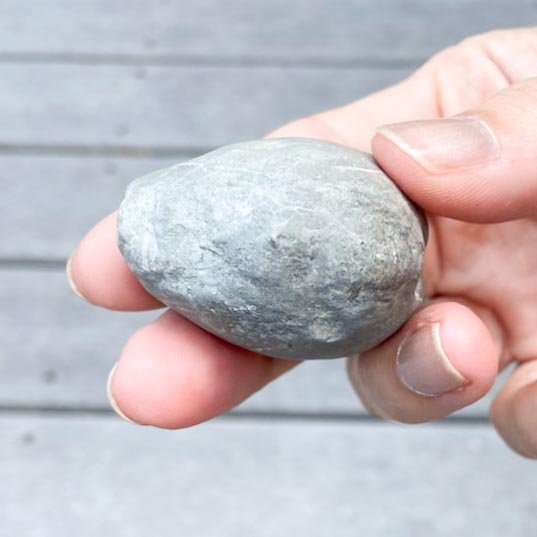
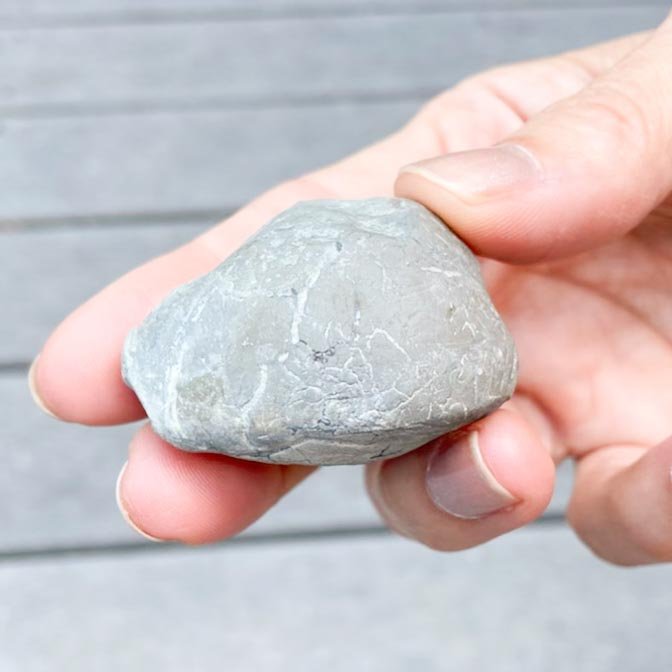
An exceptional example of Macrocrinus mundulus, Edwardsville Formation, Mississippian, Carboniferous, Crawsfordsville, Montgomery County, Indiana, USA.
This is a museum quality example for the truly discerning collector. The preservation, completeness, preparation and aesthetic appearance make this a beautiful display piece.
The stalk and the crown are exceptional on this example. The stalk is formed of numerous calcarious plates called ossicles that flow towards the crown. The crown is composed of cup shaped sets of plates in a pentaradial pattern around the crinoid. This part of the crown is known as the calyx. The arms that extend from the calyx are called brachia. There are lateral unbranched extensions of plates that protrude from the arms called pinnules.
This example has the anus perfectly preserved between and extending beyond the arms of the crown.
The crinoids from the world famous location of Crawfordsville, Indiana are about 320 Million Years Old.
This specimen has a crown of about 5.20 cm and a total length of about 12+ cm.
Full dimensions are listed below.