
 Image 1 of 4
 Image 2 of 4
 Image 3 of 4
 Image 4 of 4

Additional Information
Description:
Pecopteris sp. is a significant fossil genus of fern-like foliage commonly found in Middle Carboniferous strata worldwide, and the Benxi Formation of China is no exception. These fossils, typically preserved as impressions or compressions in shale and sandstone, represent the leaves of extinct tree ferns or seed ferns that thrived in the warm, humid coal swamp environments characteristic of the Pennsylvanian epoch. The distinctive comb-like arrangement of their pinnules (leaflets) makes them relatively easy to identify. In the Benxi Formation, Pecopteris contributes to our understanding of the diverse plant life that formed the basis of the region's ancient ecosystems, coexisting with lycophytes, sphenophytes, and other early vascular plants. Their presence helps paleontologists reconstruct the paleoclimate and paleoenvironment of the Middle Carboniferous in this part of Asia and provides crucial data for broader paleobotanical and paleogeographic studies.
Vendor: fossil soup - ZZ
SKU Number: SQ5388284
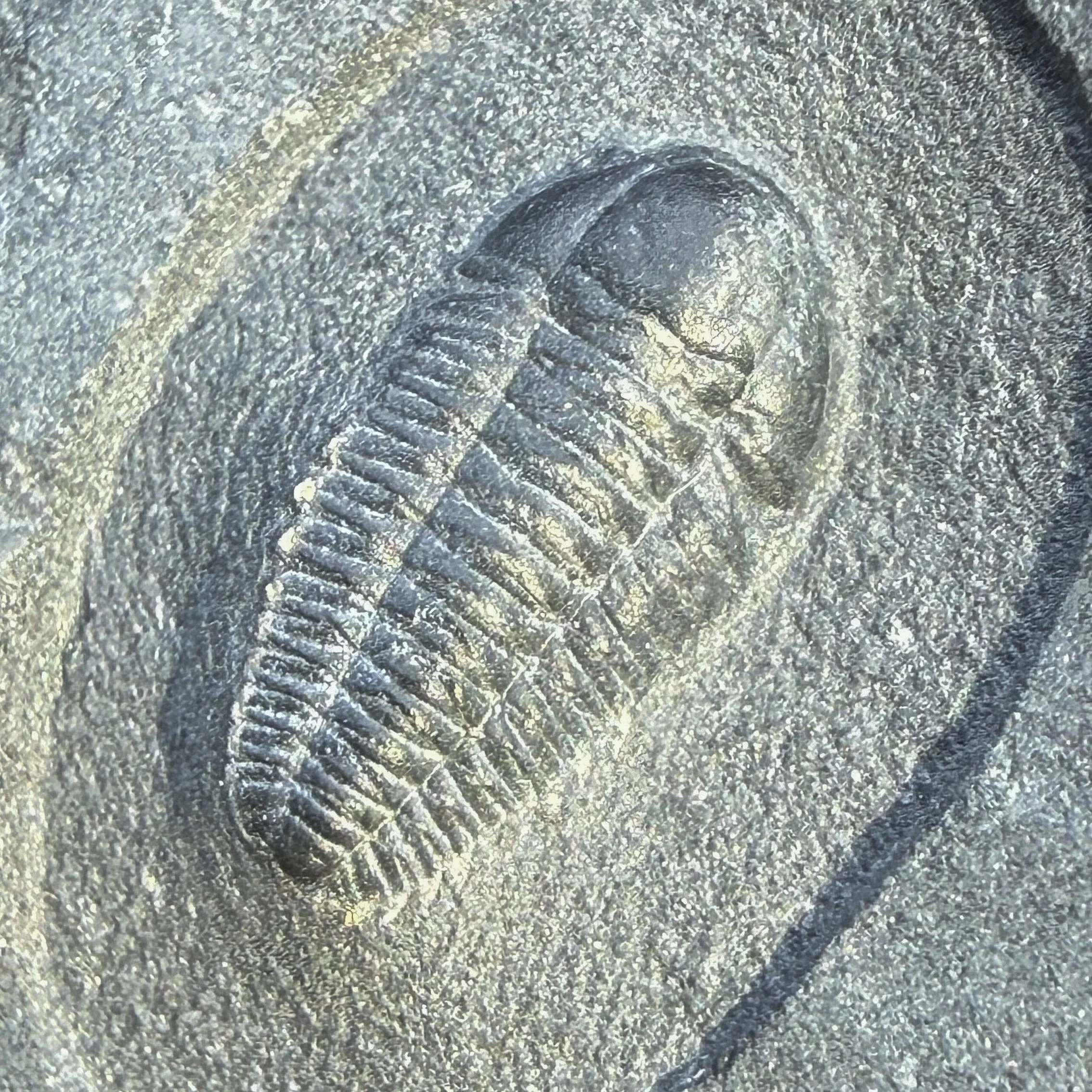
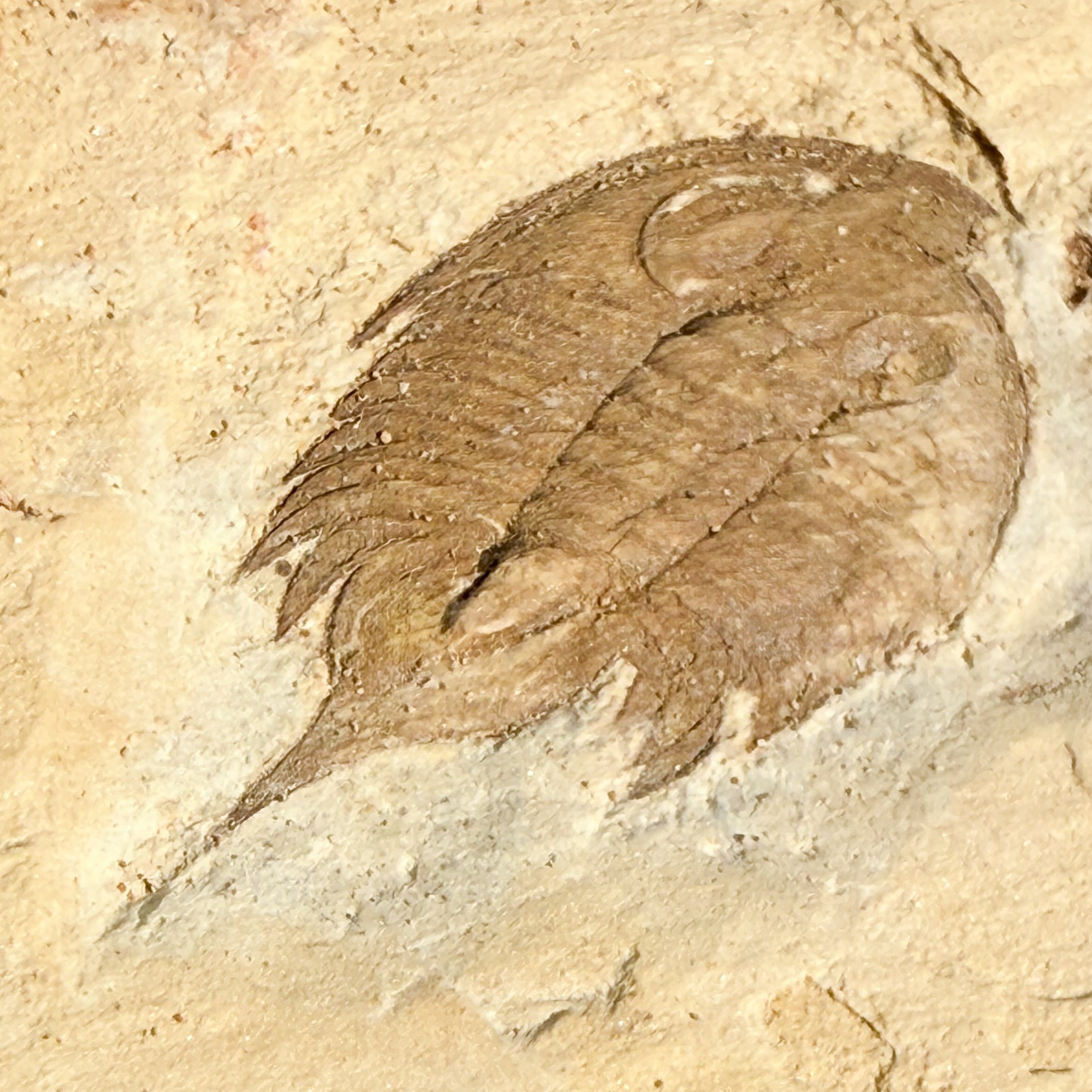
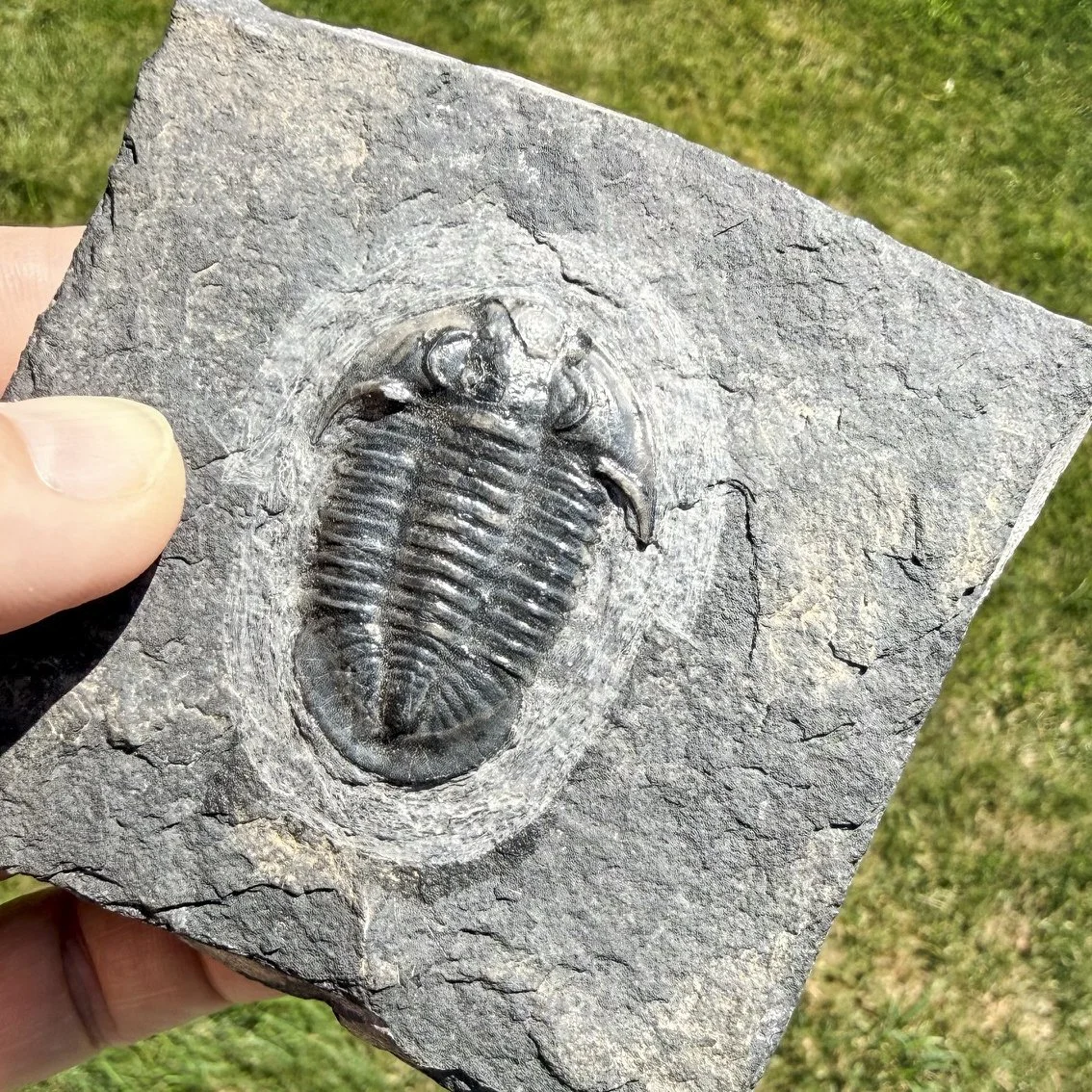
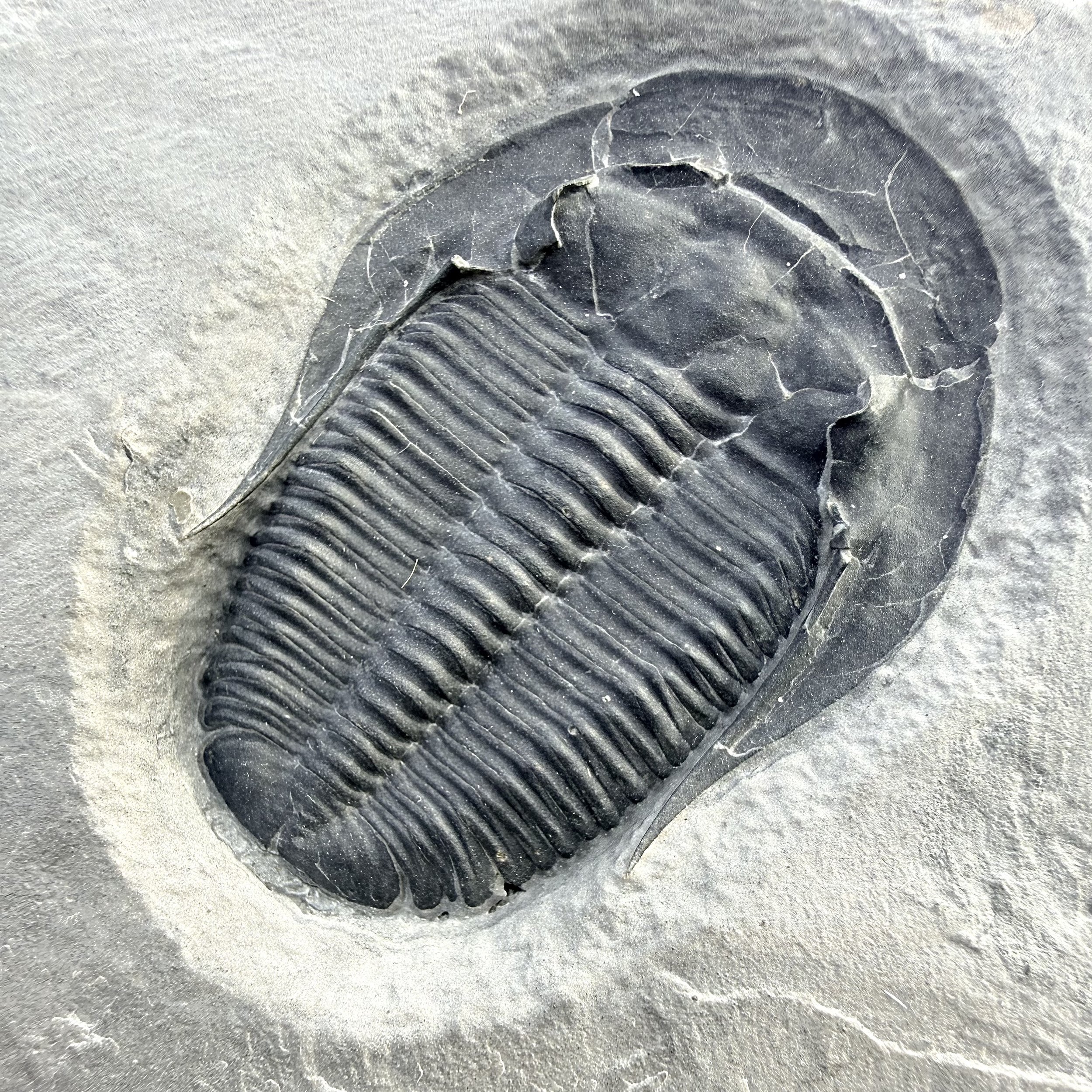
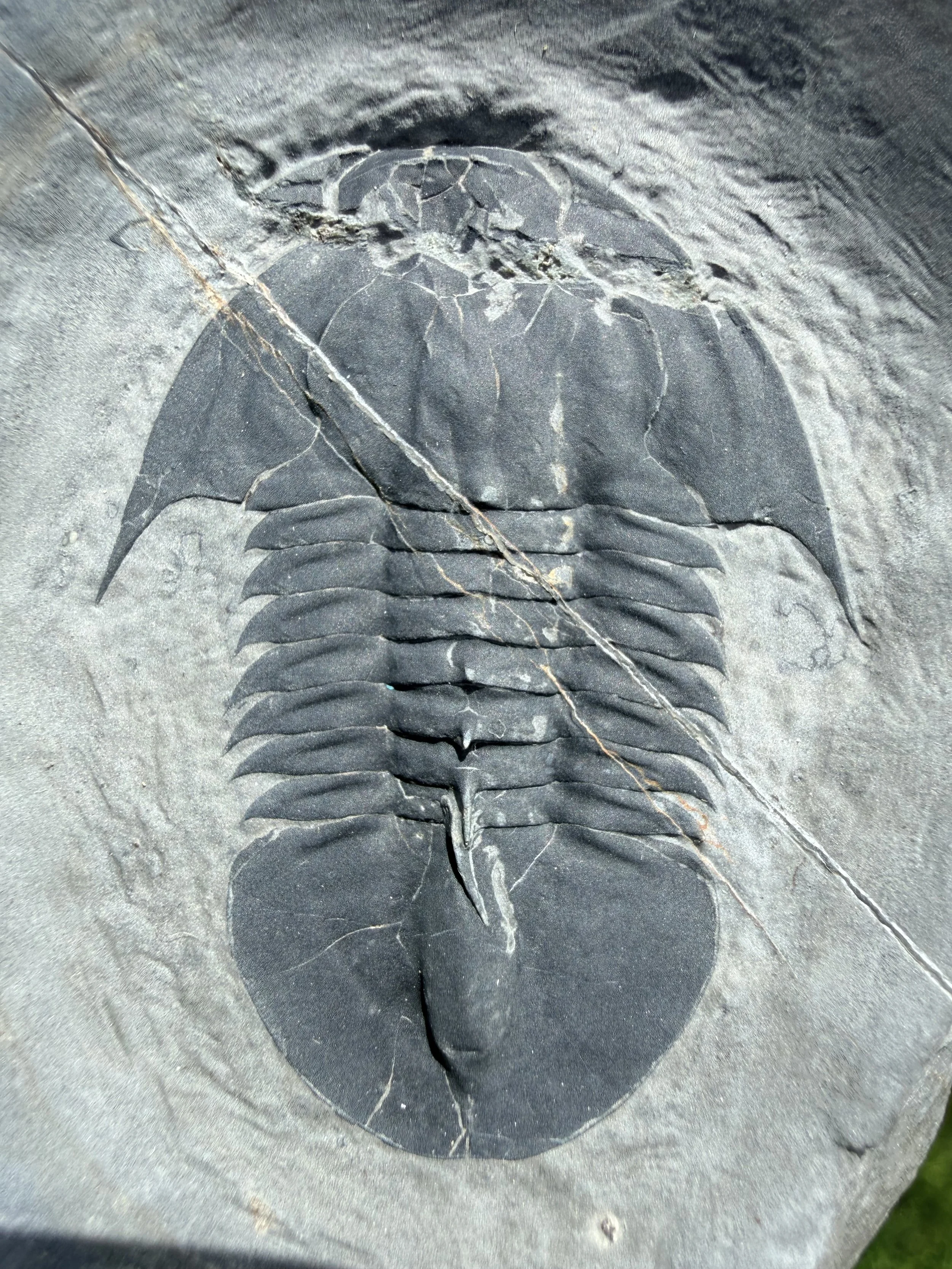
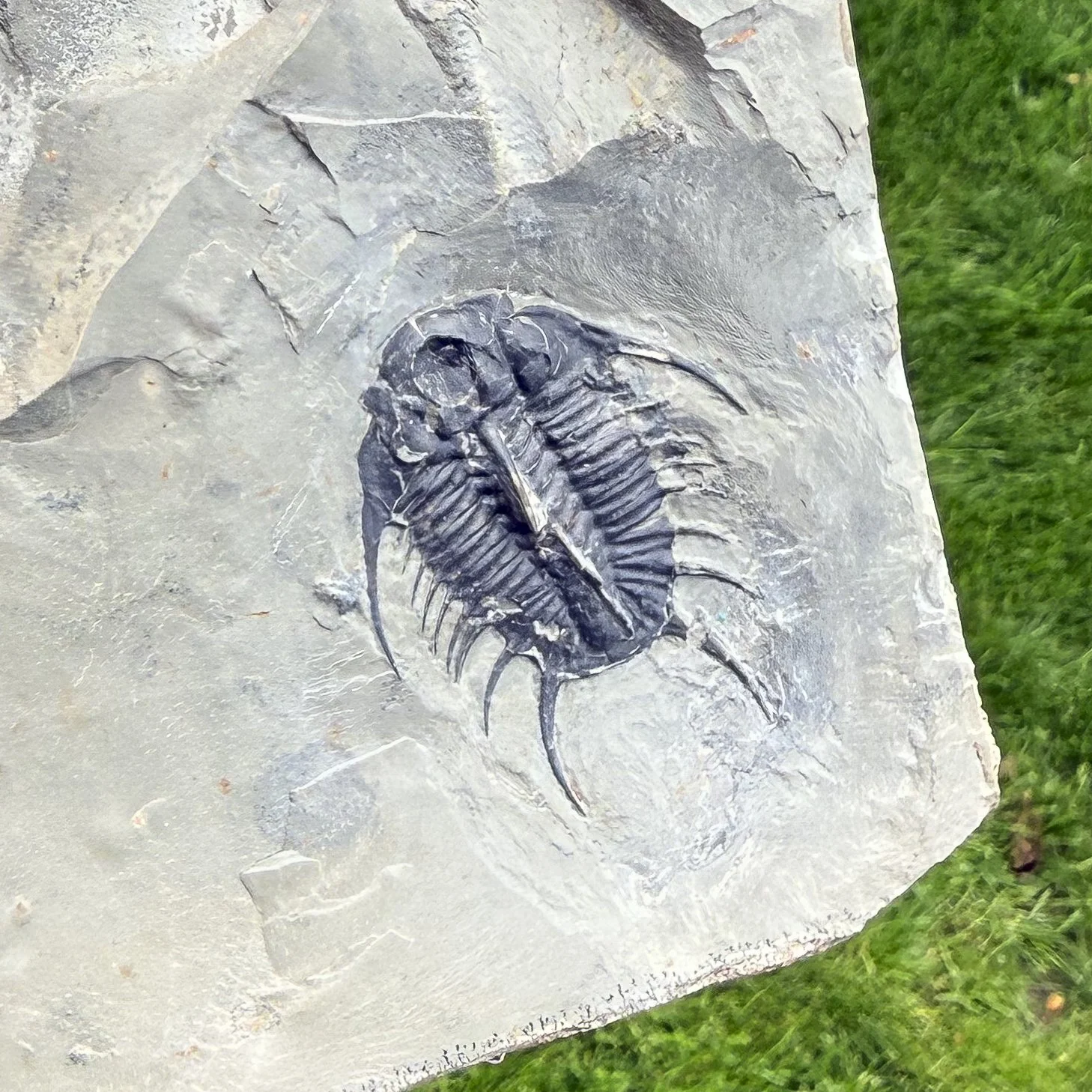
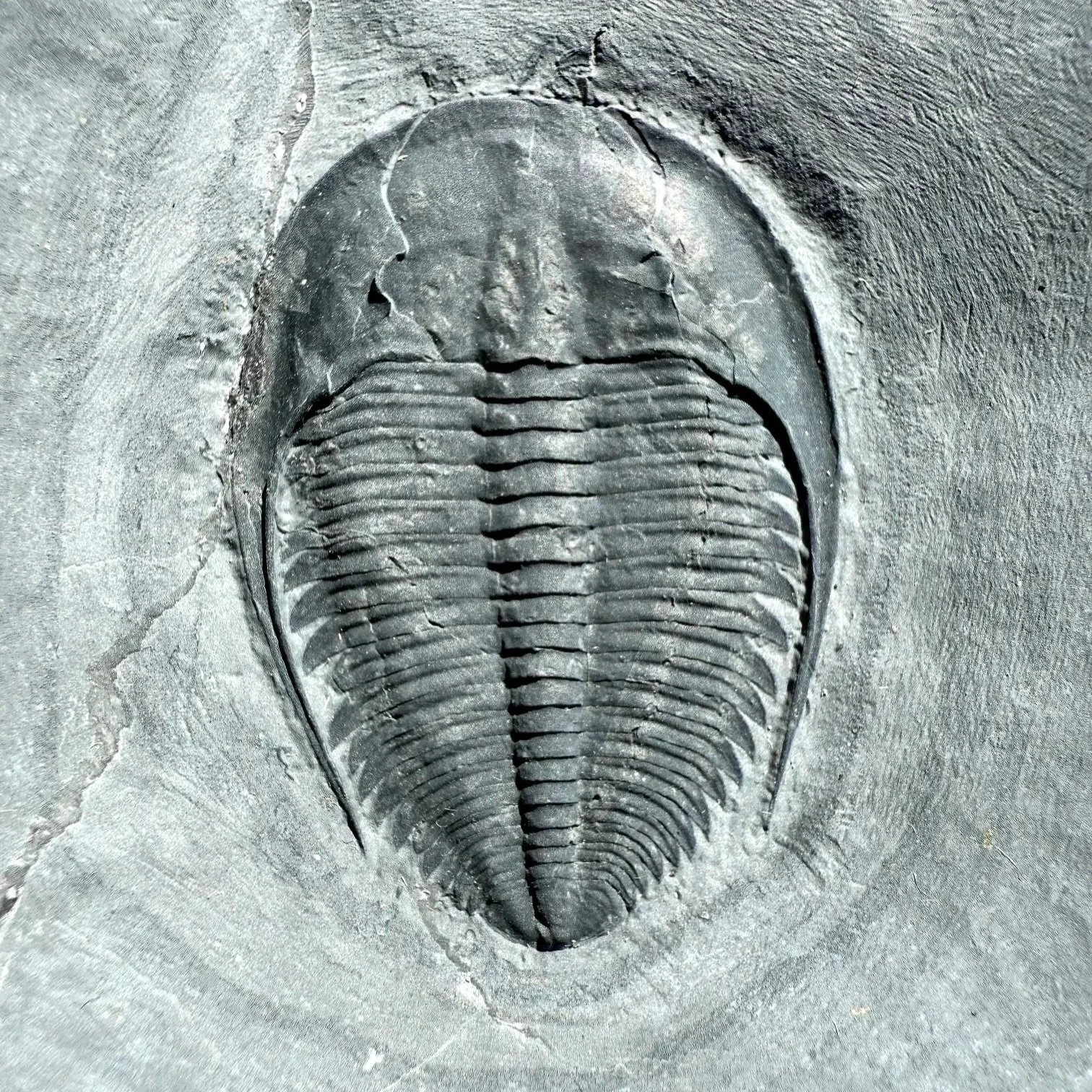
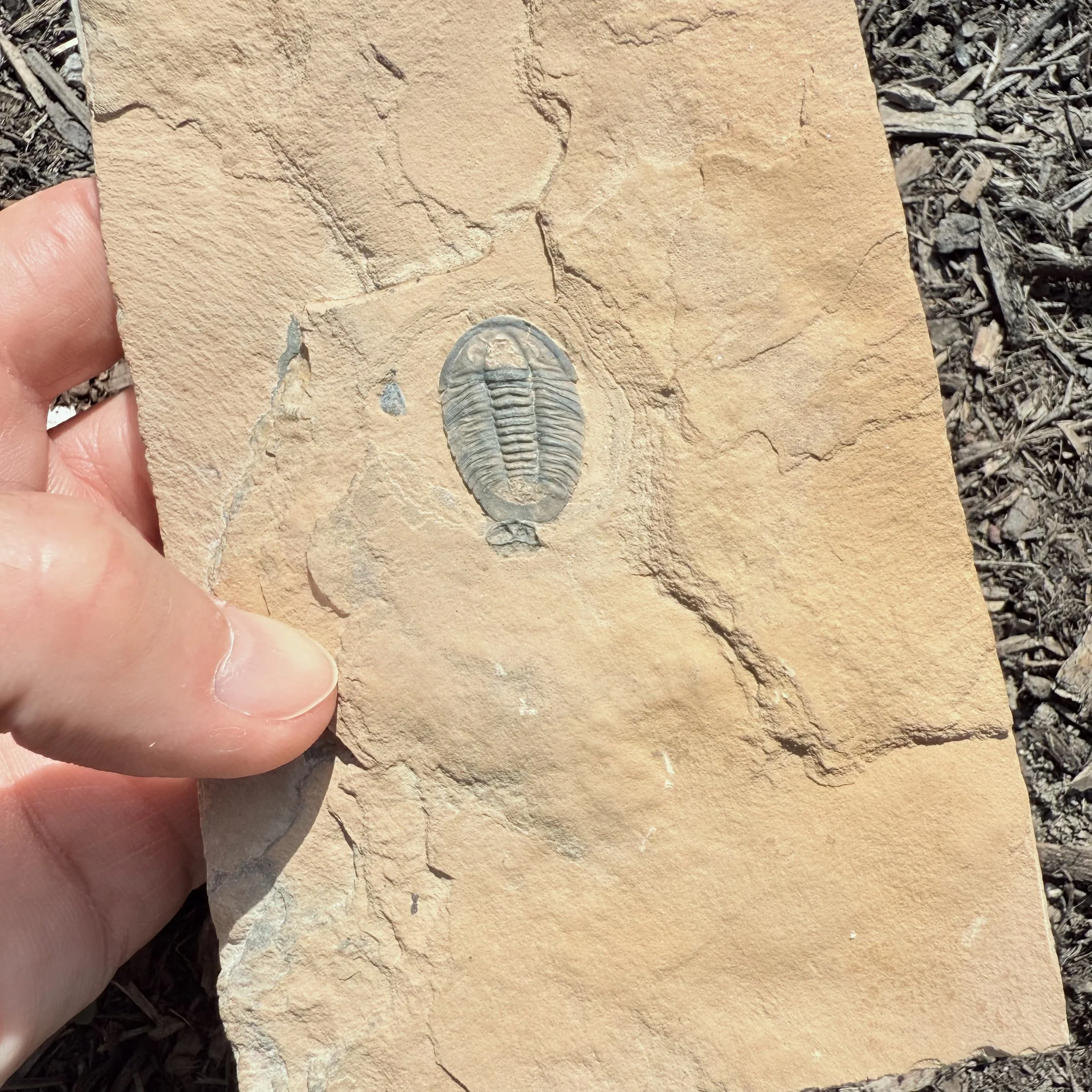
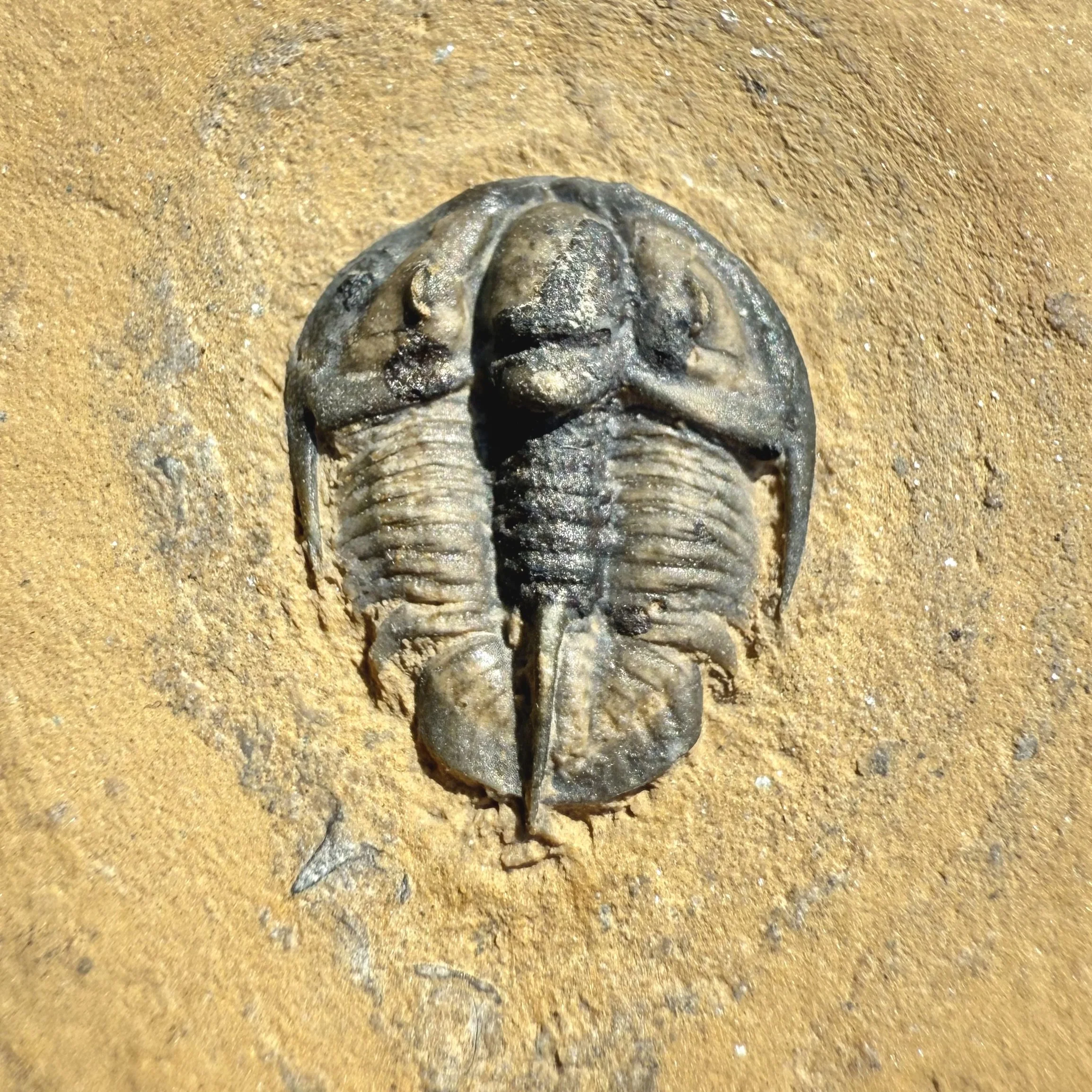
Rhombampyx yii trilobite from the Middle Ordovician, Meitan Formation, Zunyi, Guizhou, China.
The distinct oval/rhomboid dome where the anterior needle spine meets the head is the highly inflated glabella. It is slightly compressed but shows the distinctive bulbous shape unique to raphiophorids.
You can clearly see a thin, straight line pointing straight up from the top of the glabella. This is the base of the median snout spine.
The two elongated cheek spines can be seen on either side of the body. In life, these spines flared outward to stabilize the animal or deter predators, but post-mortem movement or burial compaction has curved it around the cephalon.
Full dimensions are listed below.