
 Image 1 of 6
 Image 2 of 6
 Image 3 of 6
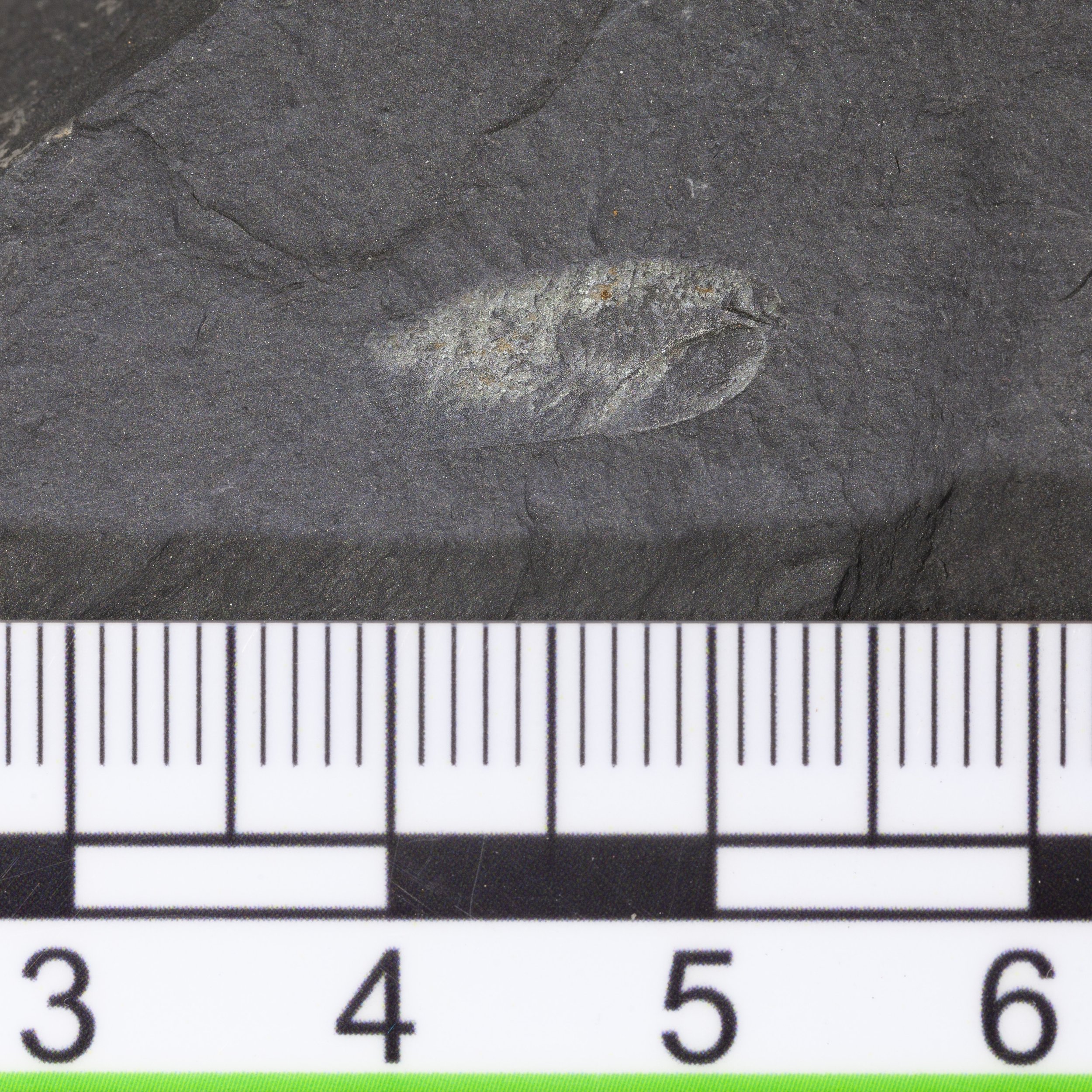 Image 4 of 6
 Image 5 of 6
 Image 6 of 6

Additional Information
Description:
While no specific species designated as "Dictyopteran sp. nov." has been widely reported from the Middle Carboniferous Benxi Formation in common paleontological literature, the presence of various dictyopteran (roach-like) insects, representing the stem group of modern cockroaches, termites, and mantises, is acknowledged in this formation. Recent research has described new roachoid taxa from the Moscovian strata of the Benxi Formation, often found co-preserved with diverse plant fossils exhibiting signs of insect interactions. 1 These early dictyopterans were likely components of the terrestrial ecosystems in the warm, humid coal swamps of the region, potentially playing roles as herbivores, detritivores, or even predators within the developing food webs of the Carboniferous period. Their study provides valuable insights into the early evolution and diversification of this significant insect order and their ecological relationships with the contemporaneous flora.
Vendor: fossil soup - ZZ
SKU Number: SQ5388284
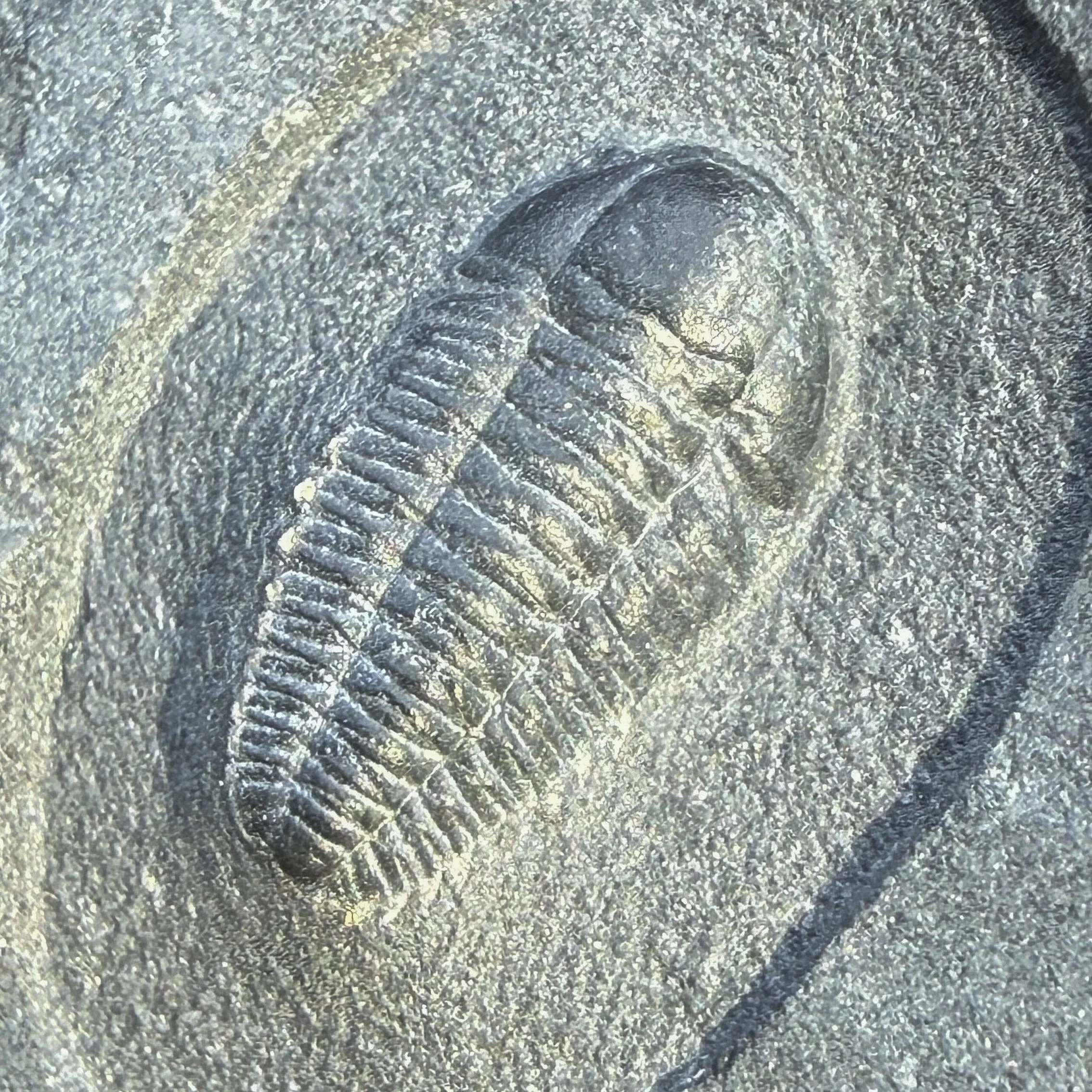
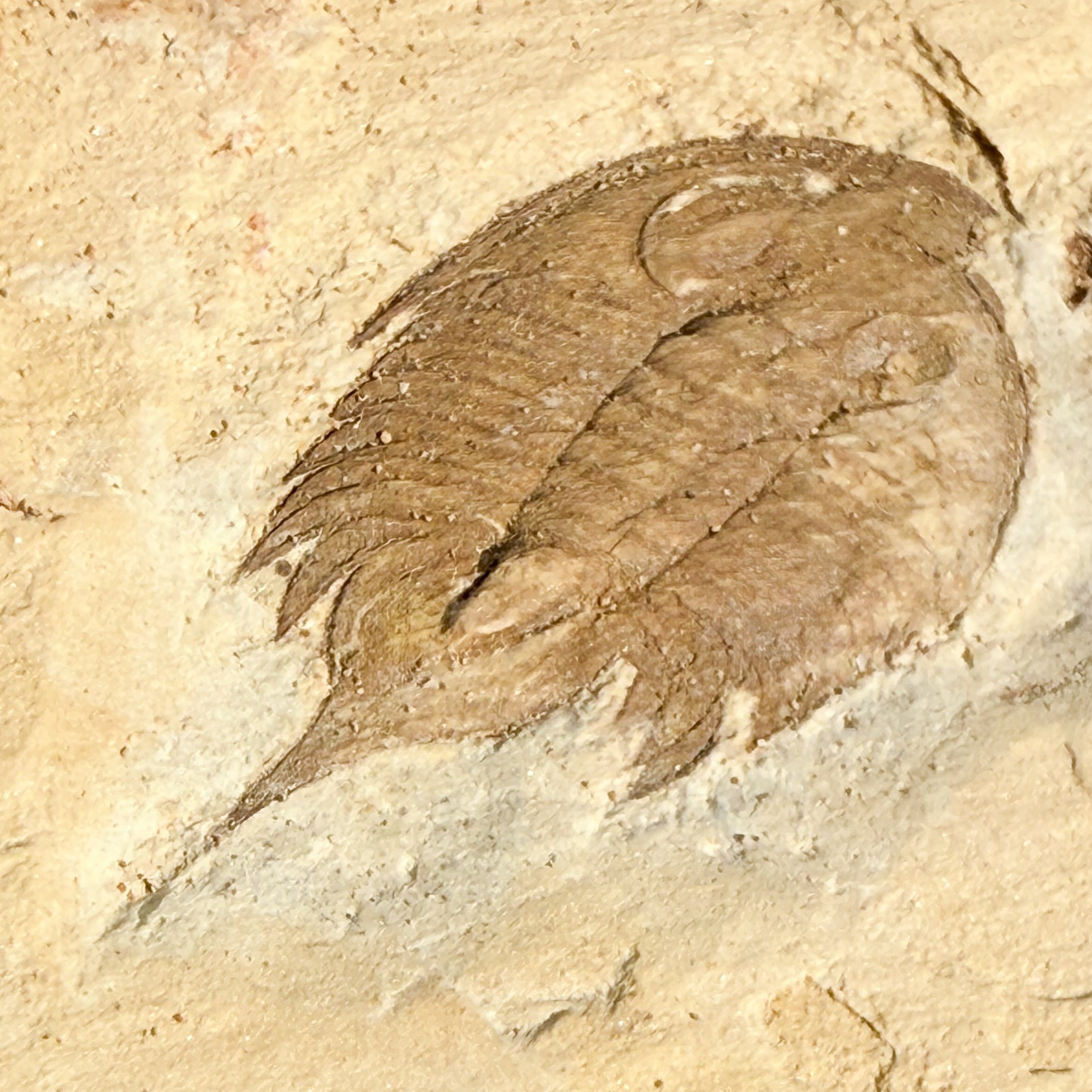
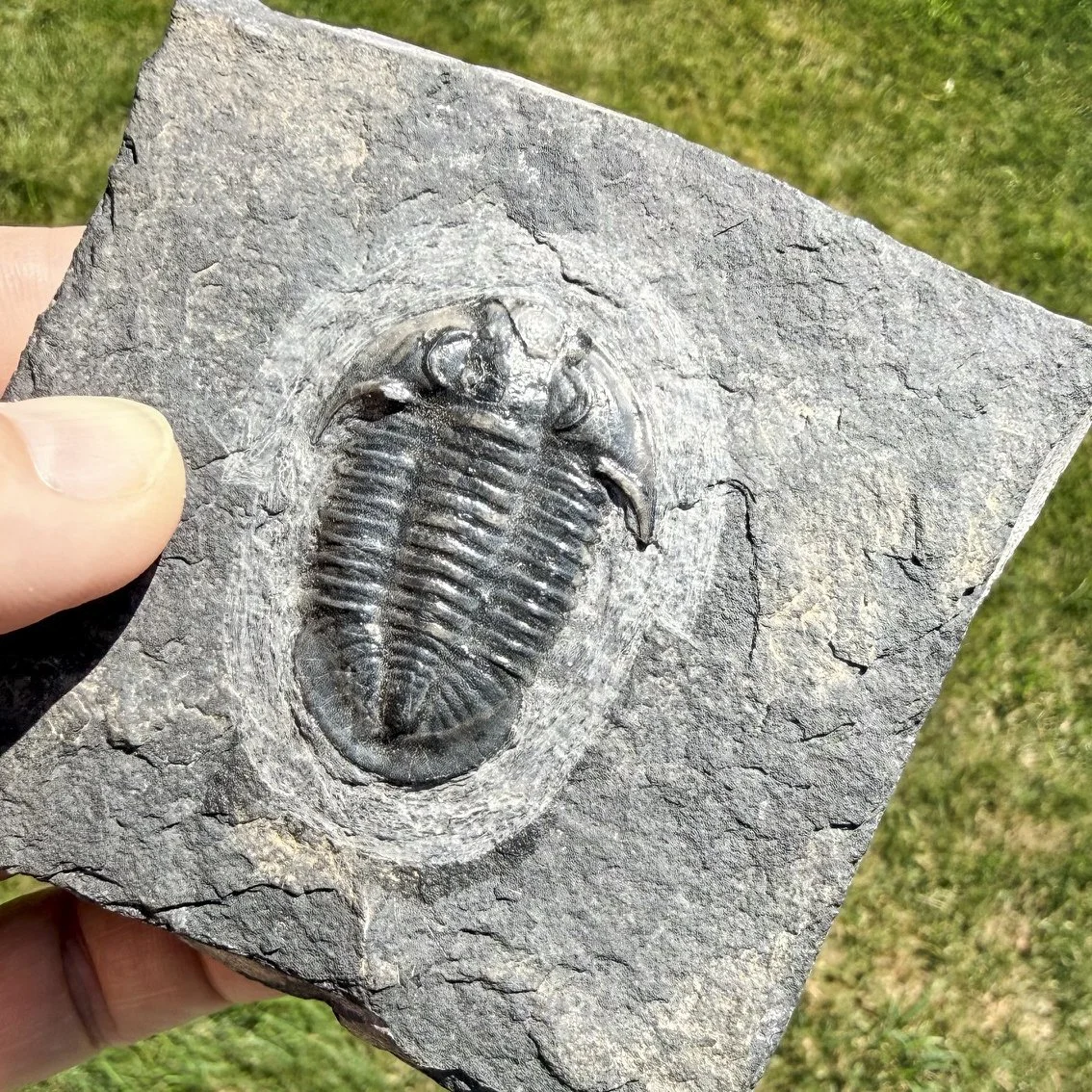
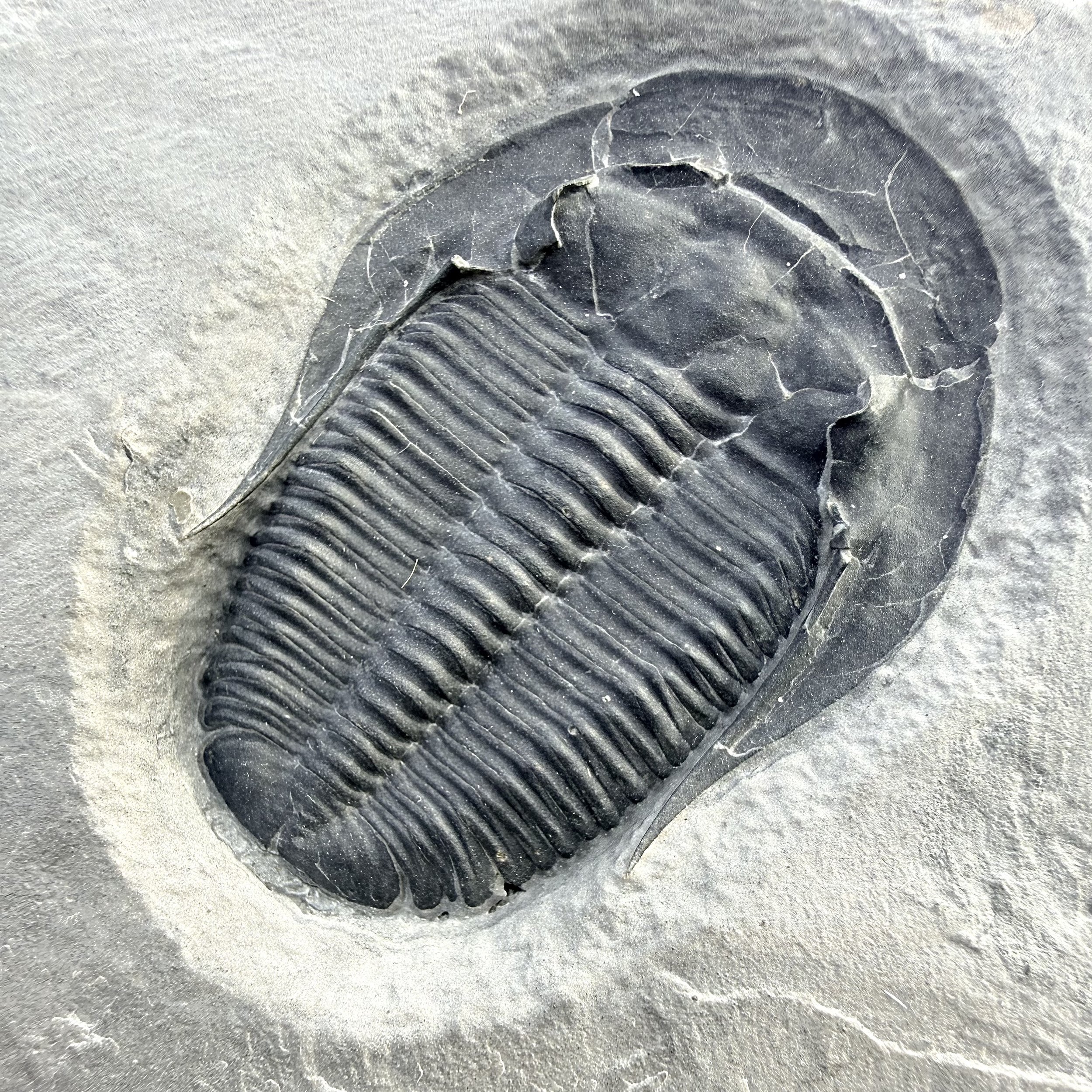
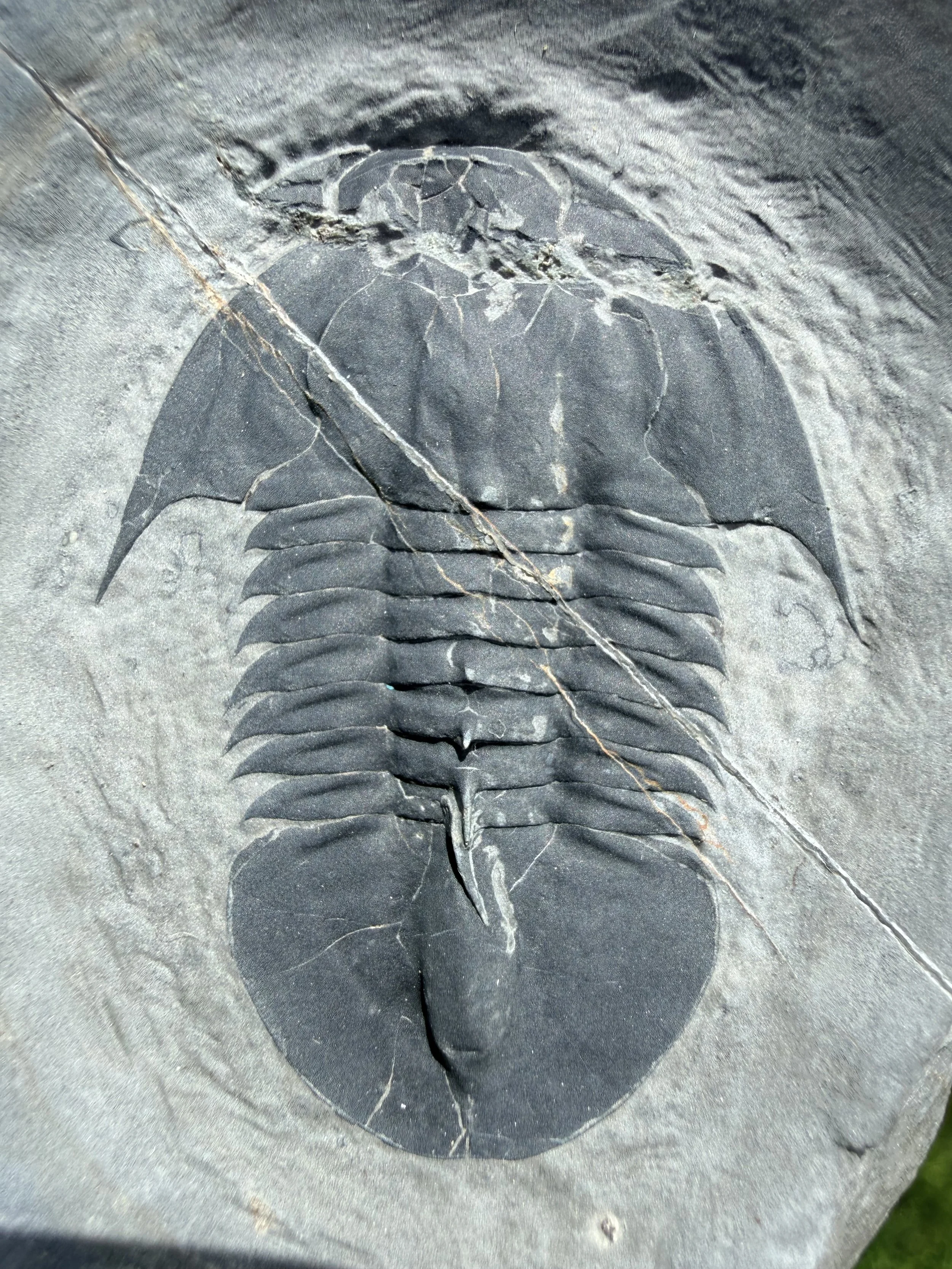
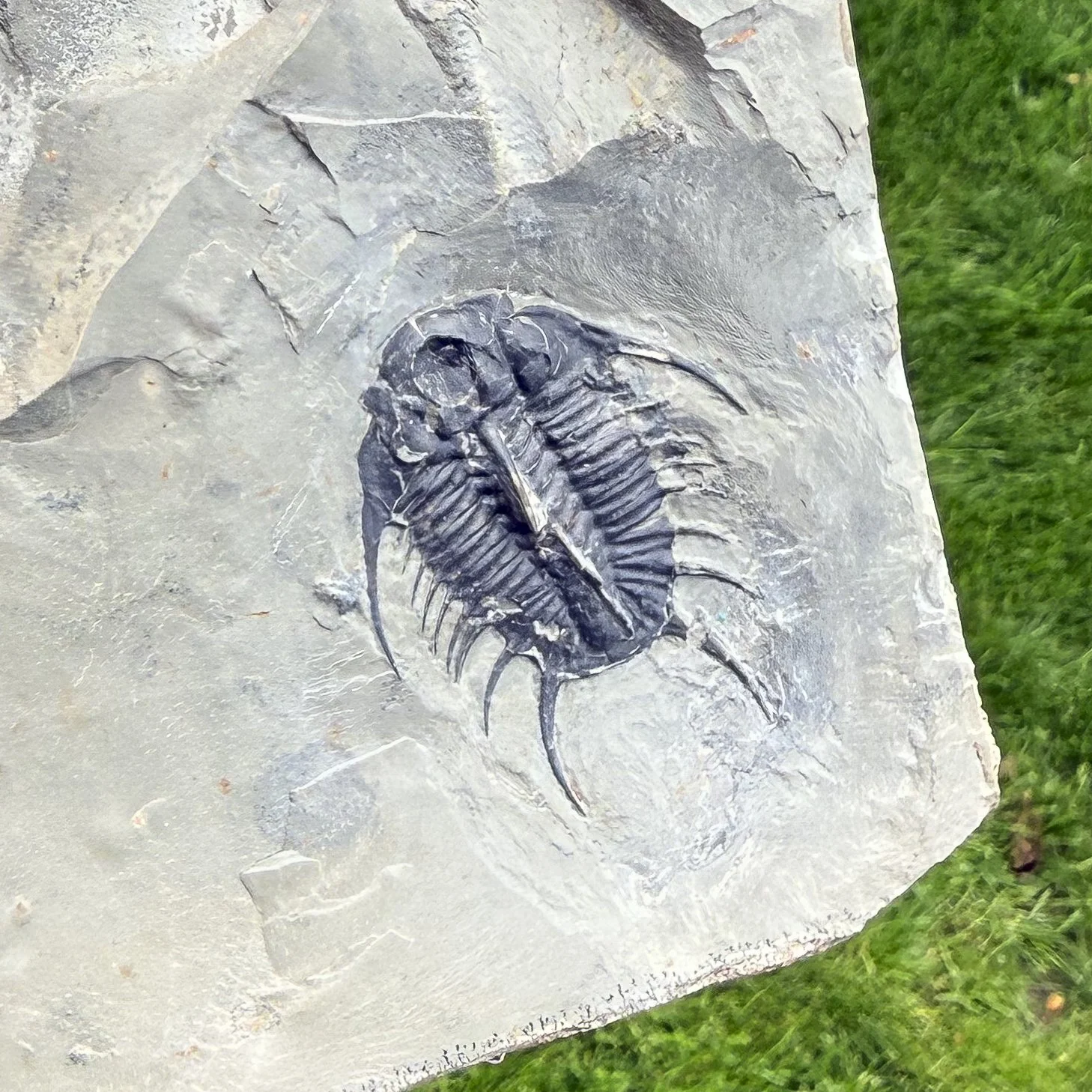
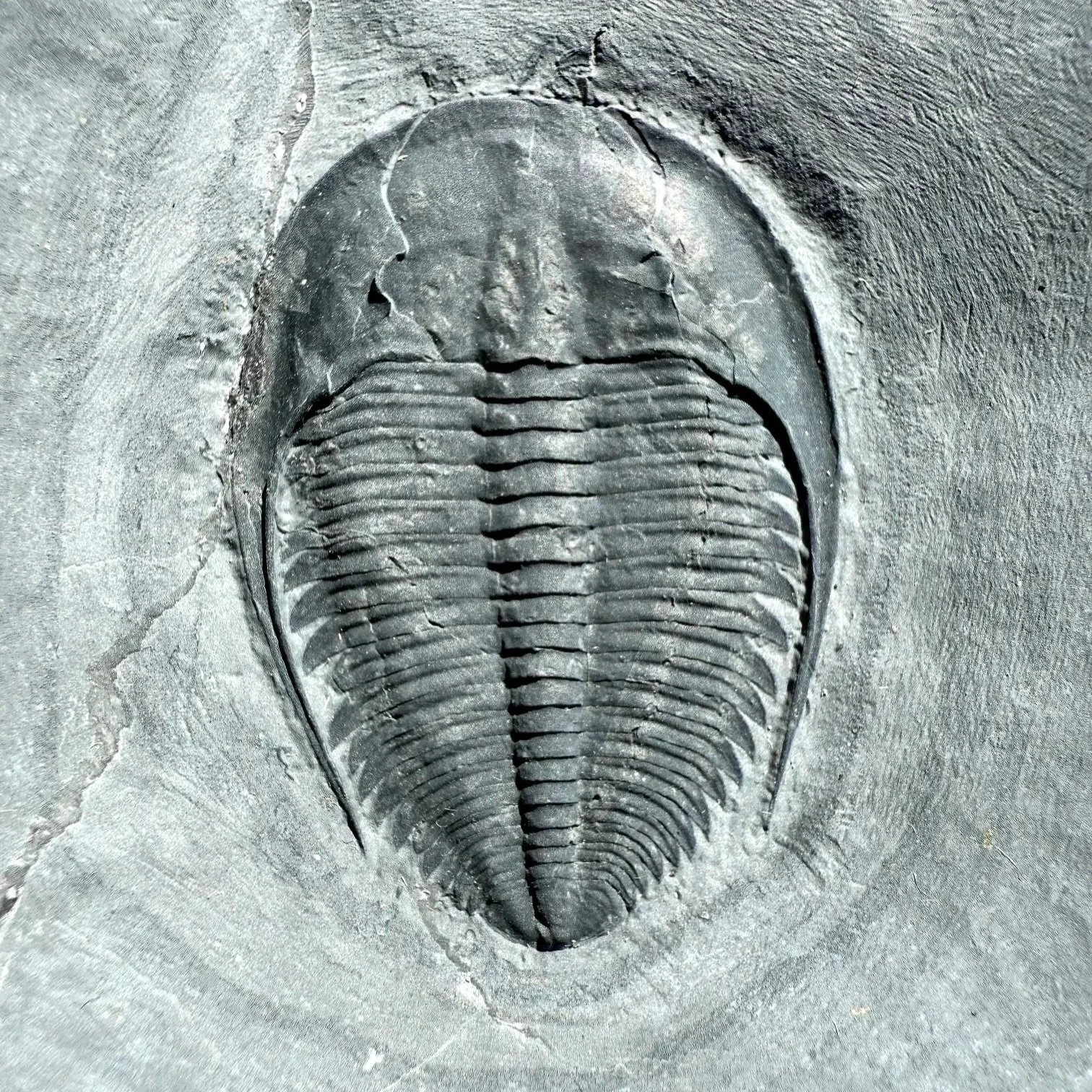
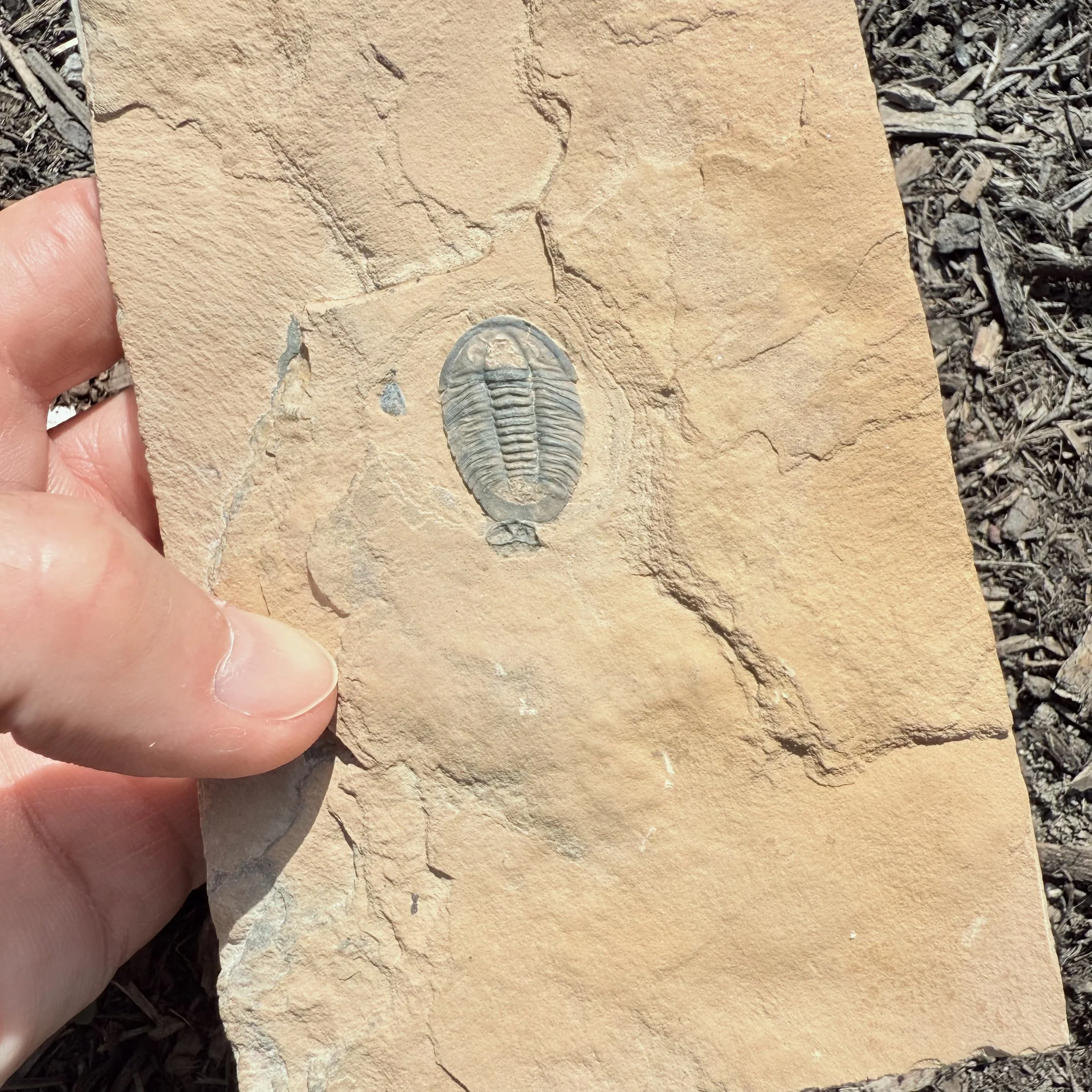
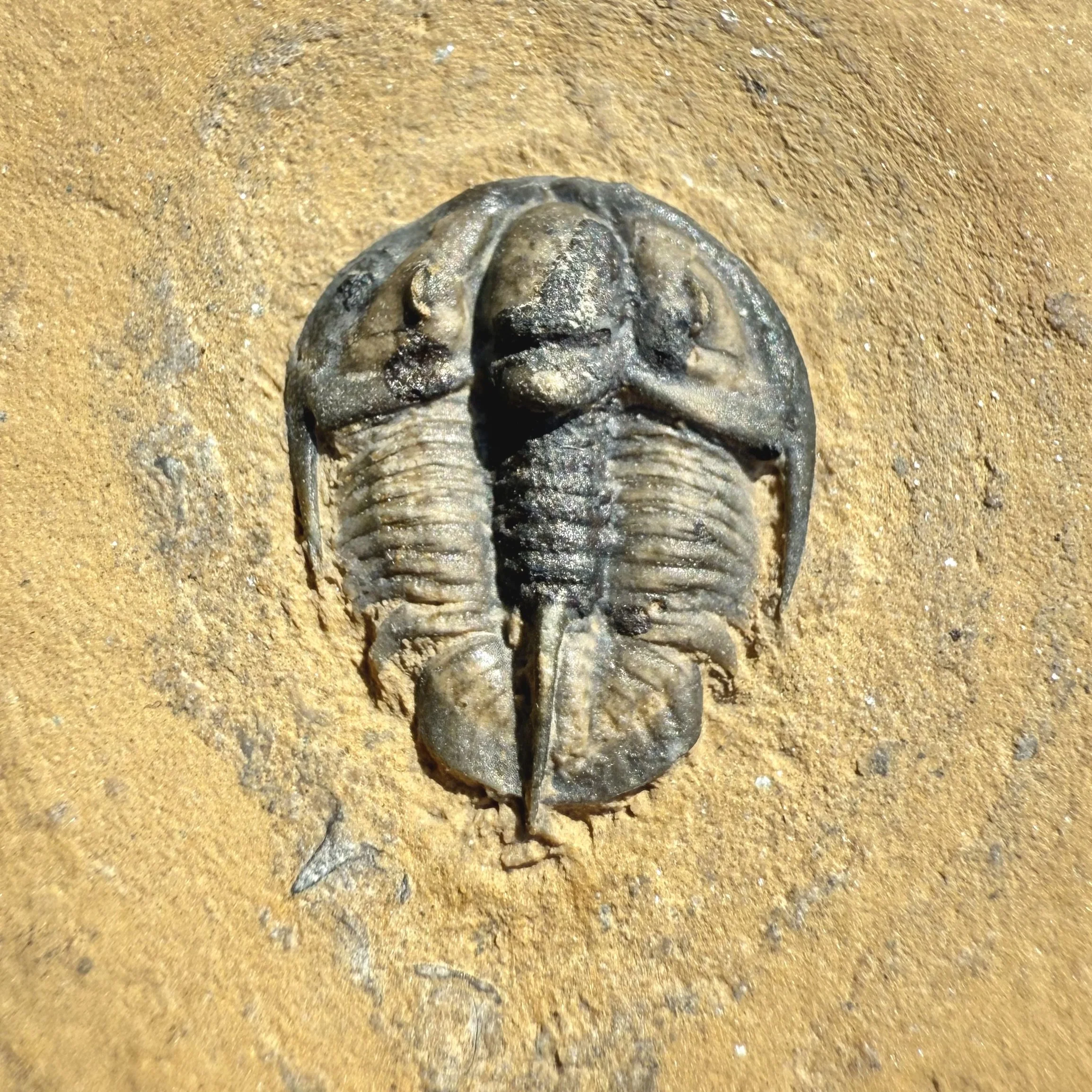
Rhombampyx yii trilobite from the Middle Ordovician, Meitan Formation, Zunyi, Guizhou, China.
The distinct oval/rhomboid dome where the anterior needle spine meets the head is the highly inflated glabella. It is slightly compressed but shows the distinctive bulbous shape unique to raphiophorids.
You can clearly see a thin, straight line pointing straight up from the top of the glabella. This is the base of the median snout spine.
The two elongated cheek spines can be seen on either side of the body. In life, these spines flared outward to stabilize the animal or deter predators, but post-mortem movement or burial compaction has curved it around the cephalon.
Full dimensions are listed below.