
 Image 1 of 8
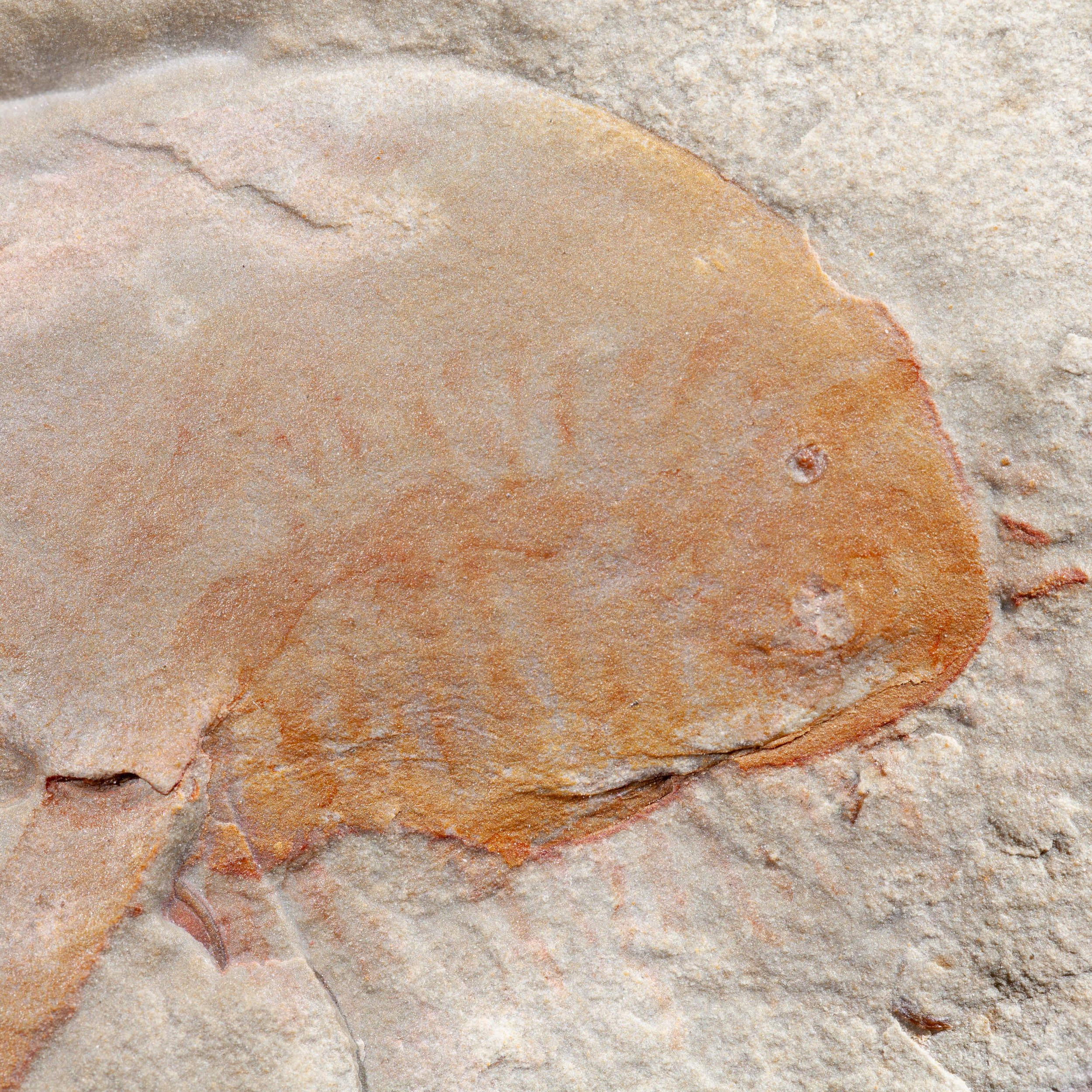 Image 2 of 8
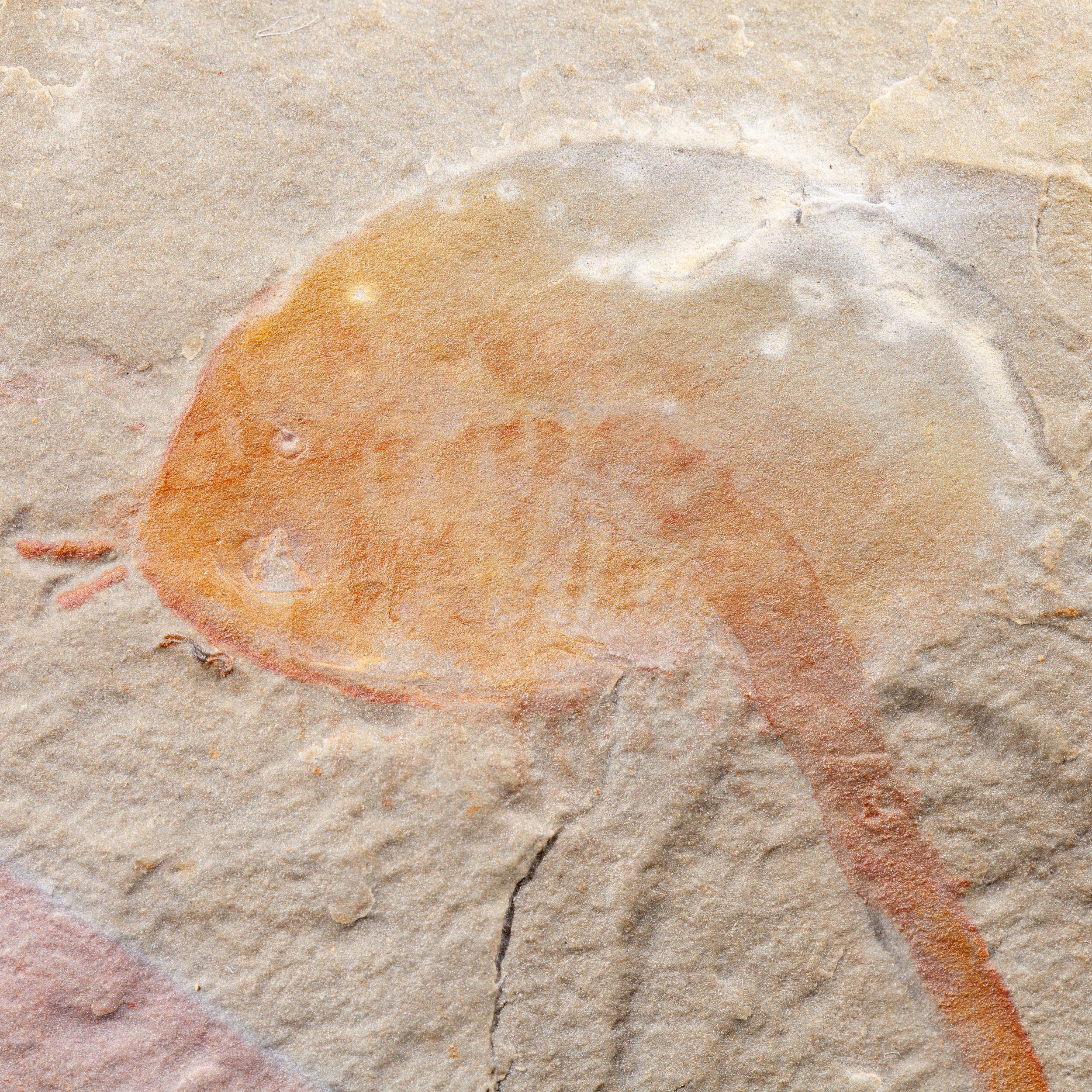 Image 3 of 8
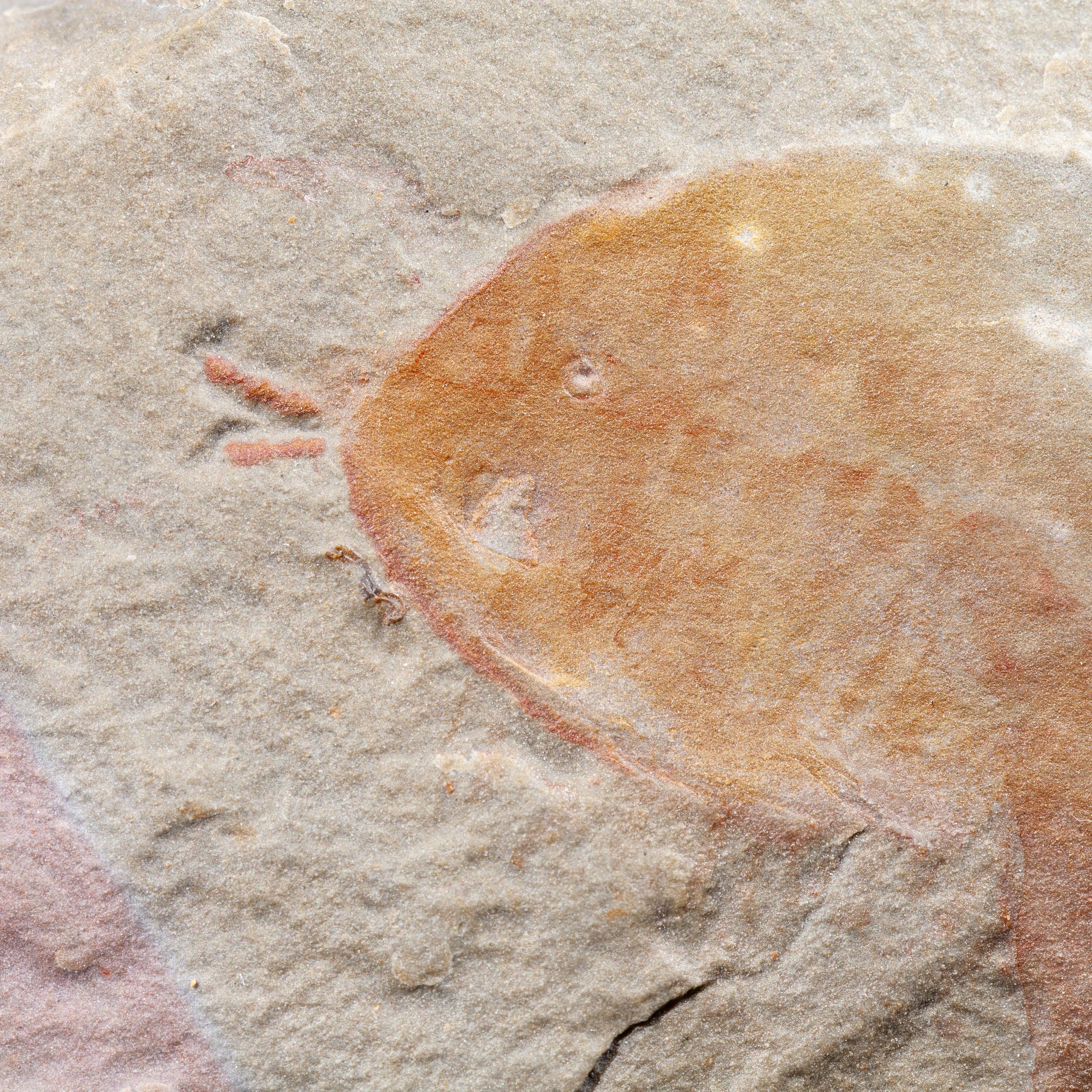 Image 4 of 8
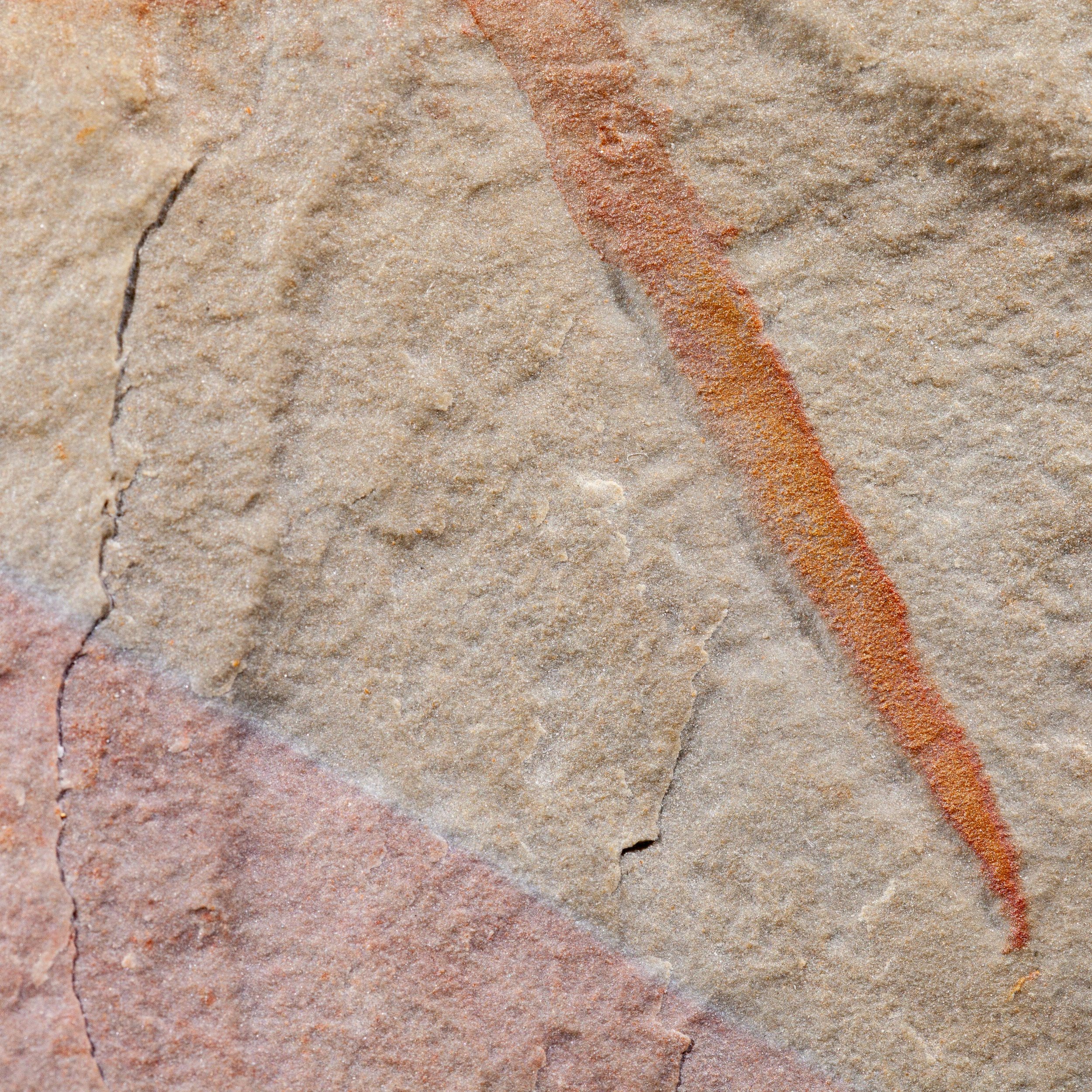 Image 5 of 8
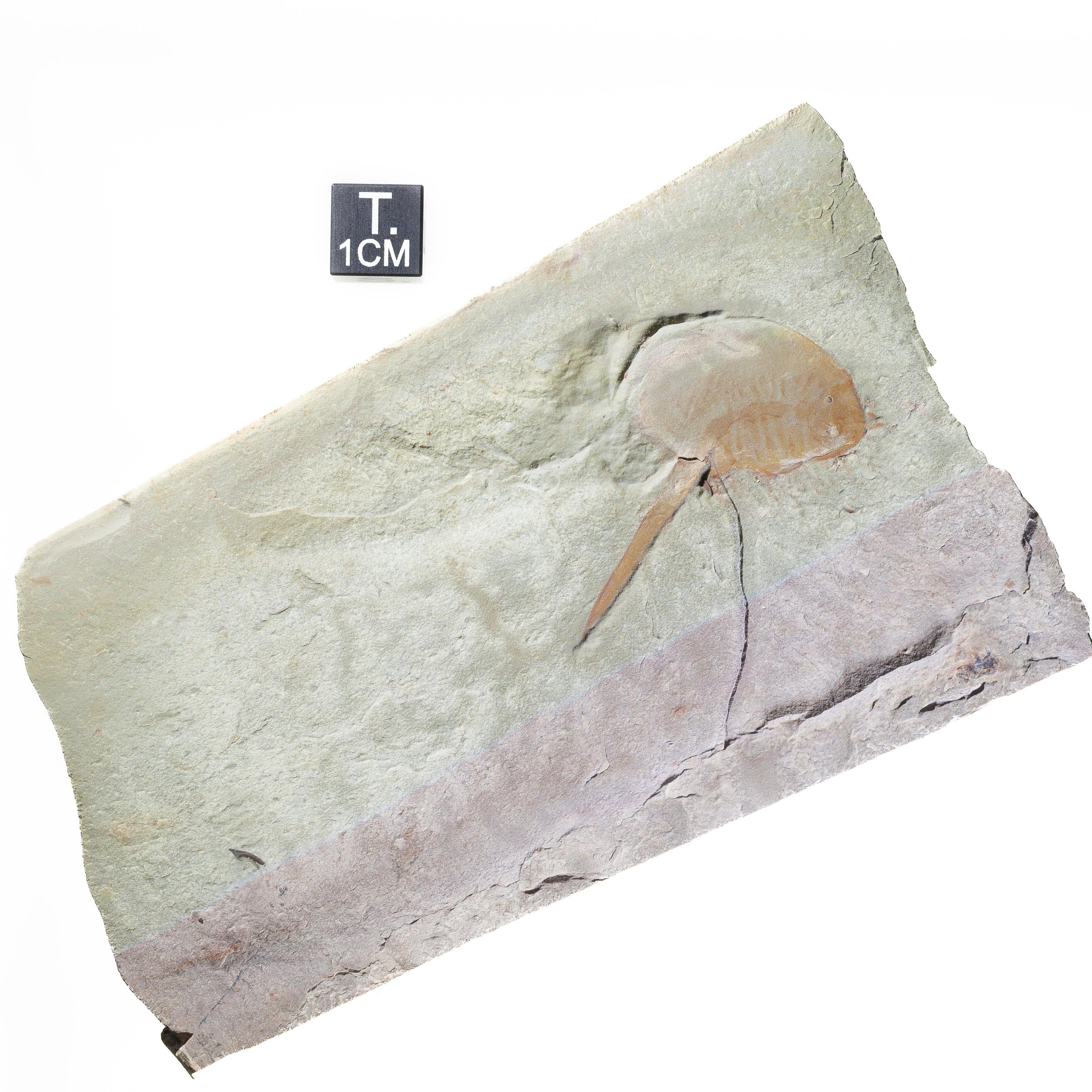 Image 6 of 8
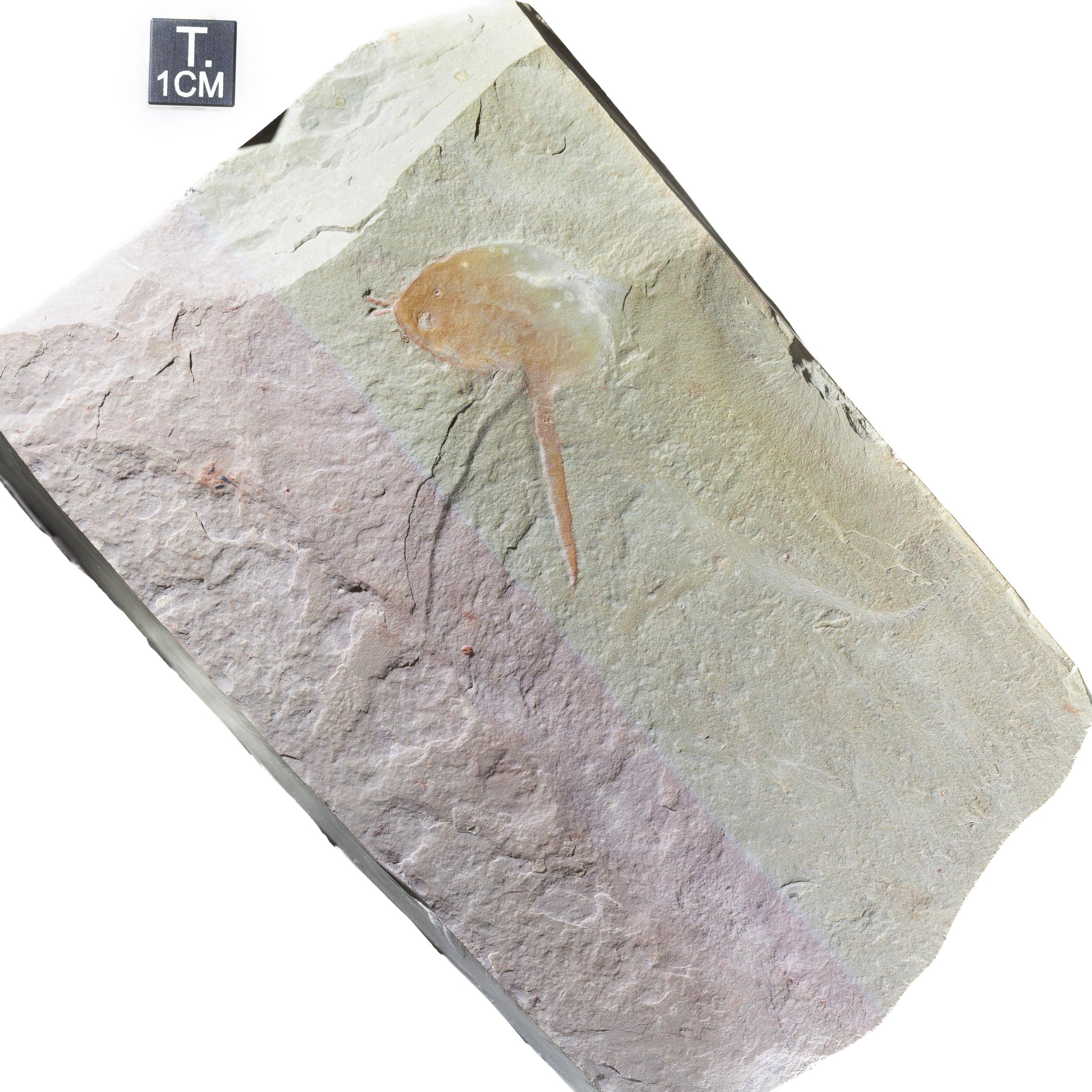 Image 7 of 8
 Image 8 of 8

Additional Information
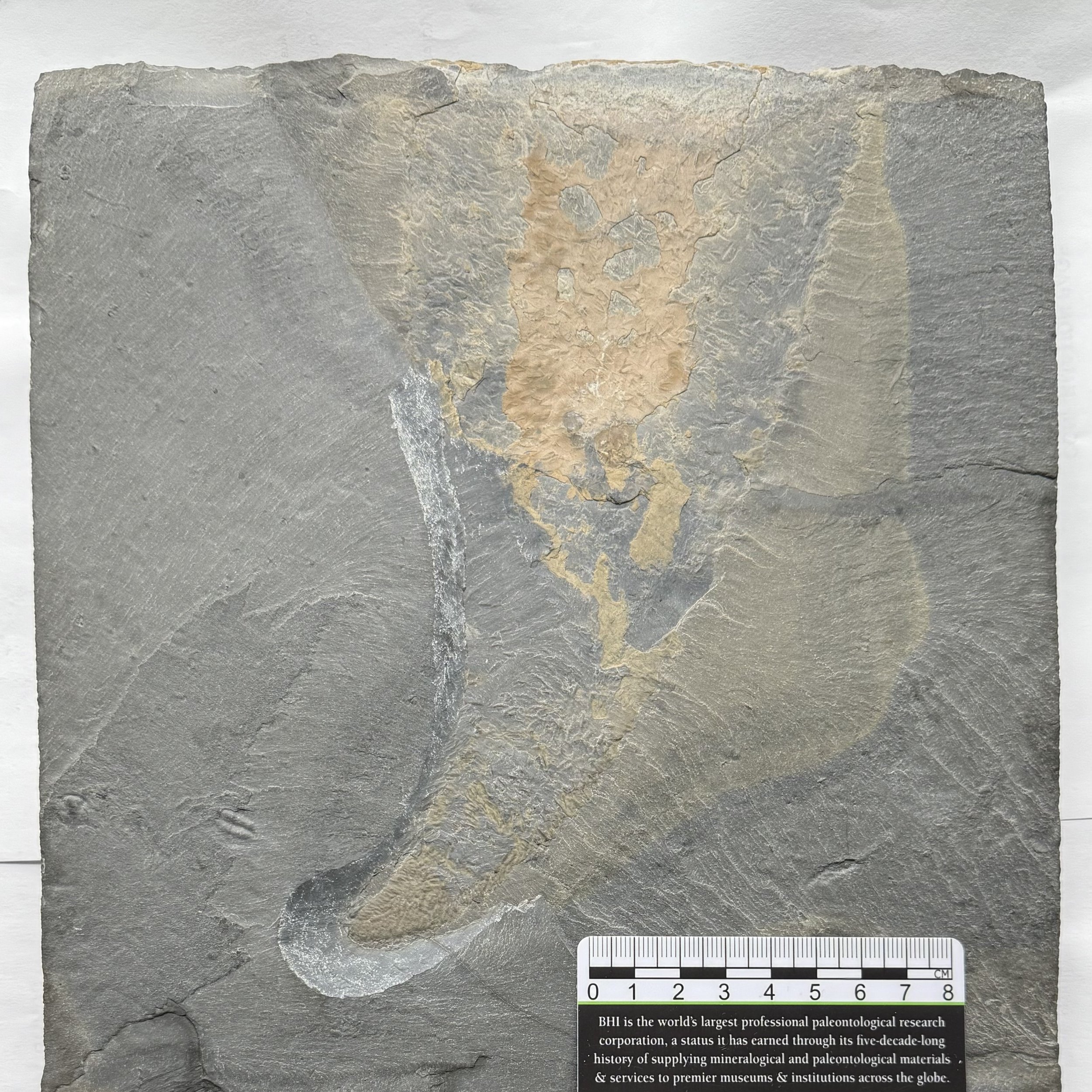
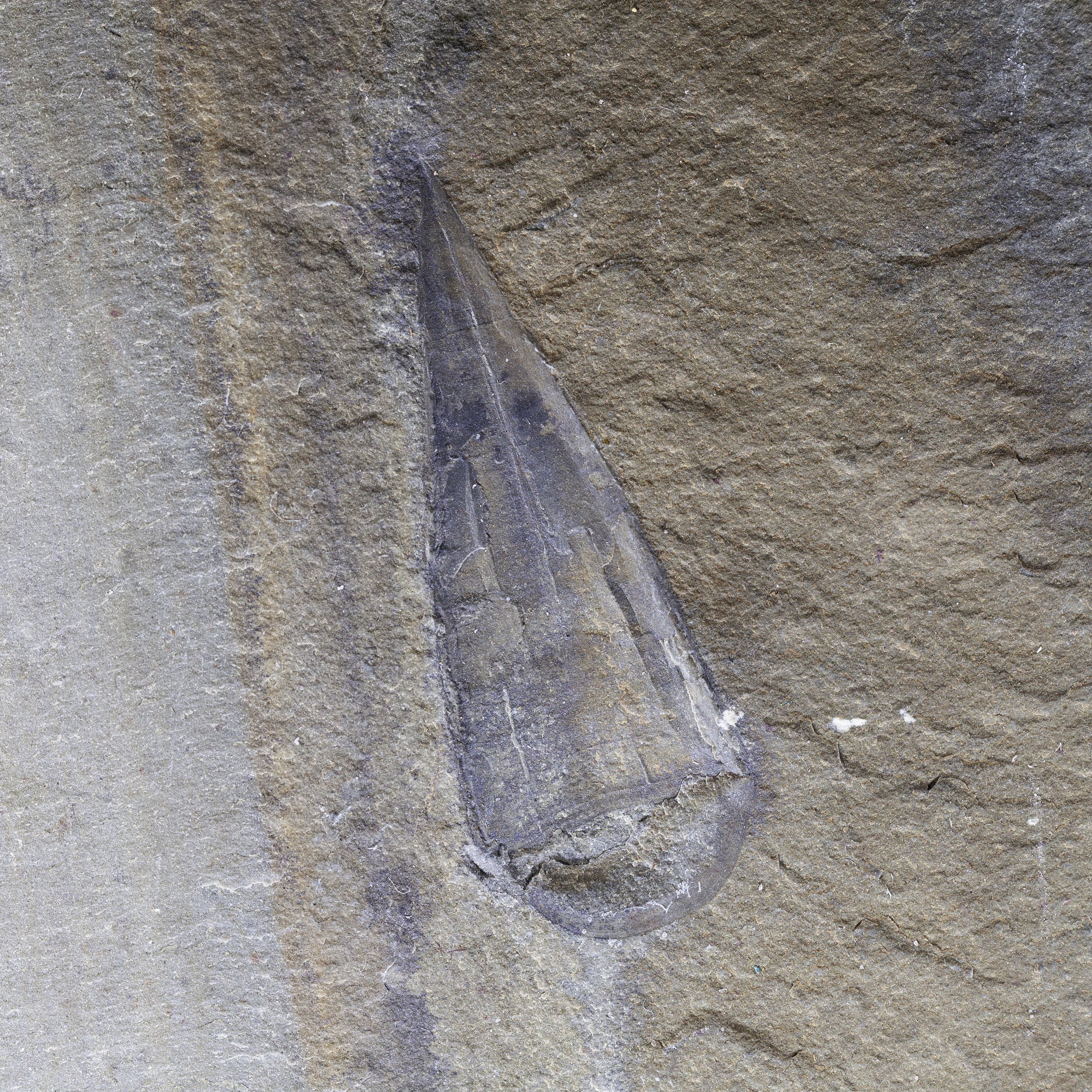
Burgessia is an extinct arthropod that existed during the Cambrian period. Phylogenetic placement of Burgessia is uncertain. It has been described as a basal member of the arachnomorphs, a group that includes chelicerates and trilobites (Briggs and Fortey, 1989; Cotton and Braddy, 2004) Burgessia is a small, soft-bodied arthropod capped by a dorsal semicircular carapace and possessing a long terminal spine. The carapace is very thin, appearing gently convex in lateral view, and ranging from 4 to 17 mm in length. The length of the spine is approximately 1.4 times the length of the carapace. There is no evidence of compound eyes. The body bears a pair of flexible antennae at the front and ten pairs of appendages which are segmented and branch into two (biramous), three in the head section and seven in the trunk. The inner branch is a walking leg in all ten pairs, and the outer branch is a flagellum in the three head appendages and a gill branch in the seven trunk appendages. A pair of short appendages that are segmented and non-branching (uniramous) is present on the eighth segment of the trunk. The walking branch of the head and trunk appendages terminate with two or three short claws. The telson (last division) has a single unsegmented posterior spine which is often preserved straight, but is bent in some cases. The digestive system is represented by a pair of conspicuous kidney-shaped gut extensions positioned laterally and connected to a central alimentary canal via primary ducts. The mouth would have been positioned ventrally behind a pair of frontal gut lobes, and the anus was located at the end of the central canal near the base of the telson.
References:
Reference to Wikipedia: Burgessia
Reference to The Royal Ontario Museum: Burgessia
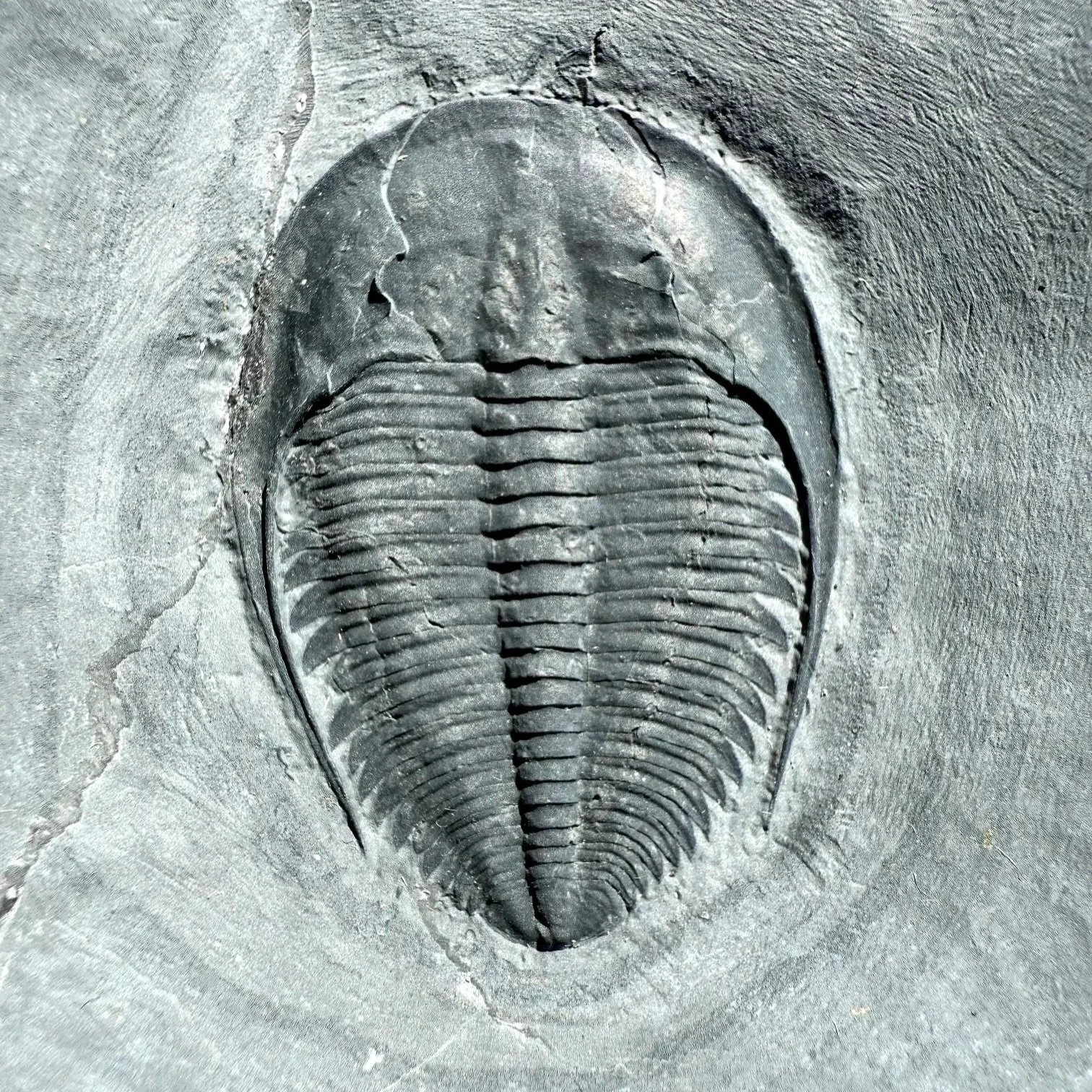

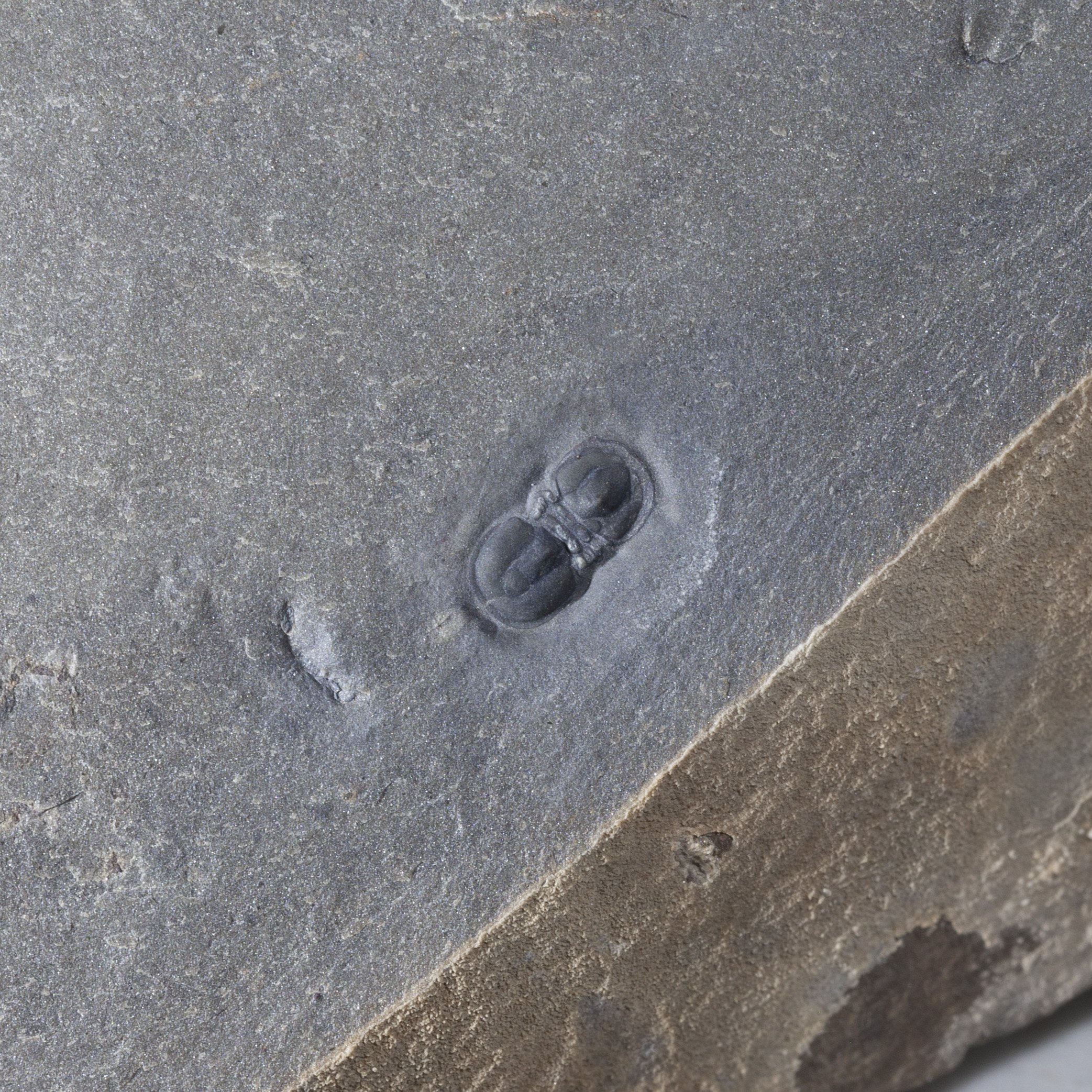
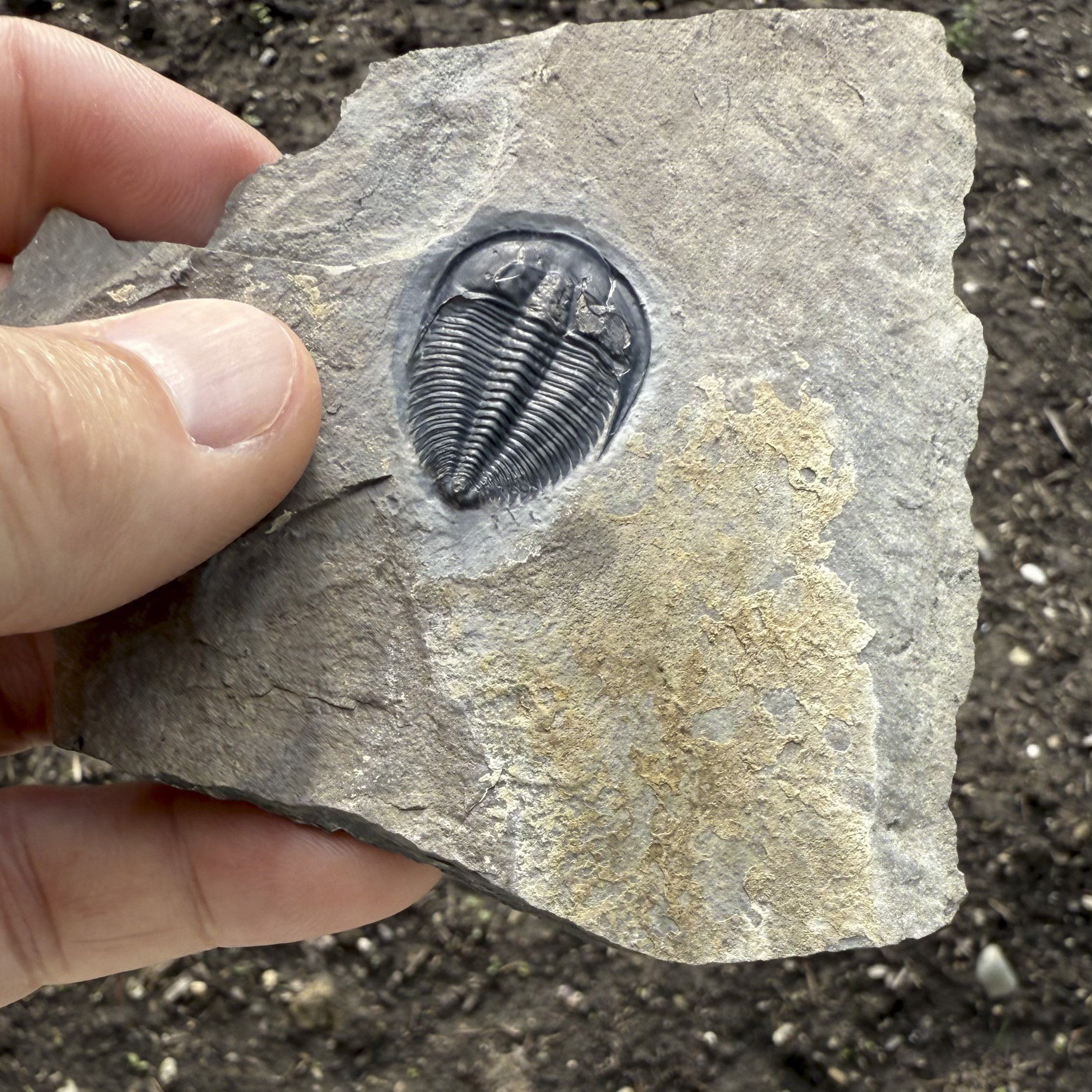
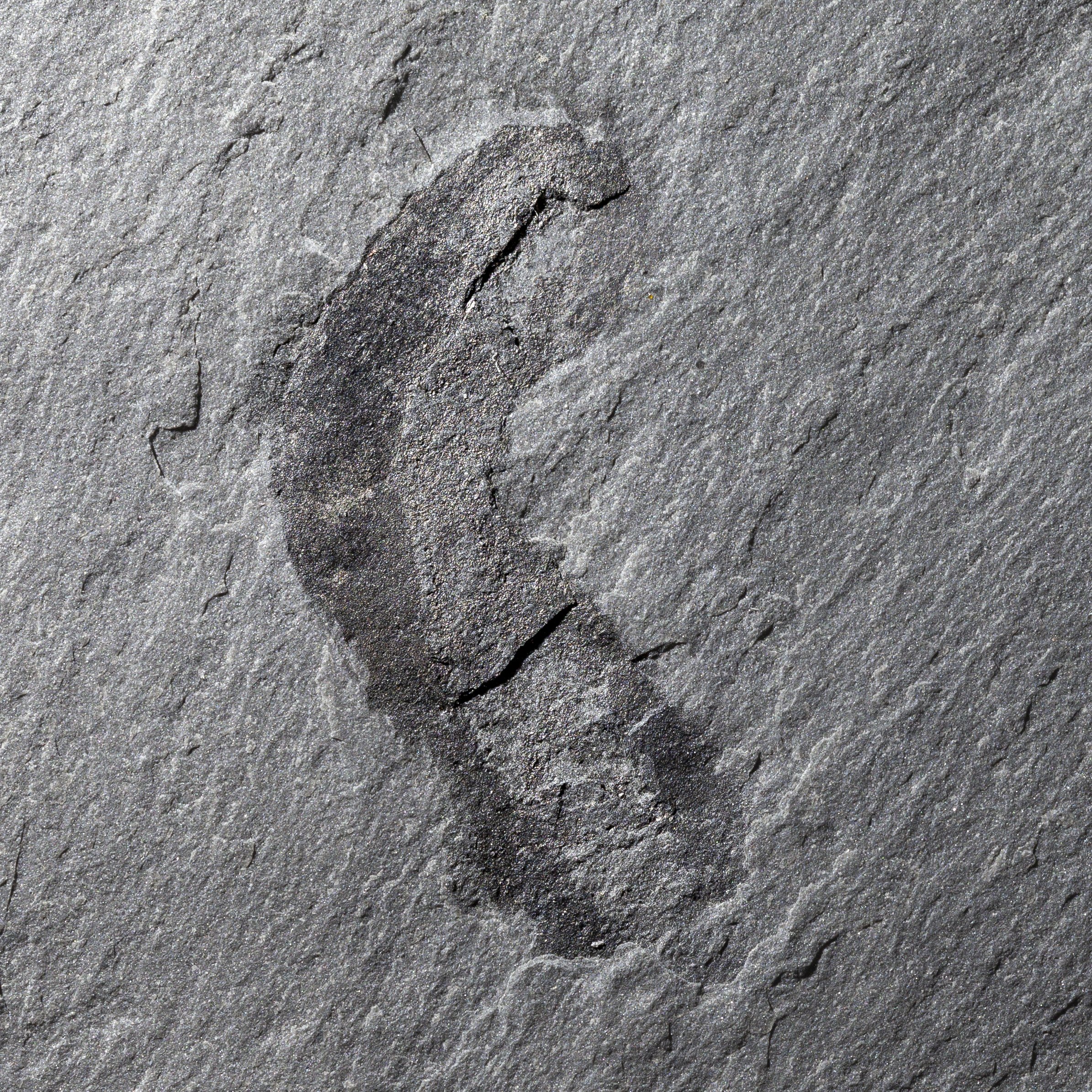






Vendor: FS-JS
SKU Number: SQ5615228
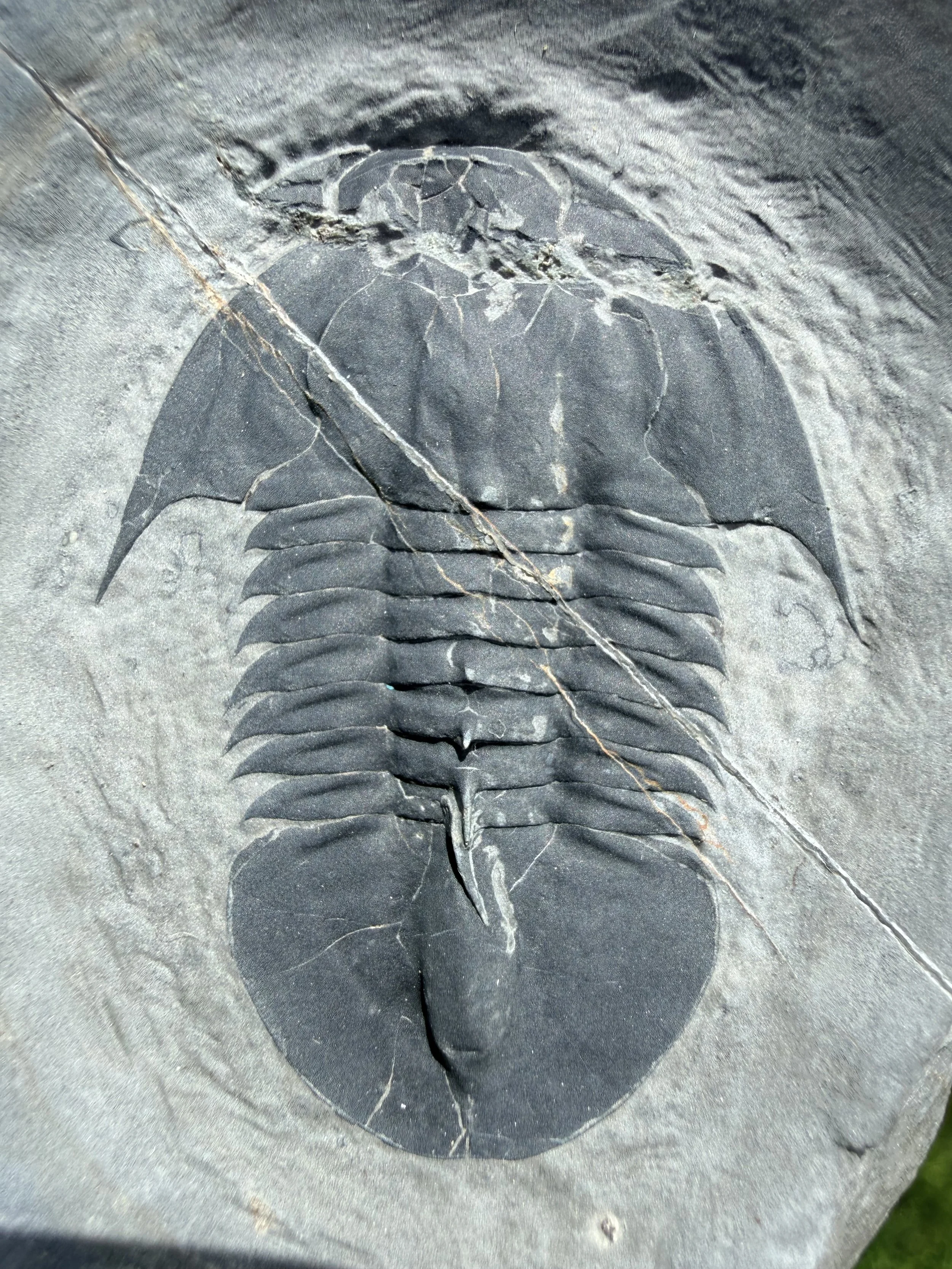
Amecephalus laticaudum from the Middle Cambrian, Spence Shale, Wellsvilles Mtns, Box Elder Co., Utah.
A very rare and complete trilobite.
Full dimensions are listed below.